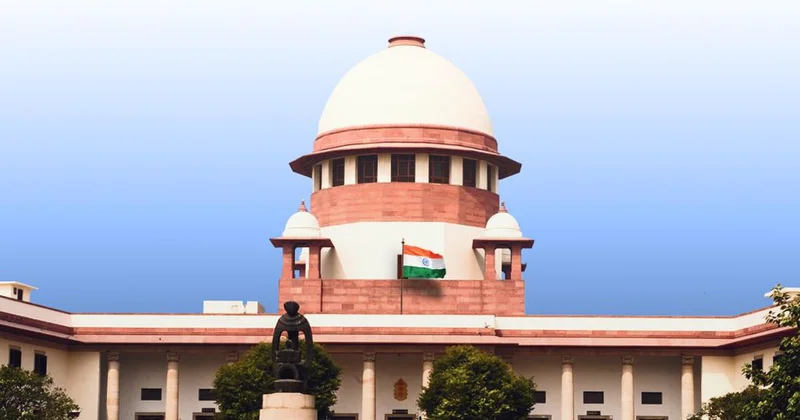
The Union government on Thursday told the Supreme Court that it is reconsidering the regulations issued by the University Grants Commission in January to address caste-based discrimination in colleges and universities, Live Law reported.
The 2026 University Grants Commission Promotion of Equity in Higher Education Institutions Regulations were stayed by the Supreme Court on January 29, observing that their provisions were “prima facie vague and capable of misuse”.
The rules had led to protests by upper-caste students who argued that it could lead to discrimination against them. The protesters contended that the rules were biased against students from the general category as they did not provide for measures against “false complaints”.
The court had asked the Union government to redraft the regulations and added that until then, their operation will remain suspended.
On Thursday, Solicitor General Tushar Mehta told the bench of Chief Justice Surya Kant and Justices Joymalya Bagchi and V Mohana that the regulations were being reviewed, the legal news outlet reported. He asked the bench to defer deciding the questions to be examined in the case until the review was completed.
Advocate Indira Jaising, appearing for the petitioners, urged the court to fix a timeline for the Union government’s decision, Live Law reported.
However, the bench said that it was not hearing arguments on the matter and adjourned the case for four weeks.
The regulations by the University Grants Commission were introduced in response to a public interest litigation filed in 2019 before the Supreme Court by the mothers of Rohith Vemula and Payal Tadvi, two students from marginalised communities who died by suicide after facing caste-based harassment. The petition had sought measures to prevent and address caste-based discrimination in educational institutions.
What the rules mandated
The University Grants Commission’s equity rules required institutes to set up special committees, helplines and monitoring teams to address complaints, particularly from members of Scheduled Castes, Scheduled Tribes and Other Backward Classes.
The commission had in 2012 first released equity rules for higher education institutes, which required them to set up Equal Opportunity Cells and Anti-Discrimination Officers. However, those rules did not provide for action against institutions that did not comply with them.
In contrast, the 2026 rules required the commission to set up a monitoring committee to oversee their implementation.
Institutes that do not comply with the regulations could be barred from participating in the commission’s schemes, offering degree programmes and online courses, and could be removed from the list of institutes eligible to receive central grants.
Edited by Nachiket Deuskar.
We welcome your comments at letters@scroll.in.