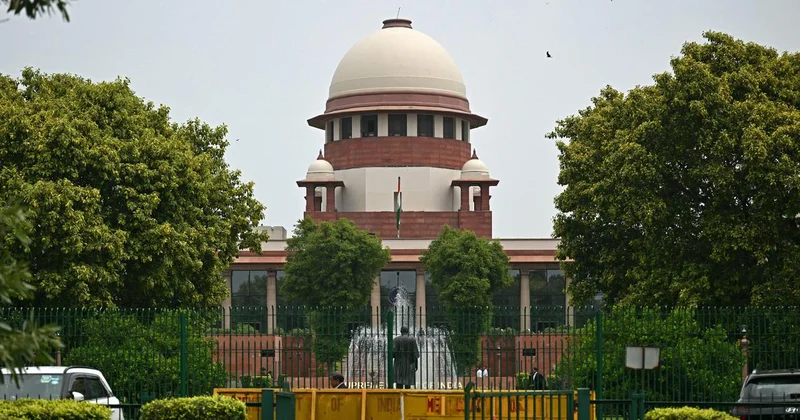
The Supreme Court on Thursday held that uttering casteist slurs in private does not meet the statutory requirement of being considered an offence under the Scheduled Castes and the Scheduled Tribes Prevention of Atrocities Act, reported Live Law.
With this view, a bench of Justices Vikram Nath and Sandeep Mehta set aside an Allahabad High Court order that had refused to quash proceedings under the Act against a school manager.
The complainant had said in the first information report that he had gone to meet the school manager on January 24, 2020, after his son was injured in a quarrel with other students. He alleged that the school manager, along with other staff, assaulted him with lathis and shouted casteist slurs at him, reported Live Law.
The FIR in the matter was registered on the next day on charges of rioting, causing hurt, wrongful confinement and intentional insult, along with Scheduled Castes and the Scheduled Tribes Prevention of Atrocities Act sections 3(1)(r) and 3(1)(s).
Section 3(1)(r) of the Act makes it a crime for a person who is not from a Scheduled Caste or Scheduled Tribe to intentionally insult or humiliate a member of the communities in a place within public view.
Section 3(1)(s) makes it a punishable offence for a person who is not from a Scheduled Caste or Scheduled Tribe to abuse a member of the communities by their caste name in any place within public view.
The school manager had challenged the proceedings before the Allahabad High Court, arguing that the alleged incident took place inside room “A” in the school. He said that the room was enclosed, had no window and was not open to the public, Live Law reported.
He also argued that the witnesses had not said they were inside the room when the alleged casteist remarks were made. Their statements only showed that a quarrel had taken place, he added.
In April 2023, the High Court refused to interfere with the case, prompting the manager to approach the Supreme Court.
On Thursday, referring to its previous judgements, the Supreme Court said a place can be considered “within public view” when members of the public can see or hear the alleged casteist remarks.
“If the alleged offence takes place within the four corners of the wall where members of the public are not present, then it cannot be said that it has taken place at a place within public view,” the court said.
The bench also noted that the FIR did not specifically attribute any caste-based slurs to the school manager.
The teachers who gave statements spoke about an “altercation and scuffle”, but none said they were present when the alleged caste-based remarks were made or that they heard them, the court noted.
“Their mere presence in the school premises, therefore, does not establish that the alleged utterance was made within public view,” the bench said.
The court quashed the proceedings against the school manager under the Scheduled Castes and the Scheduled Tribes Prevention of Atrocities Act, but clarified that the case relating to the other alleged offences would continue.
Edited by Sneha.
We welcome your comments at letters@scroll.in.