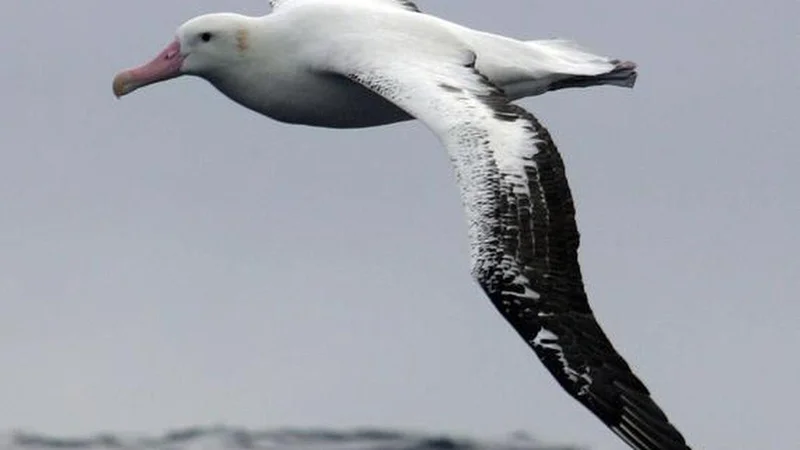
Do you know that there are birds that spend almost all their lives flying over the vast seas? Known as pelagic birds, they enjoy the largest habitat — the ocean — that provides plenty of food but little space for breeding. So they nest on islands or rocky cliffs.
In the air
The seawater, as well as the fish they eat, is highly saline. So how do the gulls, terns, petrels, albatrosses, puffins circumvent this problem? Salt glands connected to their nostrils help them get rid of the excess salt. Those birds that do not have salt-exuding glands manage to excrete the salt in their urea-rich faeces.
Sea birds that spend days together in the air carry out all their functions — feeding and sleeping — on the wing. They sleep with half their brain awake or catch short power naps.
Yet another problem is flying in the face of the sun above and the harsh glare from the ocean beneath. Nature has taken care of this too. They have special inbuilt ‘sun glares’: a red oil secreted in their retina filters off much of the glare.
Pelagic birds usually live for a long time, compared to other birds. A 71-year-old albatross named Wisdom returned to an island called Midway in the Pacific Ocean to lay her egg. Even at 71, Wisdom was in her fit and in her prime.
Unfortunately, plastic pollution is taking a toll on these beautiful birds. The plastic disintegrates into microplastic fibres, which are consumed by fish that are, in turn, are eaten by the pelagic birds. Don’t you think polluting the oceans has to be stopped so that these wonderful birds continue to fly high?
Fun facts
Among sea birds, the Arctic Tern deserves the gold medal for the longest flight. It migrates from the Arctic to the Antarctic and back again every year, covering more than 35,000 km.
The Albatross deserves a special mention. Considered the lord of the air, it has the largest wingspan (12 feet) and is so aerodynamic that it can fly without flapping non-stop for two whole days!
The frigate bird picks up small fish from the water’s surface without letting its wings get wet, as it does not have water-repelling glands. But it also uses the strategy of teasing the other seabirds by pulling their legs and tails. The harassed birds regurgitate their food, which is conveniently caught and swallowed by the frigate.
Published - August 21, 2026 08:30 am IST