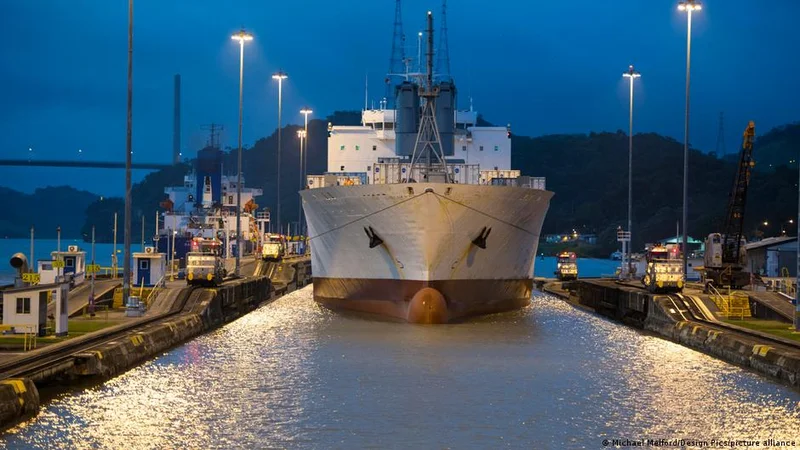
The Panama Canal will cut the number of ships passing through it starting next month due to a lack of rainfall as the El Nino weather pattern takes hold over the region, the canal operator said on Thursday.
The vital waterway that links two oceans and carries about 5% of global maritime trade relies on rainfall to keep ships moving through the passageway.
From September 3, the waterway will allow 34 ships to pass through it, instead of the current 36, the Panama Canal Authority said.
From September 15, the number of ships allowed to pass through it will drop to 32.
That Panama is met with severe drought even though it is one of the wettest nations on Earth is a sign that El Nino has formed in a warmed-up Pacific Ocean. Rainfall between May and August was about 34% below the historical average for the period, the canal operator said.
What is El Nino?
El Nino is characterized by unusually warm ocean surface temperatures in the central and eastern Pacific, with knock-on effects including droughts, floods and wildfires.
Those changes in winds and ocean temperatures have knock-on effects on weather patterns all over the world and will likely turbocharge extreme weather events because of how warm the world already is from fossil fuel pollution, experts say.
Scientists say they expect El Nino to get so intense this late fall and early winter that "it would rank among the largest El Nino events in the historical record going back to 1950."
Panama Canal affected by drought in recent years
The 50-mile (80-kilometer) Panama Canal was impacted by severe drought in 2023-2024, when the canal operator slashed ship crossings.
In 2023, the water level in the lakes feeding the canal was so low the waterway's operators cut the daily ship transit number from 38 to 22.
The authority has already implemented water conservation measures but called for methods to bolster the "long-term sustainability" of the waterway.
Edited by: Zac Crellin