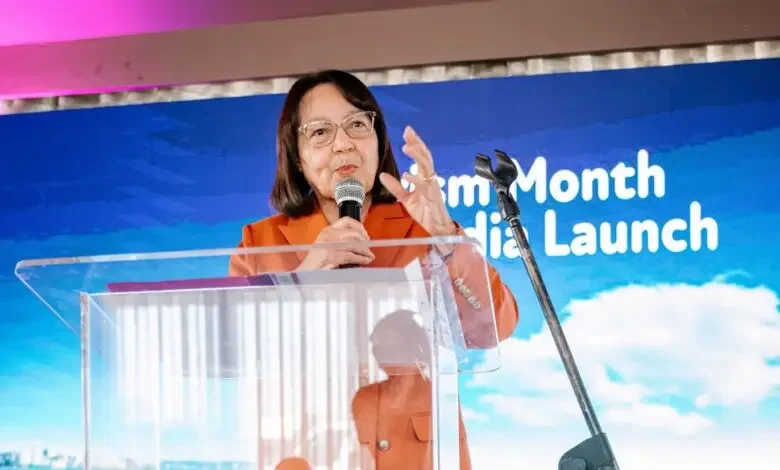
South Africa wants tourists to discover the country through their phones. That was one of the clearest messages from the launch of Tourism Month 2026 in Durban on 13 August, where Tourism Minister Patricia de Lille placed digital technology at the centre of the country's plans to grow the tourism sector.
This year's theme, Growing South Africa’s Tourism Sector in the Digital Era, reflects a major change in how people discover destinations, plan holidays and decide where to spend their money. The modern traveller can watch a video of a destination on TikTok, search for accommodation, compare reviews, check prices and make a booking without ever speaking to a travel agent.
For De Lille, South Africa needs to be part of that digital journey. “They discover our country on a screen on their cell phone,” she said during the launch. “That's where technology comes in. And that's why we have partnered with TikTok.”
The partnership forms part of a wider effort to market South Africa through the platforms where potential travellers are already spending their time. The government is also looking to markets such as India, China, Mexico and Indonesia as it seeks to increase the country's share of international tourism.
For the tourism industry, the opportunity is significant. A small guesthouse in Limpopo, a township restaurant, a cultural experience in a rural community, or a local tour operator can reach a customer thousands of kilometres away without the advertising budget of a large hotel group.
That is one of the promises of digital tourism. Technology can make it easier for smaller businesses to be discovered by people who may never have encountered them through traditional tourism marketing. But being visible online does not automatically make a business digitally competitive.
A tourism operator may have a TikTok account or an Instagram page, but still struggle to provide prices, take online bookings, accept digital payments, or respond quickly to customers. Some businesses may also lack the money, time or skills needed to create regular content and manage their online presence.
This is where the government's digital tourism ambitions will face an important test. During the launch, Reverend Zondi said, “Technology must reduce barriers to entry, not create new ones.” The statement is particularly relevant to small businesses that are expected to benefit from the country's tourism growth. Getting a business online is one thing. Equipping that business with the skills, connectivity, and infrastructure to compete effectively online is another.
For tourism businesses, the real value of digital marketing lies not in how many people see a video. It is what happens afterwards. A video can receive thousands of views without producing a single booking. The commercial value comes when someone sees the content, decides to visit, makes a booking, pays for an experience and spends money in the local economy.
This distinction matters as South Africa increases its use of social media to market itself. Digital platforms can help smaller businesses reach customers directly, but they also create a new competition for attention. Businesses are now competing not only on the quality of their products and experiences but also on how effectively they can present themselves online.
A large hotel may have a marketing team, professional photographers and an established online booking system. A small operator may be managing bookings, cleaning rooms, creating content and answering customer messages from the same cellphone. Both may have access to social media, but they do not necessarily have the same ability to compete.
This means digitalisation could either help reduce inequalities in tourism or deepen them. If businesses with better resources can dominate online spaces, smaller operators could struggle to benefit from the very digital shift that the government hopes will open the sector to more people.
That is why support for digital skills and infrastructure will be important. Small businesses need more than encouragement to get online. They need to understand how to market themselves, manage bookings, accept payments and turn customer engagement into sales. They also need reliable connectivity and affordable digital services.
The potential economic impact extends beyond individual businesses. Tourism operates across a wide network that includes accommodation, restaurants, transport operators, retailers and local attractions. When a visitor spends money at one tourism business, that spending can support other businesses and workers in the surrounding community.
This is why digital visibility can become an economic issue. If a small operator receives more bookings because customers discovered the business online, the benefit may extend to a driver, a restaurant, a local supplier, or another service provider.
The same principle applies to domestic tourism. Tourism Month is promoting initiatives such as Sho't Left Travel Week, South African National Parks Week and Provincial Mahala Weeks to encourage South Africans to explore their own country.
“Before we ask the world to discover South Africa, we must continue to encourage South Africa to discover its own country,” De Lille said. The message comes as affordability remains an important consideration for South Africans deciding whether and where to travel. Affordable local travel can support businesses that depend heavily on domestic visitors while giving South Africans opportunities to discover destinations closer to home.
Digital platforms can help with that discovery. A South African looking for an affordable weekend away can discover a destination through a short video or a social media recommendation. A family looking for something to do during a school holiday can discover an attraction they did not know existed. But once again, discovery must lead somewhere.
South Africa is also trying to make the journey easier for international visitors through its new Electronic Travel Authorisation system. The system is intended to simplify the travel authorisation process for eligible travellers by allowing applications to be completed electronically. De Lille presented the system as part of the country's broader move towards digitalisation.
For tourism businesses, this matters because the customer's journey begins long before they arrive at an airport. It starts when they first see a destination online and continues through research, comparisons, bookings and travel arrangements. Every point of difficulty creates an opportunity for a potential visitor to choose another destination.
Artificial intelligence is likely to add another layer to this process. Travellers are increasingly using digital tools to research destinations, plan itineraries and find experiences. Tourism businesses will therefore need accurate information online if they want to remain visible to travellers who are using search engines, social media and AI tools to make decisions.
A business with clear information, good reviews and an easy booking process has a better chance of being found. A business with little reliable information online can easily disappear, even if the experience it offers is excellent. South Africa has made its direction clear. It wants to attract visitors through digital marketing, make international travel easier and give tourism businesses a greater chance of reaching customers.
But Tourism Month should ultimately not be judged by views, likes or followers. The real measure will be whether more people travel, whether they spend more and whether that spending reaches the businesses and communities that need it.
For a small tourism operator, the difference between being seen and being successful could be the difference between 100 000 views and 10 bookings. The first creates attention. The second creates income. As De Lille said during the launch, “Tourism policy is economic policy.”
The digital era will put that statement to the test. South Africa can make itself visible to the world through a smartphone screen, but the real question is whether the businesses behind that screen are equipped to turn attention into customers, revenue and jobs.