From Europe to Southeast Asia, Chinese electric vehicle maker BYD is on a roll. But its toughest challenge is much closer to home: cracking Japan, the world’s fourth-largest auto market, where it has yet to make a dent in sales after years of trying. That might be about to change.
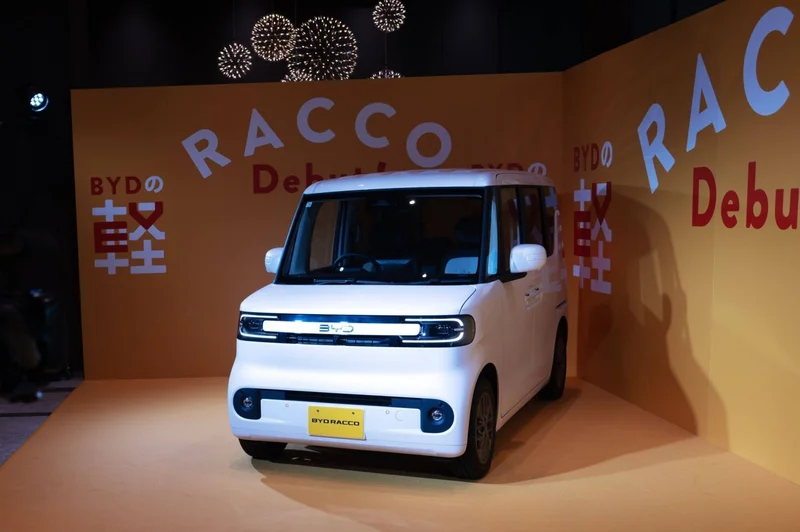
July’s introduction of the tiny Racco, which means sea otter in Japanese, is the right approach in a country whose love for small, cost-efficient vehicles goes back decades. The Shenzhen-based firm is the first foreign player to make a dedicated effort to tackle the boxy kei jidosha, or light car, a quintessentially Japanese vehicle category. Much smaller than even compact models, these autos are restricted to 3.4 meters in length and 1.48 meters wide. They even have their own tax and insurance rules.
The price of ¥2,145,000 ($13,000) for an entry-level model shows BYD is serious about gaining traction with a bespoke battery-powered design. By comparison, Nissan Motor’s popular Sakura mini has a higher sticker price, but is slightly cheaper once national subsidies are factored in. That said, Sakura has fewer features and a shorter range when fully charged, so the Chinese carmaker is offering value at a comparable price.