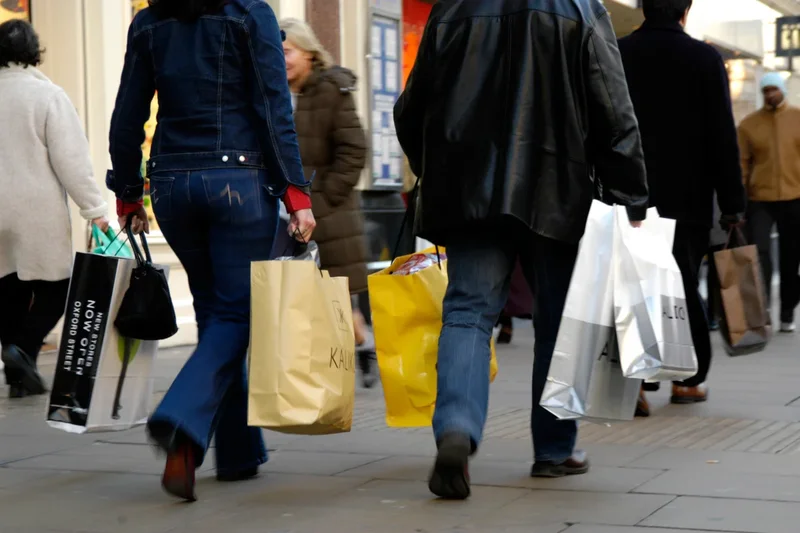
Official data shows UK retail sales dipped in July, driven primarily by the steepest monthly fall in clothing purchases seen in more than a year.
According to figures from the Office for National Statistics (ONS), overall retail sales volumes contracted by 0.5 per cent in July when compared with the previous month.
This reversal follows a 0.7 per cent expansion in June, a figure that statisticians had revised downwards from a previous estimate of 1 per cent.
The contraction in July was slightly larger than expected, with economists having initially forecast a 0.4 per cent decrease for the month.
Sales across clothing and footwear retailers dropped by 2.7 per cent during the month, representing the sharpest monthly decline since May last year.
Industry experts noted that this drop was linked to retailers bringing discount events forward into June, boosting performance that month at the expense of July sales.
Non-store retailers, which primarily covers online retailers, also saw a particular slump in July, with sales sliding by 3.6 per cent.
Household goods stores were also in decline, reporting a 1.9 per cent monthly drop.
Food sales grew by 0.5 per cent over the month as warm weather continued to benefit supermarkets.
The data also showed that retailers selling alcoholic drinks “performed well” due to promotions, the hot weather and the final stages of the World Cup.
The ONS said retail sales volumes increased by 1.1 per cent over the three months to July, compared with the previous three months.
ONS chief economist Grant Fitzner said: “Retail sales increased in the latest three months, with all main sectors, apart from motor fuel, seeing growth.
“Some retailers told us that hot weather and promotions helped sales of outdoor products and items such as fans, with clothing and online sports merchandise also doing well.”
Jacqueline Windsor, head of retail at PwC UK, said: “While successive heatwaves and World Cup celebrations earlier in the month helped grocery sales – of everything from beer to picky bits – the earlier timing of discounting and promotions meant that some large online and fashion retailers in particular pulled forward sales into June that would previously have been in July.
“Higher inflation, notably the higher energy price cap and higher petrol prices later in the month, also meant less money in shoppers’ pockets for discretionary spending outside of grocery and fuel.
“Despite less promotional activity from online retailers, the high street failed to benefit as heatwaves continued to impact footfall.”
Matt Swannell, chief economic Adviser to the Item Club, said: “The retail sector is likely to face a challenging H2 as households’ real incomes come under further pressure.
“Inflation has already started to rise in July and we expect it to increase further over the next six months, reaching 3.5 per cent before year-end.
“At the same time, weak demand will keep a lid on pay gains and lead to a modest rise in unemployment.”