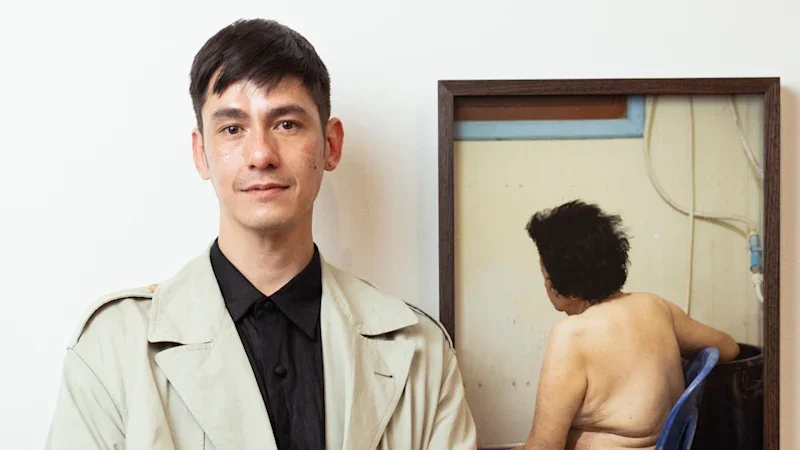
Nathan Beard’s achingly intimate photograph of beloved, elderly aunt Mae Khong bathing after a debilitating fall was never intended to be seen by anyone outside the family, much less win Australia’s leading photographic portrait prize.
He grabbed the frame almost instinctively, slipping in and out of the bathroom with his camera as Mae, 84, weary and in pain, yet fiercely independent insisted on bathing herself.
“I wasn’t intending to shoot her for a particular outcome or a prize,” says Beard. “I just wanted to record that moment because she was being so bold and courageous.”
Now the poignant image has won the $50,000 National Photographic Portrait Prize. His success has been made bittersweet by Mae’s death last month and the sense he has lost one of his most precious connections to his Thai heritage.
Khong came to Australia shortly after Beard was born and helped raise him after his mother went back to work. After his mother’s death in 2019, she became his “second mother”.
“This idea of maternal transference and bonding with my auntie definitely felt more pronounced,” he says. ” And it really focused my attention on sort of trying to record or observe and just hold on to her through making work.”
He recalls Khong as a strong character who was also capable of great tenderness.
“She was always right,” he says. “She would never back down. And, more often than not, she probably was. But she was also incredibly very tender and loving and caring and would give her all to try to support you. She was extremely giving with her time and was relied upon a lot by her community as well.”
Growing up in Perth, Beard recalls being surrounded by “Thai-ness”, from domestic shrines and religious observances to the herbs and vegies his mother grew in their garden. As a youngster, he occasionally pushed back at this perceived “otherness” from his schoolmates.
“I remember feeling a little bit frustrated with certain cultural expectations and being slightly bratty as a kid,” he says. “But I never felt any sense of shame about the culture. If anything, growing up in a mixed race household allowed me to seek out solidarity and friendships with other people that came from similar mixed cultural backgrounds.
“[Khong] was the last surviving member of her generation from the Thai side of the family. So bound up with her was this expectation of connection to Thai-ness and how delicate that was.”
One of the three judges, Isobel Parker Philip, describes her emotional response to the work.
“When I thought about all the works that we were installing, that was the one that lingered for its emotional intensity,” she says. “When you look at it, you can feel what it would have been like to sit in the room with her. It reminds me of my grandmother. You can kind of feel a palpable connection, a kind of empathetic connection, even though you can’t see her face.”
Melbourne-based Beard says the fact his subject is simultaneously concealed and exposed allows viewers to consider their own experiences
“I think it is like a blank slate for people to be able to project a lot of their own associations with mortality and ageing and of relatives that they might have had to care for or may anticipate having to care for,” he says. “There’s a universality in that kind of image making.”
Beard says his Auntie would possibly not have understood the fuss around the picture but nevertheless she would have been very proud of his success.
Beard has earmarked most of the prize money to go towards making new work, but some of it will be used for an emotional trip back to Thailand next month.
“With some of the money I’ll be able to go and visit her stupa at the family shrine for the 100-day ceremony.”
National Photographic Portrait Prize 2026 exhibition, National Portrait Gallery, August 22 until Sunday October 11
The Booklist is a weekly newsletter for book lovers from Jason Steger. Get it delivered every Friday.