- See more Daily Mail on Google - save us as a Preferred Source
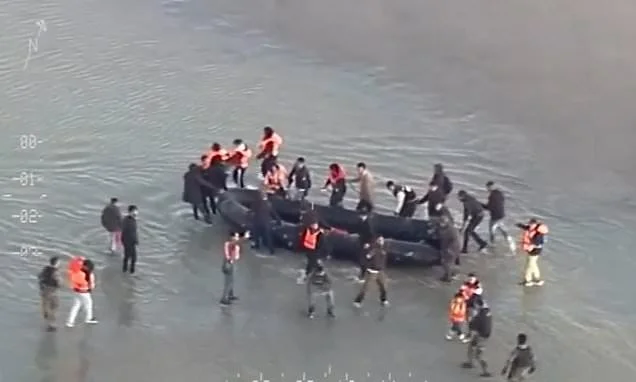
Shocking footage shows violent migrants clashing with French police as they tried to set sail for the UK.
The video, filmed on a beach in northern France, shows migrants wearing life jackets throwing stones at the officers to keep them away from their dinghy.
The officers then used Pava spray before slashing the inflatable boat with a knife.
The footage, released by the UK's Border Security Command, was intended to show how the police patrolling France's northern beaches are getting tougher in an effort to curb illegal crossings.
According to the Home Office, French police prevented more than 4,300 migrants from reaching UK shores in the first three months of a new deal between the countries.
Officers funded by the UK stopped 185 boat crossings between April 27 and August 2, seizing equipment, preventing launches and arresting people-smugglers.
This represents around 60 per cent of all attempts, according to official data.
Across the same period, 8,200 migrants arrived on 120 boats.
Shocking footage shows migrants clashing with French police as they attempted to intercept a boat from crossing the English Channel
The video, filmed on a beach in northern France , shows migrants wearing life jackets and throwing objects at the officers to keep them away from their dinghy
The officers then use Pava spray before slashing the inflatable boat with a knife
The data suggests French police are stopping more of the smaller vessels, rather than some of the ever-larger boats being used for the journey.
The figures come as Prime Minister Andy Burnham is under pressure to show that the government is focused on cracking down on irregular migration.
Polling shows it’s one of the most important issues for the British public, as the cost of housing asylum seekers has surged over recent years.
Under previous Prime Minister Keir Starmer, Home Secretary Shabana Mahmood in April signed a new agreement with her French counterpart that will see the UK pay France £661 million over three years to bolster efforts to stop small boats crossings.
Previously the French authorities allowed most dinghies to head towards the UK once they had launched, due to the risk of intercepting them in deep water, while loaded with people.
Of the 12 boats stopped so far at sea, three interceptions took place in the last two weeks.
While Channel crossings are down about 40 per cent compared to last year, thousands of illegal migrants are still making it to the UK, with 250 arriving on Monday.
Late last month a record 165 migrants reached Britain in a single vessel with Border Security Command pictured towing a mega dinghy - estimated to be the same size as a standard bus at 13m (42ft) long - when it arrived in Dover on 23 July.
Home Secretary Shabana Mahmood said the 'UK-France deal is already having a real impact, stopping crossings before they happen and disrupting the criminal gangs behind them'.
'People smugglers should be in no doubt, we’re taking down their operations, seizing their equipment and breaking their business model for good.'
Shadow home secretary Chris Philp called Labour’s celebration of the deal’s results 'a joke,' saying that instances of crossings being prevented were falling.
'The only way we can stop the crossings is by having a proper deterrent,' he said, calling for irregular arrivals to be 'rapidly' deported.
Earlier in August Reform UK said if it was in power it would intercept vessels crossing the English Channel and return migrants to French ports, even if France disagreed.
The French interior ministry responded by saying this would 'constitute a violation of French sovereignty'.
In July, 2,316 people made the journey across the Channel — the lowest level for that month since 2020.
In the first seven months of 2026, 14,200 migrants arrived on England’s shores aboard 214 small boats, compared to 25,436 on 431 vessels in the same period last year.
Between 2018 and 2025, a total of 162 people died in the waterway, according to the University of Oxford's Migration Observatory.
This rises to 257 when factoring in other migration-related deaths in the area, such as accidents involving people trying to board lorries heading for the UK.