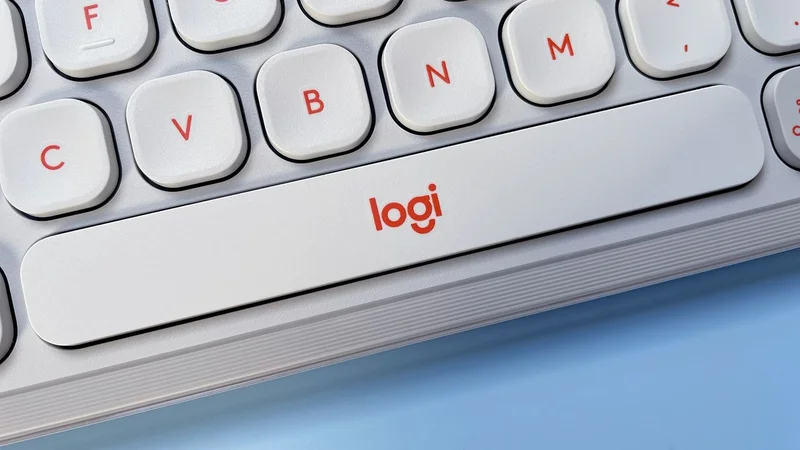
- Logitech facing a class action lawsuit over tariff refunds, with the lawsuit alleging the company raised the price of some products to pass the cost of tariffs onto customers
- The US government collected an estimated $166 billion in IEEA tariffs which are to be returned to businesses, but their are no mechanisms in place to return the cost of tariff-inflated goods back to customers
- Nintendo and Sony are also facing lawsuits over tariff cost refunds
Following President Donald Trump’s return to power in January 2025, he almost immediately levied numerous International Emergency Economic Powers Act (IEEA) tariffs on imports of almost all goods coming into the United States.
According to Trump, the tariffs were imposed to boost domestic production of goods, and increase the purchasing of products manufactured in the US. Somewhat shortsightedly, the US was not able to suddenly change to the mass production of most imported goods and the tariffs were passed on to consumers as part of the price of imported goods.
Many of these and subsequent tariffs were deemed illegal by the Supreme Court of the United States, with around $166 billion in IEEA tariff revenue collected by the government to be refunded to businesses. Unfortunately, many businesses don’t really want to hand that money back to consumers, and Logitech is now being taken to court for it.
Tariffs refunded to businesses but not passed on to consumers
A class action lawsuit has been filed by Cotchett, Pitre & McCarthy, LLP, by the District Court for the Northern District of California, San Jose Division, against Logitech.
The lawsuit alleges Logitech raised the price of many of its products to cover the costs of the import tariffs, but the company has not made it possible for customers to claim back the tariff costs they covered.
As the companies were the ones who paid the tariffs, there is no mechanism in place for consumers to claim back the costs that companies silently imposed on them.
According to the lawsuit, Logitech investors were told by its executives that the price of its products had to be raised to offset the cost of the tariffs.
Around half of the Logitech product catalog saw price rises at around 14%, but the costs of some products were raised by as much as 25%.
Nintendo and Sony also in hot water
While the lawsuit singles out Logitech, numerous other companies have also been accused of raising the costs of goods to cover tariffs and then keeping the refunds for themselves.
For example, Nintendo’s operating profits were reported to be around $902 million between April 1 and June 30. But during the same period the previous year, the operating profit was around $360 million.
While some of this profit increase can be attributed to a boom in games sales and software purchases for the Switch and Switch 2, much of the profit has been alleged to have actually come from tariff refunds.
Nintendo claims to have covered the costs of tariffs itself despite the price of both Switch consoles rising by as much as $50 in 2025.
Nintendo has filed a lawsuit against the US government, demanding that the refunds from the “sweeping” and “constantly changing” tariffs be paid back with interest. Nintendo is also battling a lawsuit in court that demands the tariff refunds are also passed on to consumers.
Sony has been handed an estimated $508 million tariff refund, but raised the prices of key products such as the PlayStation 5 to cover the costs of the importation tariffs. A lawsuit has been filed, but Sony has made no indication that consumers who bought PlayStation consoles at elevated prices will see a dime back.
Benedict is a Senior Security Writer at TechRadar Pro, where he has specialized in covering the intersection of geopolitics, cyber-warfare, and business security.
Benedict provides detailed analysis on state-sponsored threat actors, APT groups, and the protection of critical national infrastructure, with his reporting bridging the gap between technical threat intelligence and B2B security strategy.
Benedict holds an MA (Distinction) in Security, Intelligence, and Diplomacy from the University of Buckingham Centre for Security and Intelligence Studies (BUCSIS), with his specialization providing him with a robust academic framework for deconstructing complex international conflicts and intelligence operations, and the ability to translate intricate security data into actionable insights.