3,000 lower-income residents in North-east towns to get $500 in warm meals under new programme
SINGAPORE – For single mother Elsie Lim, dinner is one more thing to fit into an already packed day.
The 43-year-old works as an administrative assistant until 6pm each day, then has to pick up her daughter from childcare, iron the school uniforms of her two children, aged six and 16, cook dinner and prepare her daughter for sleep.
Her six-year-old daughter, Dyan, also receives specialised support for dyslexia twice a week.
A new warm meal programme launched by OCBC and the North East Community Development Council (CDC) on Aug 21 could ease some of that burden for Lim.
Her family will be among 1,000 households in Tampines, Punggol and Pasir Ris-Changi towns that will receive $500 in meal credits under the programme.
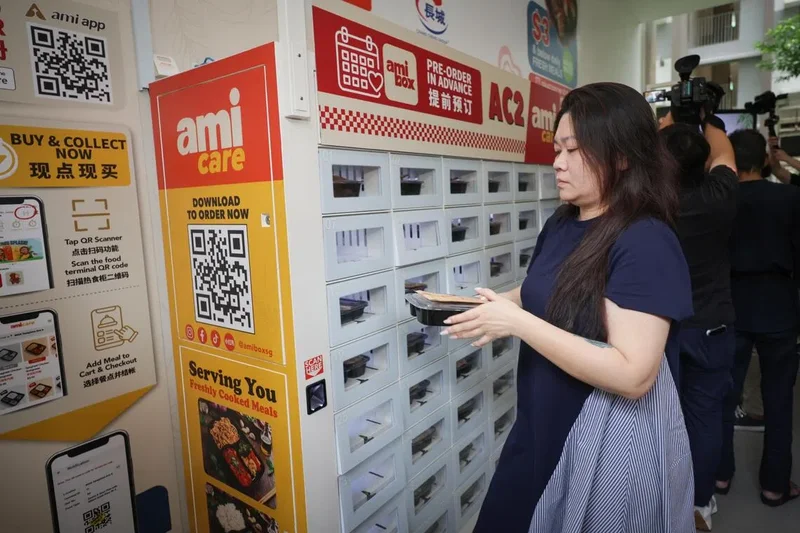
The credits will cover about 165 meals, redeemable at about 30 food lockers located at or near the void decks of HDB rental blocks in the three towns.
Launched at Block 609A Tampines Avenue 9, the programme aims to provide 165,000 warm meals to more than 3,000 residents from lower-income households over a year from September.
“The only time I can really see my kids during the school term is during dinner time. But if I can cut the 30 minutes to one hour I spend preparing dinner, then I can spend more time with them,” said Lim.
She added that there are times she cannot cook meals for her children because she is out for errands or working. She lives at Block 609A Tampines Avenue 9, which has a food locker at its void deck.
The programme will also help Lim save money, as she said grocery and hawker centre prices have been increasing.
Among the eight halal-certified meals available at launch are spaghetti with roasted chicken, stir-fried chicken udon, rendang chicken, vegetarian tofu with mushroom sauce rice, and teriyaki fish rice.
For Michael Ethan Gerald, 39, the menu offerings will help meet the nutritional needs of his sons, aged five and three.
The full-time caregiver to his children said his family used to receive pouches containing processed food by the carton from a food charity a few years ago.
Besides his concerns about his children’s nutritional needs, Michael said the cartons of food pouches also took up considerable space. He added that his family would throw away the uneaten food, resulting in food wastage.
The programme is funded by $500,000 contributed evenly from OCBC and the North East CDC.
Meals are redeemable between 12pm and 3pm and between 5pm and 8pm.
The credits will be given to recipients through the mobile app Ami App, which will also be used to redeem meals.
Speaking during the programme launch, Mayor of North East District Baey Yam Keng said that for families who are already stretched thin juggling work, caregiving and financial pressures, putting a meal on the table every day can be a struggle.
“This programme exists to ease that burden in a practical and dignified way. A warm meal may seem like a small thing, but for a family having a hard week, it can be one less worry,” said Baey.
He said that the North East CDC is already working with the Social Service Office in Sengkang to expand the programme there.
Baey said that while there are other programmes that help with food security, such as allowing lower-income residents to buy groceries at discounted prices, the warm meal programme can help those who cannot or do not cook at home.
The programme complements the support these families currently receive through ComLink+ and ComCare, both of which provide financial and social assistance through the Ministry of Social and Family Development (MSF).
Minister for Social and Family Development Masagos Zulkifli was also at the launch. He noted that sitting together as a family over a warm meal is a moment that means more than just eating the food that is served.
“When time and energy run thin, warm meals could be one of the things they (families) give up or don’t have the time or effort to do,” he said.
The minister also thanked family coaches from MSF Social Service Offices for taking the time to listen to and observe how they are coping with the challenges of daily life.
He said: “The family coaches understand that this is also about reducing stress, creating stability and helping families find moments to connect with one another.”
Family coaches support the aspirations of ComLink+ families by helping to co-develop an action plan with them.
OCBC head of group brand and communications Koh Ching Ching said: “No family should have to worry about where their next warm, wholesome meal will come from.”
The menu options will be rotated regularly to provide variety and cater to diverse tastes and dietary needs, with offerings reviewed and adjusted based on recipients’ preferences and feedback.