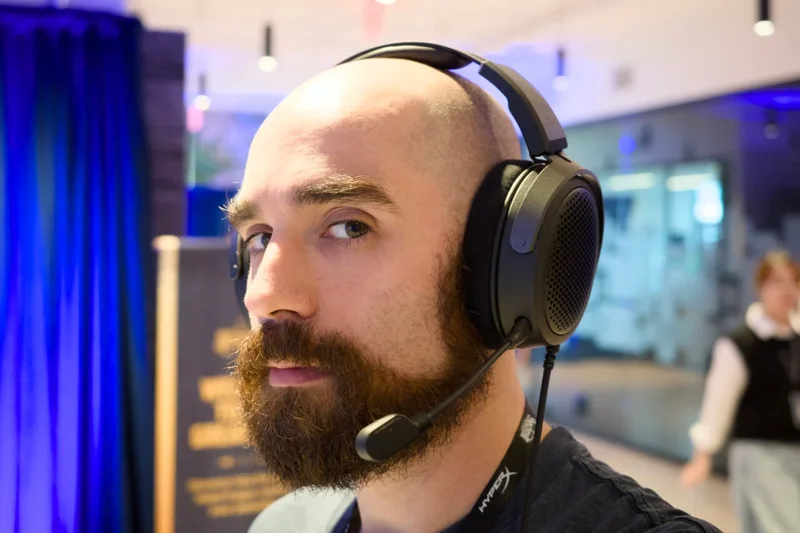
HP’s latest headset is doing a little more with lessâliterallyâthanks to the cheese grater holes punched into the side of each earcup. The HyperX Cloud Alpha Air, a relatively affordable open-backed headset, is making me consider whether most gamers need anything more audio-wise for their closed-in gopher hole where they regularly play.
The $150 HyperX Cloud Air takes after the $200 Sony Inzone H6 Air and much larger headsets like the $300 Asus ROG Kithara with their open-backed designs. This exposes the 40mm driver to the elements, but it also helps keep the headset lighter and keeps your ears cooler. Whatâs more, in my limited tests, I was surprised by the depth of sound coming from these headphones.
The push for open-backed gaming headphones makes more and more sense, and HPâs gaming brand, HyperX, may be supplying one of the better, more affordable versions of this design. I plugged into Clair Obscur: Expedition 33 for a few minutes and swapped back and forth between it and a $180 HyperX Cloud III S headset. In the same game, with the same EQ, the closed and open-backed headsets sounded on parâthat is, until I tested the bass.
The HyperX Cloud Alpha Air includes a special âBass Tubeâ that amplifies the punchiness of the sound in spite of its open-backed design. I could tell the difference as soon as I started firing off shots from Expedition 33âs ranged weapons. I would need to spend more time with the headset before I could tell if the audio experience and the mic quality were anywhere close to even more expensive headsets, like the HyperX Cloud Alpha 2. What I can say is that it felt much, much lighter than that $300 headset.
The cups around the Cloud Alpha Air are made from memory foam covered in a suede wrap. This means they wonât flake like faux leather inevitably does, though the material will potentially absorb moisture if youâre the type who suffers from gamer sweats. These open-backed designs also lack the swappable side panels that have made the HyperX headset line so customizable.
The biggest issue with these, and most other open-backed headsets, is the wired requirements. You canât remove the cable from the headset, and youâll have to rely on extenders and other dongles if you hope to plug it into your PC. The wired connection does make it compatible with all PCs and consoles, though youâll have to plug it into a computer and use HyperXâs Ngenuity software to modify any of the headsetâs EQ options.
The wired-only connection is the HyperX Cloud Airâs biggest hurdle for players. However, the headset does get me considering if I really need anything more. Alone in my room, stuffed into the corner of my Brooklyn apartment, I often wonder why I should bother with ANC (active noise cancellation) from a pair of cans that can cost $300 or more. I donât need to drown out anything more than cars passing by outside.
That doesnât mean there arenât obvious reasons you may want closed-back headphones that let in less noise. Your raucous dorm room may require something that can keep the ambient belches of your roommate at bay. Then again, gamer parents may want to have an open ear in case their kid escapes their bedroom to go exploring. Or you may actually want to hear if your significant other is trying to get your attention.