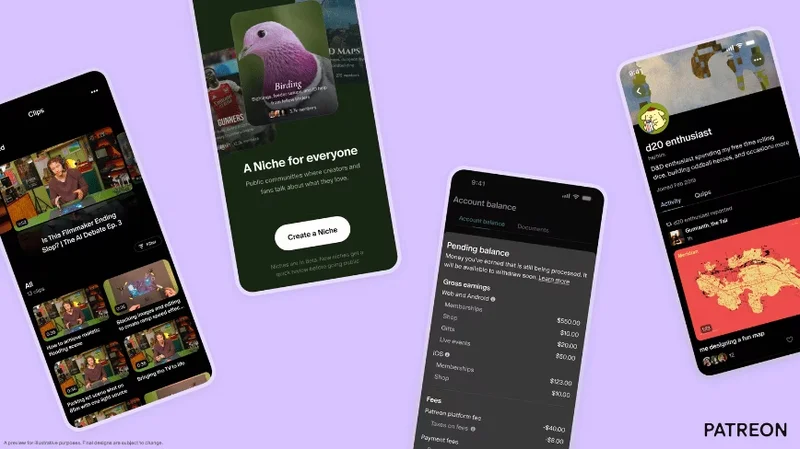
Patreon has published a roadmap of new and revamped features. TechCrunch counted 30 of them. The most consequential line in the post is an admission.
“To the smaller creators on Patreon: the lack of discovery you’re seeing right now is not your fault. It’s ours,” chief executive Jack Conte wrote in a long post to creators.
Patreon opened its discovery network to most creators over the past two months. Conte says it is not yet working for the people who need it most.
The problem Patreon built
Patreon spent 13 years as the place creators went to escape algorithms. Fans subscribed directly, and posts reached them. In April the company launched a Home feed, short posts called Quips, and public posts that surface to people who do not already follow you.
That turned Patreon into a network with a recommendation system. Recommendation systems have a familiar failure mode.
“Before, our recommendations systems were focused on finding similar creators to the ones a fan already loved,” Conte wrote. “The problem with this system, though, is that it tended to favor larger creators by definition.”
He added that the complaint is not only anecdotal. “This isn’t just qualitative feedback: we see it in our data, too.”
A creator posting as the lightFUL witch circle put the objection directly in the comments under the post. Smaller creators bring their existing audiences to Patreon, they wrote, and then watch the discovery system introduce those people to bigger creators instead. That dynamic makes small accounts feel like “feeders into the discovery system”.
What changes in the algorithm
The fix is a change in what the system compares. Patreon will stop matching creators to other creators and start matching posts to other posts.
The comparison will weigh topic, style, craft and themes, Conte wrote, “no matter who created it or how many members its creator has”. A fan who likes one post about a niche subject should see similar posts, whether the person who made them has 50 members or 50,000.
Conte did not promise it will work. He wrote that he cannot guarantee everyone will get millions of new fans, and called that goal unachievable.
The numbers Patreon put behind the network
The company published figures alongside the roadmap. The network now sends 1.5 million new free and paid members to creators every month.
Memberships attributed to the feed are up five times since the April launch. Creators who publish public posts grow their paid memberships 25% to 30% more than comparable creators who do not.
Those numbers arrive a month after Patreon cut 93 jobs, or 20% of its staff. Conte said at the time that the core business was strong and the roadmap would not change.
Short-form video, and what Patreon calls it
Several features borrow from platforms Conte spends the post criticising.
Clips, in early access on iOS, finds moments in a creator’s long videos and turns them into short shareable clips. Creators can download those and post them to TikTok, Reels or Shorts. They can also publish them on Patreon as a Quip.
Suggested previews pick the most engaging moment of a paid video rather than showing the first 30 seconds. Quip quotes do the same for writing, pulling a passage out of a long post to use as a teaser.
Conte is careful about the comparison. Replying to a creator who asked for a YouTube competitor, he wrote that he is “trying to be very careful to NOT call this social media”, and that he remembers what Instagram felt like before Facebook took it over.
Patreon is also rolling out video and Quips to adult creators, which the company says carries extra trust and safety cost.
Niches, and communities without a creator at the centre
Niches is the other bet on small creators. They are topic-based spaces covering interests, subcultures and fandoms. Several creators and their fans gather in each one.
Conte described it as “kind of like a subreddit, but where the creators hang out, too”. It is in early prototype.
The logic matches something the desk has covered before. Data from the Estonian startup Odience suggested niche creator communities outsell mass reach.
Patreon is working with Cloudflare on AI scraping
The roadmap includes anti-scraping protection, and Conte named the partner. Patreon is working with Cloudflare to block AI crawlers taking creators’ work.
He did not moderate the language. “We are working with Cloudflare to protect you from the AI thieves and scoundrels scraping Patreon to rob you of your work,” he wrote, adding that he had tried several times to phrase it more evenly and gave up.
“When it comes to AI, creators deserve compensation, credit, and consent. Anything less is theft.”
Cloudflare has been building the machinery for that position. It set AI crawlers a September deadline. They pay publishers, or they lose access.
Other safety items include extra sign-in checks, auto-moderation covering non-English comments, real-time spam detection, and per-creator visibility controls. Patreon says its trust and safety team reviewed more than 13,000 harassment reports in 2025. It logged more than 3,000 reports of dangerous organisations.
The payments detail worth reading
One change is smaller than the rest and affects revenue directly. After about 30 days of failed payment retries, a member now converts to a free membership rather than dropping off entirely.
Patreon says those members are roughly twice as likely to resubscribe.
The analytics work is more conventional. Earnings break down by tier and billing cadence, membership counts now include free trials and members in payment retry, and a revamped payouts tab shows what is available, pending, and how a balance moves month to month.
What is not confirmed
Conte flagged the caveat himself. “We may not fully release everything below,” he wrote of the features list, saying it depends on feedback over the coming months.
Several items are prototypes rather than products. Niches, fan profiles and the quoting tool remain in early testing. Clips runs on iOS only.
Patreon has not said when the discovery algorithm change reaches all creators. Nor has it said how it will measure whether small creators benefit. The creator who raised the feeder problem asked exactly that. They want Patreon to report how discovery spreads across creator sizes, not just the total it generates. Nobody from the company had answered in the thread.
The wider context is that creator platforms are pulling in different directions on payouts. X ends its revenue sharing programme on 7 September, while Myspace is relaunching with no algorithm at all.
Get the TNW newsletter
Get the most important tech news in your inbox each week.