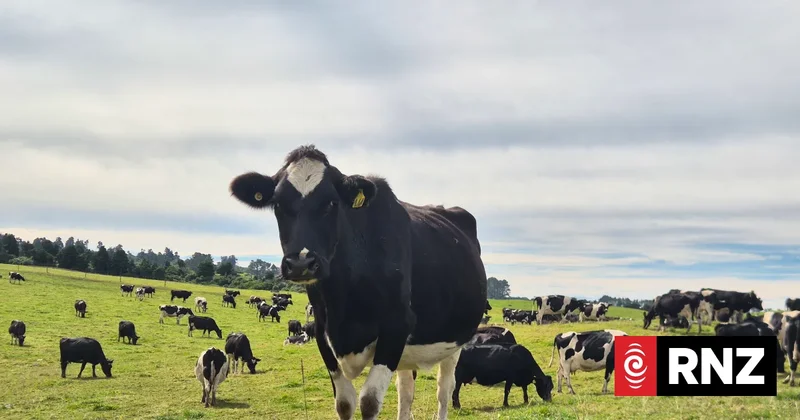
Bordering the national park that surrounds Taranaki Maunga, Crystal Rivers Farm takes its name from the many waterways which radiate out along its paddocks.
It's nestled in a part of the region prone to high rainfall, where big storms can bring over 200 millimetres of rain in just a few days.
As such, it's a hard place to winter dairy cows without running the risk of runoff and paddock sediment making its way into the waterways.
It's why Paul Kuriger made the decision to spend a little more money when buying into the 194-hectare farm and investing in a herd home.
What is a herd home you ask?
Well it's a type of covered shelter used on dairy farms where cows have the freedom to move around and rest in a large open area that has a roof.
"We didn't want to contribute sediment throughout the winter and run off into the streams. We're always looking at winter grazing and winter grazing bills were always going up and up and up," Kuriger said.
"So we thought at the time, we would take an extra $500,000 out, spend that capital on putting a barn on so it could have greater uses than just grazing off-farm as it could be used for calving as well."
The 4400m2 barn can fit up to 400 cows. But with only 360 cows in the herd, that's about 12m2 per cow on a soft bed of wood chips and cows enjoying about 11 kilograms of dry matter - hay or silage - each day.
Kuriger told Country Life it had been a great investment and allowed him to increase milk production by an extra 30,000 kilograms of milk solids each year.
That's because it allows the farm to keep milking for an extra month, with the cows taking shelter and being fed from inside the barn between May and October.
The cows average 11 to 15 full days in the barn over the winter months, but Kuriger prefers they have the freedom to come and go from the shelter to the paddock.
"I've had the cows in here when we've had 8 inches of snow on the ground outside, and I've even opened the gate at the other end of the barn, and all I've had is a cheeky heifer walk out and then spin around and run back inside."
Kuriger said it had also helped cut down feed wastage as it prevents hay and silage being pushed into the ground and not utilised. It means they can save the pasture for when it's needed.
"With the utilisation of the feed in the barn, you're finding in some senses you're actually feeding less because the cows do so well.
"They're contented. They're quite happy in here. They're not battling the elements."
He said the animal welfare benefits had been huge.
In the spring, two weeks before calving starts, he'll move the cows to the shed where they stay until they've calved - offering the best possible start for the newborns.
"[We have] very few calf losses because it's just they're born into a temperature of probably 24, 25 degrees when all the cows are in the barn. So those calves are up and running straight away."
The wood chip base provides another benefit - it's eventually taken out and spread across up to a third of the paddocks on farm as a fertiliser.
All of the farm's waterways have been fully fenced off, and about 36ha are covered in native bush which also helps with ensuring the waters of the farm run crystal clear.
At an existing wetland Kuriger pointed out how the stock set backs had been pushed further out, allowing him to infill the border with more native plants.
He told Country Life these helped to filter water from big rainfall events before it made its way into the stream.
"Before it actually enters the inner half stream, which is right beside it, the water [will] turn a bit brown, and then it will clear itself up a day or so after the event, and the sediment will sit in the pond in the base of the pond, and it keeps returning clear water back to the stream.
"With the bush filtering it, it's a great advantage and it's a great asset for the farm."
Kuriger said it was about regenerating the bush "as best as possible" and looking after it for future generations.