- See more Daily Mail on Google - save us as a Preferred Source
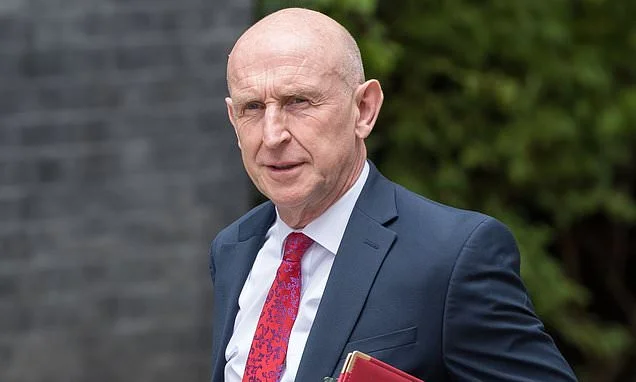
Chancellor John Healey has been left with 'razor thin' financial headroom ahead of his first Budget after figures showed Labour is spending nearly £1billion a day on benefits.
The surge in the cost of welfare and the state pension to £29.5billion last month helped deliver worse than expected borrowing figures yesterday.
It will add to fears that Mr Healey will hike taxes at the Budget in October to pay for Andy Burnham's spending plans.
The Resolution Foundation think-tank believes his 'headroom' against Budget rules has now shrunk from £24billion to less than £8billion.
Borrowing – the shortfall between government spending and its tax income – climbed to £1.8billion in July, up from £1.1billion in the same month a year ago.
Economists had forecast public finances would break even in July – traditionally a bumper month for self-assessment tax receipts.
But while the Government did rake in more taxes, the increase in spending was even bigger.
The rise in borrowing was also driven by higher interest payments on Britain's debt.
The payments climbed by 10 per cent to £7.7billion.
Chancellor John Healey has been left with 'razor thin' financial headroom ahead of his first Budget after figures showed Labour is spending nearly £1billion a day on benefits
The UK debt pile has now swollen to £2.98trillion according to yesterday's figures from the Office for National Statistics (ONS).
Tory shadow chancellor Sir Mel Stride said: 'Labour will just keep tapping the nation's credit card, even with the bailiffs at the door.'
Borrowing for the first four months of the financial year, from April to July, stands at £56.7billion. That is £2.3billion higher than forecast by the Office for Budget Responsibility (OBR) at the time of the previous Chancellor's spring statement in March.
That will narrow the scope for Mr Healey to meet fiscal rules obliging him to bring borrowing and debt levels down. In March, the OBR said the Government had £24billion 'headroom' against meeting the target.
But the worsening borrowing figures, combined with major spending commitments – on council house building, social care reform and defence – have seen this reduced sharply.
In addition, the cost of borrowing on global financial markets has been pushed higher, largely due to the Iran war – which has driven up oil and gas prices, stoking inflation. It adds up to an increasingly difficult run-up to the Budget.
Elliott Christensen, senior economist at the Resolution Foundation, said: 'The Chancellor's margin against his fiscal rules is now razor thin, with the healthy headroom of around £24billion last spring likely to have fallen below £8billion.'
Turmoil on bond markets, which has pushed up yields on UK bonds, known as gilts – adding to the cost of borrowing – over recent days is likely to have shrunk that headroom even further, the think-tank said.
The new figures will add to fears that Mr Healey will hike taxes at the Budget in October to pay for Andy Burnham's spending plans
Martin Beck, chief economist at consultancy WPI Strategy, said: 'The fiscal arithmetic remains extremely tight.
'The Government still faces a familiar trade-off between its policy ambitions, the pressure to maintain market confidence and the need to put the public finances on a sustainable path.
'That means difficult choices on tax, spending and borrowing are still likely at the Autumn Budget.'
Tory business spokesman Andrew Griffith said: 'Labour must slash spending, rather than always reaching for more borrowing.'
Reacting to the figures, the Chancellor sought to assure markets over Labour's commitment to improving public finances. 'Fiscal discipline is the bedrock of our UK economic stability and national security which is why we are committed to meeting our fiscal rules, with a buffer against global uncertainties,' Mr Healey said.
Neil Mehta, from asset manager RBC BlueBay, said: 'Policy pledges to cut VAT on electricity bills, cap bus fares and business rates relief have only added to the spending load.'