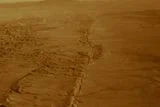
The San Andreas Fault zone stretches about 800 miles along California, including through some of the state’s major cities. It is a strike-slip fault responsible for several of the most destructive earthquakes in the state’s history, and, according to new information from San Jose State University, it is slipping faster than previously thought.
The research, led by Kim Blisniuk, an Associate Professor of Geology at San Jose State University, is still under peer review and has not yet been published in any scientific journal; the researchers believed it was best to raise public awareness.
Read More: Boomerang Earthquakes Don’t Just Move Forward — They Bounce Back
Slip Rates That Stay Constant
During their research, Blisniuk and her team studied the part of the San Andreas Fault that stretched through Sanborn County Park in Santa Clara County, California. In an interview with ABC 7 Bay Area, a local news channel in the San Francisco Bay Area, Blisniuk noted that the slip rate in that area remained consistent with the fault's slip rate in Northern California, rather than slowing over time as predicted.
Slip rates, according to the U.S. Geological Survey (USGS), measure how quickly the two sides of a fault move past each other each year. The Earth’s crust usually shifts only a few millimeters to centimeters per year, according to the USGS, and those movements can lead to building pressure and eventually earthquakes.
These findings could affect how scientists estimate long-term earthquake hazards in the region. In the same interview, Blisniuk explained that people are aware that cities and other infrastructure are built on the fault line and that earthquakes do and will occur there. She also explained that, now that her team has this data, these slip rates aren’t particularly surprising.
What Major Earthquakes Have Happened Along the San Andreas in the Past?
The San Andreas fault zone is no stranger to earthquakes. While seismic activity often occurs along this fault zone, there have been a few major earthquakes in recorded history, some of which have been truly devastating.
One of the most notable earthquakes along the fault zone was the Great 1906 San Francisco earthquake. This earthquake, which occurred on April 18, 1906, is one of the most significant earthquakes of all time, according to the USGS.
At 5:12 a.m. local time, a foreshock ripped through the San Francisco Bay Area, and about 20 seconds later, the full force of the earthquake struck, violently shaking the area. According to the California Department of Conservation, the event measured magnitude 7.9 and ruptured about 270 miles of the San Andreas Fault. The city crumbled, and a large fire broke out. According to the USGS, some reports stated that there were about 700 deaths, but there were likely many more.
Another major earthquake along this fault zone was the 1989 Loma Prieta earthquake. Occurring on October 17, 1989, at 5:04 p.m., the shaking lasted only 20 seconds; however, the 6.9-magnitude earthquake produced thousands of aftershocks, including one measuring magnitude 5.2 and more than 300 measuring magnitude 2.5 or greater. The death toll reached 63 people, though thousands were injured and even more were displaced, according to the California Department of Conservation.
Other major earthquakes have occurred along the fault, and another will likely occur in the future. The best thing to do is to be prepared. Experts recommend assembling an earthquake kit with basic supplies in a to-go bag and staying informed about earthquake safety.
Read More: A Seismic Wave from the 2011 Japan 9.0 Earthquake Shifted the Entire Country — Now We Know Why
Article Sources
Our writers at Discovermagazine.com use peer-reviewed studies and high-quality sources for our articles, and our editors review for scientific accuracy and editorial standards. Review the sources used below for this article:
- This article references information from the USGS: Earthquake Processes and Effects
- This article references information from the USGS: Slip Rate Map
- This article references information from the USGS: The Great 1906 San Francisco Earthquake
- This article references information from the California Department of Conservation: The 1906 Great San Francisco Earthquake
- This article references information from the California Department of Conservation: The 1989 Loma Prieta Earthquake
- This article references information from ABC 7 Bay Area: New research finds San Andreas Fault is slipping faster than previously thought