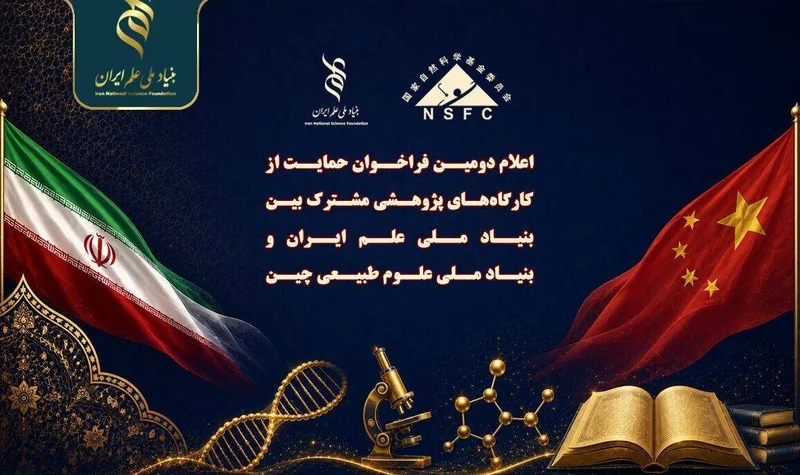
Iran, China to support implementation of joint research projects
TEHRAN – The Iran National Science Foundation (INSF) and the National Natural Science Foundation of China (NSFC) will support the implementation of the second joint specialized workshops with the aim of developing science diplomacy, fostering research networking, and exchanging technical knowledge.
The grant, amounting to 7 billion rials (some $3,700) for each research project for one year, will be allocated to the following fields, IRNA reported.
- Advanced Materials:
Exploration and processing of rare earth elements
Nano-composites for resilient construction materials in earthquake-prone areas
Green synthesis of nanomaterials using biological resources
- Novel Sensors:
Smart nanomaterials for biosensors: early detection of diseases and pathogens
Nanostructured gas sensors for environmental and industrial pollution monitoring
In July, the INSF and the NSFC announced supporting the implementation of 15 research projects by faculty members. The grant, amounting to 50 billion rials (some $26,595) for each research project for at least three years, would be allocated to the following fields, INSF.org reported.
Water and Energy: AI-powered smart irrigation systems for water-scarce and saline environments; Integrated water resource management under drought and climate variability conditions; and Energy-efficient advanced technologies for water treatment and seawater/brackish water desalination.
Energy storage and hydrogen technologies: Renewable energy integration into national grid and distribution networks; Agricultural and medical biotechnology; Genetic improvement of strategic crops for drought, salinity and heat resistance using molecular breeding techniques; Microbial biotechnology for food security: bio-fertilizers, single-cell proteins, and probiotics, biopesticides and biological control; Recombinant drugs and biosimilars: process development, purification, and quality control; and Novel drug delivery systems based on biological origins (nano-carriers, liposomes).
In January, the INSF and the NSFC agreed to cooperate in joint projects in Traditional Medicine and Medicinal Plants:
-
Evidence-based integration and standardization of traditional Chinese and traditional Persian medicine for major diseases; Sustainable medicinal plants: eco-cultivation, biodiversity, and resilience; and the Application of Digital and AI Tools in the Classification, Analysis, and Clinical Research of Traditional Medicine and Medicinal Plants.
-
Energy: Renewable Energy; High-efficiency Utilization of Conventional Energy; Energy-Related Materials; Storage Technologies; and the Application of Artificial Intelligence in the Energy Field.
Supported by the INSF and the NSFC, an Iranian-Chinese workshop was held from November 10 to 12, 2025, focusing on new technologies for decarbonization and the sustainable built environment.
Organized by Sharif Energy, Water, and Environmental Research Institute and Chongqing University, China, the three-day event is being conducted in English, with participants attending the workshop in person and online, IRNA reported.
It was centered around pathways toward a net-zero and decarbonized energy future, sustainable sectors, and carbon efficiency, as well as innovation and digitalization for the energy transition, and the development of climate-resilient and resource-efficient cities.
The workshop served as a valuable step towards expanding scientific ties between the two countries to lower carbon dioxide emissions and develop a sustainable environment.
MT/ MG