India’s Forests, Real and Imagined: Writing the Modern Nation by Alan Johnson is an ambitious work of literary ecocriticism that attempts to trace the figure of the forest across approximately three millennia of Indian literary history. It looks at the ancient Sanskrit epics and Tamil Sangam poetry, proceeds to colonial-era nationalism and progressive realism, and then to contemporary postcolonial fiction and Indigenous writing.
Ecological realities and fictitious constructs
The book has been published by Bloomsbury Academic as part of a series in environmental humanities and literary studies and is the result of years of research supported by a Fulbright-Nehru award alongside extensive institutional backing from Idaho State University. It is undeniable that the book has had an incredible journey fuelled by evident passion and considerable scholarly range, but there are tensions in a humongous project that aims to accomplish so much within a relatively compact frame.
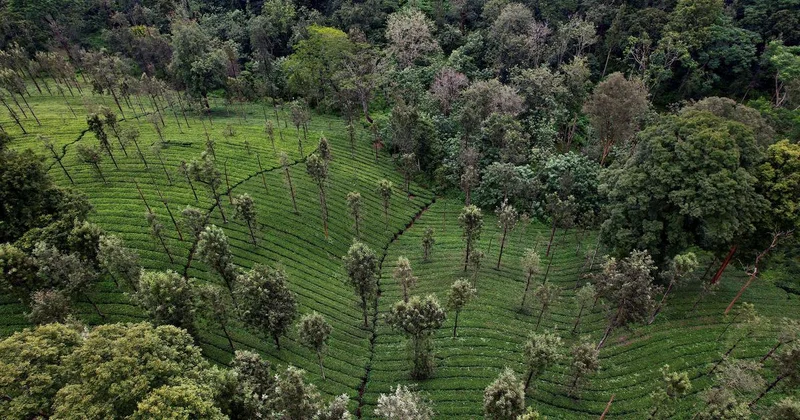
The introduction of the book invites its readers on an aerial survey of the Indian subcontinent as it might have looked, around 3000 years ago. Johnson moves south from Himalayan Oak Valleys to the forests bearing sal, sandalwood, teak, and neem. The legendary Naimisha forest from Sanskrit literature, the Dandakaranya in Valmiki’s Ramayana, the Western Ghats and the mullai forest of Tamil tinai taxonomy all make an appearance in succession. Through this imagined journey, the writer establishes the central argument with brilliant elegance, arguing that the forests have held simultaneous ecological realities and fictitious constructs, with relations between these two blurring to give way to Indian identity, moral philosophy and ultimately, the national imagination. As the book dwells throughout on geography and literary cartography, Johnson welcomes us into the book through the same lens, by a bird’s-eye view that can be seen as literal and metaphorical simultaneously entangled.
Johnson, after the introduction, starts by looking at what can be defined as the earliest and the foundational layer of representation of the forests in Indian literary culture. He engages with the forests mentioned in the Hindu epics, Ramayana and Mahabharata, and the Tamil Sangam landscape typology. Through this, he also engages with the broader philosophical traditions that have presented forests as a space of testing one’s dharma, as a site for ascetics to withdraw from society and for the moral transformation of the self.
The first chapter also includes photographs such as a sadhu in Corbett National Park and an areca nut palm, pointing to Johnson’s interest in the material persistence of the “ancient” associations. Though the arguments on forests in epic literatures functioning as trials for moral kingship have been explored before, what Johnson does is articulate it with clarity and then also connects it to the following chapters that deal with how these embedded cultural patterns were mobilised and transformed to serve modern nationalist projects.
However, there is the underlying risk of anachronism, as reading the Dandakaranya forests or the tinai landscapes as contributors to “writing the modern nations” would require employing a teleological logic that Johnson does not fully interrogate. The poets in ancient times did not compose these texts with the intention of imagining a modern nation-state, and the conceptual tools required to bridge the gap between then and now, such as Anderson’s “imagined communities” among other theoretical frameworks, are gestured by Johnson but could be more rigorously deployed.
After venturing into representations of the forests in ancient epics, Johnson moves toward the colonial era with a relatively firmer treatment of Bankim Chandra Chattopadhyay’s Anandamath (1882), the novel which carried the famous hymn Vande Mataram that eventually became an anthem associated with Indian nationalism. In this treatment, the convergence of forests and the nation, the latter being represented as a maternal body or Bharat Ma, is explicit in the source text as well. The source material, thus, lends quite naturally to Johnson’s arguments.
The “home forests” and the figure of Mother India emerging from Chattopadhyay’s novel are read against the background of colonial forest policies in tandem with the displacement of indigenous communities along with the cultural politics associated with the Bengal Renaissance. It accounts for the writer’s ability to read literary texts in productive dialogue with colonial administrative and environmental history. The argument that Chattopadhyay’s forest is both a refuge from colonial modernity and a womb of national rebirth is compelling, but readers familiar with Tanika Sarkar’s work on Chattopadhyay or Sudipta Kaviraj’s analyses of Bengali nationalism may find Johnson lacking in certain aspects and wanting to carry the conversations forward with deeper engagement.
Towards the late colonial era, Johnson looks at two of Hindi and Bengali literature’s prominent writers, Premchand and Bibhutibhushan Bandopadhyay. While Premchand is usually associated with the criticism of caste and village realism instead of forests, Johnson including him in the conversation is interesting and compelling since he focuses on reading the forest capaciously, as encompassing rural and semi-wild landscapes that exist in tension with both urban modernity and colonial extractivism. On the other hand, Aranyak (1939) by Bandopadhyay is one of the most remarkable forest novels in any language, which is a lyrical and melancholic account of a young Calcutta man’s encounter with the forests and tribal communities of Bihar. This book practically demands ecocritical attention, and Johnson’s engagement with it could be one of the book’s most anticipated sections. However, bringing these two writers into a conversation under the combined umbrella of the progressive era opens the risk of flattening the differences between them, both aesthetic and philosophical.
On the one hand, we are met with the social realism of Premchand and on the other, we have the near-mystical naturalism of Bandopadhyay, each of which has a fundamentally different relationships to landscape as well as narrative. The question that remains is whether one chapter can be sufficient to do justice to both as well as the rich critical traditions that surround each author. Interestingly, Bandopadhyay’s Aranyak alone can provide a sustained book-length treatment with an ecocritical lens owing to the negotiations between “development” and “preservation” or even knowledge among the indigenous communities as opposed to the “modern” system of knowledge.
After taking us through two of the 20th century’s most well-known writers, Johnson turns his attention towards internationally acclaimed postcolonial novelists, Amitav Ghosh and Salman Rushdie. Ghosh has employed a meticulous engagement with the mangroves in the Sundarbans in The Hungry Tide and Rushdie’s enchanted woodland in Shame and the scene in the Sundarbans in Midnight’s Children. Johnson supplies photographs of mangrove trees at tide as well as a figure of Bon Bibi, a guardian spirit of the region, suggesting that he attends to the textual politics along with material dimensions.
The most “politically” urgent section would be his engagement with CK Janu, Mahasweta Devi and Easterine Kire, for which he draws on his recent scholarship. One of Johnson’s most important interventions lies in centring indigenous perspectives alongside the canonical postcolonial authors. Janu is rarely discussed in literary criticism in India or in the West, while Kire’s Naga fiction offers us a fresh perspective that remains in absentia from mainstream postcolonial literary studies. On the other hand, Devi has a wider reach and established position in the critical canon, but Johnson focuses on her fiction set in the forests instead of the more commonly discussed texts, such as Draupadi.
The engagement with the relationship between forest laws and literary representations offers us a glimpse into the most consequential dimension of the forest question in contemporary India. It refers to the ongoing dispossession of forest-dwelling communities through conservation regimes and development projects codified and even legitimised through the Forest Rights Act of 2006. A question that could be raised is the placement of this chapter towards the end, in a chronology that places ancient epics at the beginning followed by colonial nationalism, progressive realism, postcolonial fiction, all the way to indigenous writing. By this, Johnson, knowingly or otherwise, reproduces a familiar developmental narrative that moves from elite textual traditions toward marginalised voices. An alternative structural choice could have been to centre indigenous understandings of forests to either frame the complete study or disrupt the chronology we are familiar with.
Ecological memories
The book concludes by engaging with an interpenetration of urban spaces in Indian modernity which is a provocative framing that looks at the rapid urbanisation of the contemporary nation and how metropolitan cities are being reimagined through their relationship with the ecological memories of displaced ecosystems. The conclusion then, following through the implications of Johnson’s book, can be read as a synthesis which brings the historical sweep in conversation with the environmental realities of contemporary India. The book includes nine photographs, some of which Johnson seems to have taken himself, on his extensive travels in India.
The banyan tree at St Thomas Mount, Chennai, the shola forests of the Palni Hills, a Radha-Krishna painting, a sacred tree in Tezpur in Assam and images of the Sundarbans all materialise the literary analysis in material landscapes. This personal, experiential engagement with the physical environments under consideration lends the book an authenticity and a warmth that sets it apart from the more detached academic treatments. But how do these images function in the argument? It is a question worth asking. Do they receive the same critical attention as literary works, being treated as visual texts in their own right? Or are they mostly atmospheric illustrations, giving a sense of place but not fully integrated into the interpretive framework?
The Radha-Krishna painting, for instance, gestures towards a whole tradition of visual representation of the forest in Indian art that intersects richly with the literary traditions that Johnson discusses, and one wonders if this visual dimension gets the sustained attention that it deserves. At the theoretical level, the book locates itself at the intersection of ecocriticism, postcolonial studies, and Indian literary history, a fecund but difficult place.
Johnson’s connections to ASLE and the broader environmental humanities community are run wide, and his engagement with Indian literary texts in multiple languages (if largely in translation) is a laudable effort to break out of the Anglophone canon that still dominates much postcolonial literary scholarship. It is refreshing to see his honest admission in the last paragraph of his acknowledgements that he approaches many of these texts “in translation, with humility and an acute sense of my own interpretive limitations.” Yet this honesty does not fully satisfy the methodological concern.
Literary ecocriticism that reads Aranyak or Anandamath or Tamil Sangam poetry in English translation is necessarily unable to access the linguistic textures, ecological vocabularies, and cultural resonances of the original languages. The words aranya, vana and kadu are rich in sonic and semantic significance, with different ecological, spiritual and social associations in their respective linguistic traditions – this richness can only be approximated in translation.
A more sustained methodological reflection on the politics and poetics of translation in ecocritical reading would strengthen the book’s theoretical self-awareness, perhaps drawing on the work of scholars such as Gayatri Spivak or GJV Prasad. More generally, one may ask how fully the book engages with some of the most significant recent developments in environmental thought.
Indian forests have been extensively studied by scholars including Madhav Gadgil and Ramachandra Guha in This Fissured Land, Sumit Guha in Environment and Ethnicity in India, Mahesh Rangarajan in his work on wildlife and conservation history and K Sivaramakrishnan in Modern Forests. These works have provided a sound historiographical base for understanding the material transformations of Indian forests under colonialism and postcolonial development. How Johnson has built from this foundation, systematically or selectively, will determine how the book will be received by environmental historians.
On a similar tangent, the rise of “multispecies ethnography,” new material, the plant turn and indigenous environmental philosophy, as investigated by the likes of Kyle Whyte or Zoe Todd and Archana Prasad in the Indian context, has expanded the theoretical tools at the disposal of scholars who find themselves at the intersection of ecology, literature and indigeneity.
While the book has enormous breadth in terms of what it wishes to cover, this can simultaneously be a strength and a weakness, since covering three millennia of literary history across multiple languages and genres within 250 pages would mean that the individual readings have been necessarily compressed. The five chapters look at material that could serve as sustained monographs on their own merits, but what we get instead is a panoramic argument for the centrality of the forest to the imagination of Indian nationalism. Such panoramic arguments have their own virtues, more so when they open paths and draw connections across traditions that are often not brought into conversations with one another, such as Johnson’s juxtaposition of Bibhutibhushan with Valmiki and Bankim with Mahasweta Devi, both provide us with illuminating resonances.
India’s Forests fills a distinct gap in scholarship literature, since there are rarely any texts attempting to envision forests as a literary-political figure on their own merits across a range from the earliest texts to the contemporary moment, which complements anthropology with a sustained literary-critical focus while including indigenous voices providing a welcome expansion of the canon. As we revisit the aerial survey that Johnson takes us ton, we must come to terms with the fact that even if the legendary forests have largely disappeared, literary and political imaginations continue shaping the ways in which forests are contested and defended.
India’s Forests, Real and Imagined: Writing the Modern Nation, Alan G Johnson, Bloomsbury.
We welcome your comments at letters@scroll.in.