At a Cabinet meeting on Wednesday, Union ministers were handed report cards. They were not being assessed for their performance as ministers but on how active and effective they have been on social media.
Each minister was ranked based on an evaluation of their social media presence between May 1 and August 15, a period that includes the nationwide youth protests over the alleged irregularities in competitive exams.
Each minister was compared not just with their Cabinet colleagues, but also against leaders of other political parties on platforms such as Instagram, X and Facebook, according to reports.
The parameters included average number of posts per day, engagement per post, the number of likes, number of followers their accounts have and the overall level of public interactions.
The ministers were told to step up their activities on social media and focus more on expanding their presence online.
Not everyone was impressed by this approach. The Modi government, it seemed, was privileging online engagement over real governance. “The priorities of this government are clear,” one social media user wrote. “It’s mostly about propaganda.”
Ministers have public relations teams to handle their social media accounts. But including their online presence in the matrix to evaluate their performance would incentivise them to spend more time recording vertical videos – presumably to the detriment of the many urgent tasks at hand.
The advisory comes at a crucial juncture for the ruling alliance.
For months, it has been clear that its messaging strategy is not working effectively any longer. In March, it responded with characteristic high-handedness, tightening regulations to exert greater control on news online, as this newsletter pointed out at the time.
But with the youth protests in July, it seems to have decided that these tactics alone were ineffective.
Ordering ministers to focus on their social media feeds was only one of several alterations the Bharatiya Janata Party has made to its publicity strategy in recent weeks.
In July, during a Parliament debate on a bill to amend the paper leaks law, the BJP-led National Democratic Alliance fielded younger MPs to put forward the government’s views. The legislators – some actually in their 40s – used slang popular with Gen Z (those born between the late 1990s and 2010) and or Gen Alpha (born between 2010 and 2024) such as “delulu” (delusional) and made “clock it” gestures, although as social media users pointed out, in the wrong context.
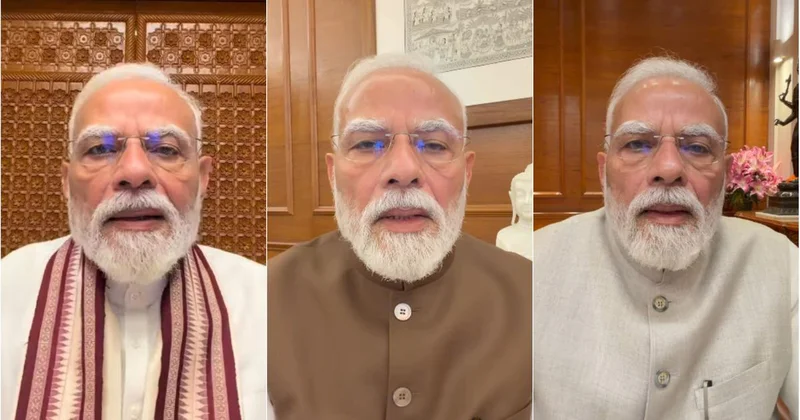
In an effort to connect with Gen Z himself, Prime Minister Narendra Modi in the midst of the youth protests in July turned to vertical videos, optimised for the youth-friendly Instagram platform – repeatedly posting late in the night for a demographic that is reputed to be nocturnal.
His videos were roundly mocked and parodied.
For the first time since 2014, a government that once prided itself on setting the narrative is struggling to stay on top of it.
Here is a summary of last week’s top stories.
Opaque money not spent. The Prime Minister’s Citizen Assistance and Relief in Emergency Situations Fund had a corpus of Rs 8,452 crore by the end of the financial year 2024-’25, showed audit statements. It reported an expenditure of only Rs 87.8 lakh, mainly towards the PM Cares for Children Scheme. This meant that the fund had utilised only 0.01% of the corpus available in the financial year, social activist Anjali Bhardwaj noted.
During the fiscal year, the fund received more than Rs 1,270 crore in domestic and foreign donations, interest on deposits and refunds from implementing agencies. Nearly 93% of the funds available at the end of the financial year had been held as fixed deposits.
The fund was created in March 2020 as the Covid-19 pandemic started with the objective of being a dedicated national corpus to deal with “any kind of emergency or distress situation”. But Opposition parties have raised questions about its transparency and the need to create the new reserve when the Prime Minister’s National Relief Fund already existed.
Organisational changes. Former Union minister Smriti Irani was appointed as one of the Bharatiya Janata Party’s eight national general secretaries, while Amit Malviya was dropped as the chief of the party’s social media department. Ram Madhav, a leader of the BJP’s parent organisation Rashtriya Swayamsevak Sangh, was named as one of its 13 vice presidents.
Union minister Piyush Goyal will replace Rajesh Agarwal as the party treasurer.
This was part of the first major changes in the Hindutva party’s national leadership since Nitin Nabin became the BJP chief in January.
State of the economy. India has replaced Indonesia as Asia’s least-preferred stock market, Bloomberg quoted a Bank of America survey of fund managers as showing. The Indian stock market has been one of the world’s worst performers this year.
The survey of panellists managing $272 billion in assets between them found that 32% were allocating a smaller share of their portfolios to Indian stocks.
Their biggest concern was that there are not enough listed Indian companies with a strong presence in the artificial intelligence sector. Weak economic growth was the second-biggest concern, followed by the lack of policy reforms to improve the business environment in the country and high valuations of the stocks.
Also on Scroll last week
Scrolllast week
- How a bureaucrat has forced Maharashtra’s eateries and other food businesses to clean up their act
- Ayodhya land deals yield rich dividends for relatives of politicians
- How adulterated fairness creams led to a surge of mercury poisoning cases in rural Maharashtra
- For weeks, an Assam district stared at drought. Then it got hit by floods
- Why Gen Alpha protests show India’s official school data is unreliable
- Anand Teltumbde: Why after 80 years, ‘polluting’ touch of a Dalit still needs ‘purifying’
- ‘Dimagi naxals’: The freedom to disagree is a political right – and is economically valuable
- ‘Holy cow, filth and squalor’: Why India was unhappy with its image in Sweden in the 1960s
- ‘1942: A Love Story’ review: A treat for the eye and the ear
- ‘A microcosm that reflects a larger reality’: Why small-town crime works for ‘Vadhandhi’
Follow the Scroll channel on WhatsApp for a curated selection of the news that matters throughout the day, and a round-up of major developments in India and around the world every evening. What you won’t get: spam.
We welcome your comments at letters@scroll.in.