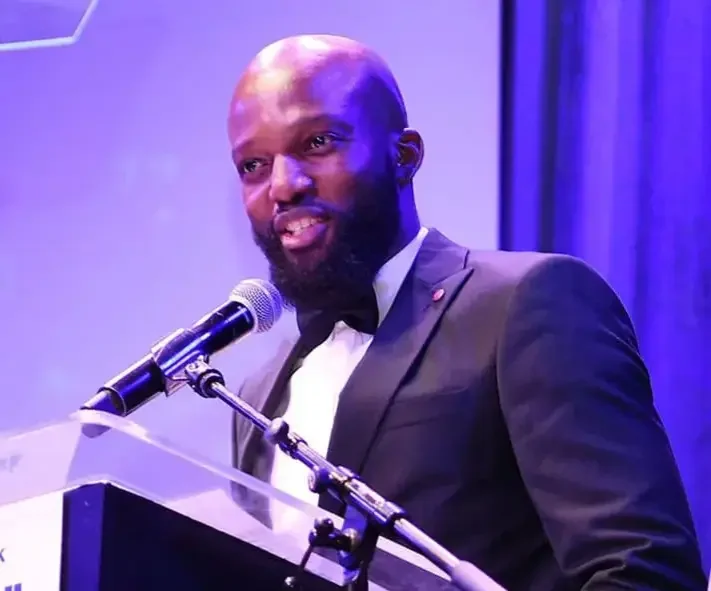
For Clement Manyathela, returning to Hlalakahle High School in Vaalbank is about more than remembering where his journey began. Seventeen years after leaving the school, the broadcaster has returned to a community where he says many of the challenges he faced as a young person continue to affect learners today.
The Clement Manyathela Foundation was launched at Primedia Place in Sandton on Wednesday, with Hlalakahle High as its first school. It will provide psychosocial support, career guidance and mentorship.
The initiative is built around Manyathela's belief that young people should receive support before they reach a crisis point and that rural learners should have access to the same information, networks and opportunities available to young people in better-resourced communities.
Manyathela said his childhood shaped the foundation's focus. Growing up in Vaalbank, he did not have a clear understanding of the different careers available to him or the pathways into higher education. When asked what he wanted to become, he recalled giving the familiar answers of doctor or lawyer because those were professions associated with money and status.
“I threw out random answers like doctor or lawyer simply because people associated them with money or status,” he said.
The lack of information, he said, could have lasting consequences.
Manyathela said some of the young people he grew up with were academically stronger than him but had never pursued higher education because they had not known about available opportunities or financial assistance.
“When I go home, I feel a sense of guilt because peers who were smarter than me didn't pursue higher education, simply because no one told them financial aid existed,” he said.
The problem remains evident among learners at Hlalakahle High.
In a video presented at the launch, grade 11 learner Dineo spoke about her ambition to become a gynaecologist, while another learner said they wanted to study actuarial science because actuaries were in demand and they believed the profession would improve their chances of finding employment.
Their ambitions show that rural learners are thinking seriously about their futures but the school says many do not have enough exposure to understand the range of careers available or what is required to enter them.
Life orientation teacher Ms Makhono said learners often knew only the professions they had heard about since primary school. She called for dedicated career days and professional career counsellors who could introduce learners to different sectors and explain the qualifications and pathways involved.
Manyathela's concern, however, extends beyond whether learners know what they want to become.
He said career decisions could not be separated from the circumstances young people experienced outside the classroom.
Hlalakahle principal TR Phaswana said many parents left Vaalbank to work in Pretoria or Johannesburg and returned only on weekends or at the end of the month, leaving some learners with significant responsibilities at home. Some of them woke up early to chop firewood and heat water before school, while others cared for younger siblings or sick relatives.
Phaswana said teachers had consequently found themselves taking on responsibilities that extended far beyond education, with educators often acting as social workers and counsellors. The school had even packaged leftover food from its feeding scheme for vulnerable families during school holidays.
“We step in as social workers and counsellors,” Phaswana said, highlighting the burden placed on teachers who are not professionally trained to provide psychological or social services.
The foundation plans to address the gap by bringing professional support to schools.
Manyathela said qualified psychologists and counsellors would be deployed to adopted schools, with therapists and mobile units expected to be available at Hlalakahle High two to three days a week for four to six months.
Learners would be able to access one-on-one sessions while teachers would receive training to identify warning signs and refer learners for appropriate support.
He said the foundation also planned to maintain access to counselling through an online telehealth platform after the initial face-to-face intervention.
For Manyathela, psychosocial support is not an additional service that can be considered separately from education because a learner dealing with trauma, poverty or instability might struggle to concentrate in class or think about their future.
“Many struggling learners aren't failing due to a lack of intellect or effort but because they are carrying unaddressed emotional burdens,” he said. “A child who is emotionally overwhelmed cannot digest career advice.”
Deputy Minister of Basic Education Dr Makgabo Reginah Mhaule said the same approach needed to inform how the education system understood learners.
While the government focussed on curriculum, assessments, infrastructure and pass rates, she said those measures did not always reflect what young people were carrying into the classroom. One learner might be worried about food at home while another might be dealing with family violence, anxiety or the absence of supportive adults.
“We cannot educate the mind while ignoring the heart,” Mhaule said.
She identified poverty, substance abuse, teenage pregnancy and social isolation among the challenges facing rural and under-resourced communities. The problems could contribute to poor attendance, declining academic performance and learners dropping out of school.
Mhaule called on the private sector and donors to invest more in rural communities. She said the government could not address the challenges alone and resources should not remain concentrated in urban centres.
Mentorship forms another part of the foundation's approach because Manyathela believes that information alone is not enough. A learner might know that a particular career exists but have no understanding of how to enter the profession or navigate institutions that might feel unfamiliar.
Daniel Mminele, the chairperson of the Nedbank Group Board and keynote speaker at the launch, said successful people could often identify a moment when another person opened a door for them, whether through a teacher, mentor or institution.
“Individual effort is necessary but rarely sufficient on its own,” Mminele said.
He said South Africa did not have a shortage of talent but it did have a shortage of opportunity and access, particularly for young people who were distant from professional networks, career information and role models.
He cautioned that mentorship should not simply reproduce privilege but should widen professional networks so that more young people could access them based on their potential.
Manyathela wants professionals to contribute to that process by volunteering as mentors, participating in rural career expos and creating job-shadowing opportunities. The foundation is also seeking financial support.
Manyathela stressed, however, that human capital was just as important. He wanted young people to meet professionals who could show them what various careers looked like in practice and help them understand how to apply, prepare and navigate spaces they might otherwise never encounter.
The foundation's work will also extend to the school's physical resources. Hlalakahle High is an MST focus school but does not have a properly equipped science laboratory, something Manyathela wants to change.
“We cannot ask children to dream of becoming scientists without giving them the instruments of science,” he said.
For Phaswana, the foundation's partnership with the school also carries a symbolic importance because Manyathela is living evidence that a learner from Hlalakahle can build a successful career beyond Vaalbank. The school has produced doctors, engineers and other professionals who have worked locally and abroad.
The principal said there was considerable potential among the learners in his school.
“To see Clement, a former Hlalakahle learner, return in his personal and professional capacity proves to our learners that their background does not define their destiny,” Phaswana said.
Manyathela joked about being uncomfortable with the attention that came with having his name attached to the foundation, recalling that he had once suggested his 702 radio programme be called the Midday Show instead of The Clement Manyathela Show. But he said he had accepted the visibility because the foundation was not intended to celebrate his achievements. It was intended to make the journey easier for young people who come from the same place as he had.
The launch brought together government representatives, business leaders, educators, media professionals and potential partners.Mhaule said the initiative should not be judged by the launch but by what happened to the young people it supported.
“The success of this foundation will not be measured by tonight's launch but by the lives touched, the young people supported and the restored dreams made possible because someone decided to act rather than criticise from the sidelines,” she said.