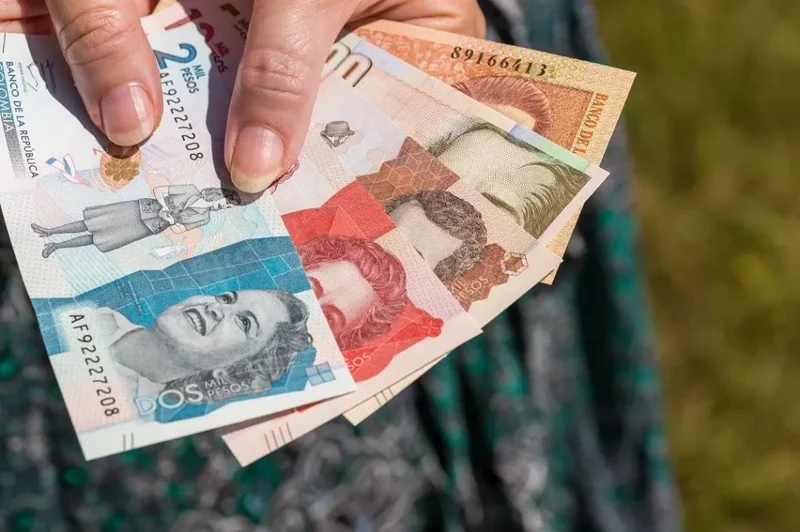
The Colombian Peso Is at a Seven-Year High — What It Does to Your Money
Colombia · MONEY
What the official rate actually did
Colombia’s Tasa Representativa del Mercado, the rate that governs contracts, tax filings and most bank conversions, is 3,048.12 pesos to the dollar for this weekend. It fell 80.53 pesos on the week, a 2.57 percent drop in the dollar, and it is the lowest official rate since 9 October 2018.
Stretch the frame and the move is bigger. On 14 August the TRM was 3,127.51. Nine days later it is 3,048.12. Anyone converting the same dollar salary in both weeks is about 2.5 percent worse off in pesos, having changed nothing about how they work or live.
Three domestic reasons and one foreign one
The domestic case rests on fiscal signalling from the new government. Abelardo De La Espriella’s administration issued a public-spending freeze decree on 7 August and has set out a goal of cutting COP 60 trillion, about US$19.7 billion at today’s rate, from expenditure. It has also floated reopening hydrocarbon exploration to private investment, which markets read as a current-account story rather than an ideological one.
The second is monetary. Banco de la República has held its policy rate at 12.0 percent on a 4–3 vote, one of the highest real rates in the region, and announced a programme to accumulate up to US$4 billion of reserves over two years. High carry attracts money; reserve accumulation is the counterweight the bank has chosen rather than cutting.
The third reason is not Colombian at all. The dollar index touched a three-month low near 98.50 on Thursday and closed Friday just above it, as markets moved back towards pricing Federal Reserve cuts. Every currency in the region gained on the dollar. Colombia gained most, but it was swimming with the tide.
What it costs you, in numbers
Take a US$3,000 monthly transfer, a fair proxy for a remote salary or a pension. At 3,127.51 that bought 9,382,530 pesos. At 3,048.12 it buys 9,144,360. The difference is 238,170 pesos, about US$78 at today’s rate, gone in nine days.
It is not a catastrophe. It is the kind of erosion people notice three months late, when the same basket costs visibly more and the salary has not moved.
What to do about it, which is mostly not to panic
Do not try to time it. The peso has spent 2026 swinging in a wide band, and the same TRM series that shows 3,048 today showed 3,230 on 4 August. Anyone who converted a year of costs on a single strong morning in early August is currently feeling clever, and anyone who did it this week is not.
The dull answer is the right one: split large conversions across the month rather than betting on a date. If you have a fixed peso obligation coming — a rent renewal, a tuition bill, an annual insurance premium — that is the case for converting early rather than late. And if you are holding pesos and planning a dollar purchase, this is the best window you have had since 2018.
What could turn it
Two things. The first is the tax reform, which the government has confirmed for September and has not yet filed. Reporting on 18 August suggests it would leave headline corporate rates alone while stripping exemptions and widening the base of people who must file. A credible fiscal package would support the peso; a bill that stalls in Congress would not.
The second is the reconstruction bill from the August earthquake. Published estimates run from COP 20 trillion to COP 40 trillion, which at today’s rate is about US$6.6 billion to US$13.1 billion, or roughly one to two percent of GDP. The government formalised an economic emergency by decree on 19 August and, as of 21 August, had created no new taxes under it. How reconstruction gets funded is the question the peso will answer next.
Frequently asked questions
What is the Colombian TRM today?
3,048.12 pesos to the dollar, in force from Saturday 22 August to Monday 24 August. It is 80.53 pesos stronger than the previous rate and the lowest official rate since 9 October 2018.
Why has the Colombian peso strengthened so much?
Three domestic factors and one external one: the new government’s public-spending freeze and its COP 60 trillion cutting goal, proposals to reopen hydrocarbon exploration, a central bank holding at 12 percent while accumulating reserves, and a broadly weak dollar with the index at a three-month low.
Is this a good time to convert dollars to pesos?
It is the worst rate for a dollar earner since 2018, and the best for anyone holding pesos and buying dollars. The sensible course either way is to split large conversions across the month rather than trying to time a currency that moved from 3,230 to 3,048 inside three weeks.
Sources
- Banco de la República — TRM series
- El Tiempo — the dollar in Colombia at seven-year lows
- Infobae — what the De La Espriella government faces on the currency and rates
- Colombia.com — dollar price, Saturday 22 August
This article was produced by The Rio Times’ automated newsroom system. How we use AI · Report an error