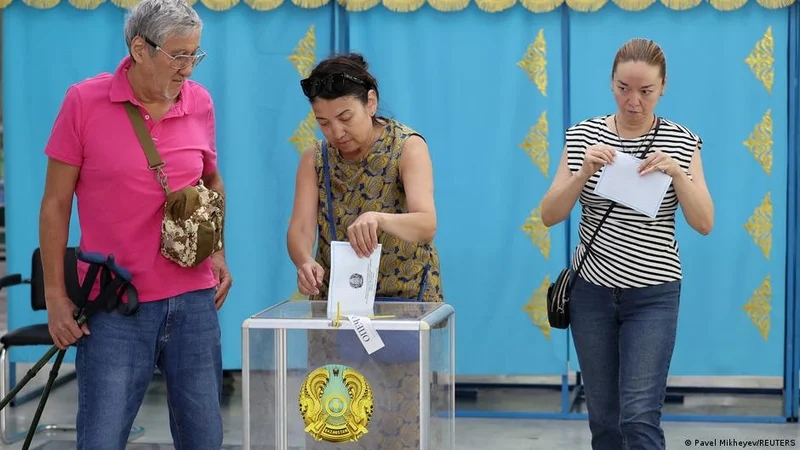
Kazakhstan's 12.3 million eligible voters will elect the Central Asian country's parliament on Sunday.
The polls come after a new constitution approved in March did away with the Senate to create a new unicameral Kurultai — a reference to the medieval councils of the region's nomadic past.
Backers of the new body say it will give parliament more say in decision making, critics argue it will only cement the power of President Kassym-Jomart Tokayev.
The 73-year-old took the reins from authoritarian Nursultan Nazarbayev — who himself ruled the country for 30 years after the collapse of the Soviet Union — in 2019.
The pro-presidential Adilet party is expected to win an overwhelming majority in Sunday's vote, with a number of smaller parties loyal to Tokayev also pegged to enter parliament.
Seven state-approved parties have been allowed to field candidates for the 145-seat parliament while genuine opposition parties have been banned.
The election is taking place amid soaring inflation (which is hovering around 10.2%) and rising taxes, fueling concerns for the government — and particularly Tokayev — of a repeat of January 2022 cost of living unrest that left 238 protesters and police dead.
Press crackdown and financial strain color Kazakhstan's election
Beyond financial strain, Sunday's vote is also taking place against the background of crackdowns on press freedom, with numerous reporters under house arrest and official criminal cases being brought against 10 independent journalists and bloggers.
Tokayev, a former Soviet official and Kazakh diplomat who worked at the UN, has touted his reforms and justified the many changes he has initiated — including the introduction of the new constitution — as necessary in a fast-changing world.
"Without a doubt, these elections will be remembered as perhaps the most interesting in our country's history," said Tokayev on Friday.
"Amid unprecedented geopolitical tensions and mounting global challenges, we must firmly and consistently implement our strategy to transform Kazakhstan into a truly developed state," he added.
Tokayev has sought to maintain a delicate balance between Moscow — with their shared Soviet ties — and the West since sanctions were imposed on Russia over its invasion of Ukraine. Resource-rich and strategically located Kazakhstan also has ties to China and the European Union.
Although Tokayev has said that he has no plans of staying in power beyond his current term, the constitutional reform that 87% of voters backed this March effectively reset term limits for the office — making him eligible to run for another seven-year stint in 2029 should he change his mind.
Edited by: Natalie Muller
If you rely on our team for trusted reporting, please take a moment to select us as your Preferred Source on Google, so you'll always see our verified news first.