Sign up for our free Health Check email to receive exclusive analysis on the week in health
Get our free Health Check email
Get our free Health Check email
Vaccine hesitancy in the U.S. has continued to surge, leading to a spike in measles and other preventable disease. But a new experimental vaccine aims to fight fear of needles and the vaccines themselves - although it’s probably not what you think.
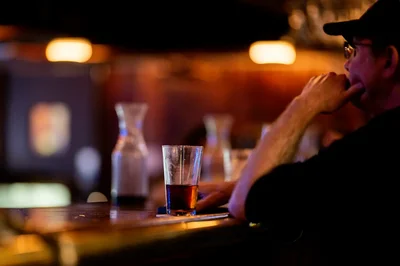
One day, you could get immunized by downing an ice cold beer, according National Cancer Institute virologist Chris Buck. Working independently of the agency, he has brewed a cloudy ale that he says can fight animal-based viruses that are particularly dangerous in people with comprised immune systems.
And drinking the beer made with special “vaccine yeast” has worked on Buck, he says, triggering his immune system’s production of antibodies that defend the body from invading threats.
He has published a non-peer-reviewed research article about his work, as well as an National Institutes of Health-supported study on related impacts in mice.
“I’ve homebrewed beer off and on for 30 years. When I saw that feeding lab mice with engineered brewer’s yeast could induce protective antibody responses against the virus I study, my instant first thought was, ‘well, I can definitely do that at home,’” he explained in a December post on the newsletter site Medium.
Could getting your annual vaccine be as simple as drinking a beer? This virologist hopes so (Getty)
Buck engineered a brewer's yeast, a key ingredient of beer, to produce harmless viral proteins from the brain- and cardiovascular disease-causing polyomavirus known as BK polyomavirus. Much like with the Covid vaccine, the proteins are what trigger the protective antibodies.
“The idea really is to just take living yeast, which are what makes beer, and put a vaccine inside the living yeast. And by doing that, you can actually get the yeast to cause an immune response,” Buck said in an explanatory video on his YouTube channel.
So, why beer?
Well, the yeast is a more effective vehicle for the protein than just consuming pure protein itself. The yeast is able to get the protein past stomach acid so it can break open in the intestine.
“And then the immune system can easily see the protein that has been protected after you take it by mouth,” said Buck.
You don’t need to drink a lot to see the effects, either.
Buck drank one to two pints of the vaccine beer every day for five consecutive days, taking two five-day booster doses five and seven weeks later. There were no significant side effects.
After drinking the beer, blood tests showed that he had produced the antibodies for two kinds of BK polyomavirus that may lead to bladder cancer, Buck told The Times.
This is something that Buck hopes can be applied more widely, and he has launched a non-profit called the Gusteau Research Corporation to develop molecules that enable the production of vaccine beer — and to make and drink his vaccine beer as a private citizen, according to Science News.
It may all sound good — but there are a few caveats.
Critics of vaccine beer worry that it could fuel further anti-vaccine sentiment. Buck says anti-vaxxers he’s talked to are interested in it (PA)
For one, a research ethics committee at the NIH initially told Buck that he couldn’t experiment on himself by drinking the beer.
In February, Buck was reportedly placed on paid administrative leave pending an investigation, according to Science News. The nature of the investigation was unclear and Buck said he intended to file a complaint.
Buck did not immediately respond to The Independent’s requests for comment, but he’s talked pretty openly about the concerns of his colleagues.
He told The Times that he believed the NIH had bounced the application “before it could even be considered” by an institutional review board and wrote in a December newsletter that concerns that vaccines should only be developed under the U.S. Food and Drug Administration approval process overlook that “many foods are known to have drug-like medicinal properties.”
“If something is already in the food supply and doesn’t appear to be causing problems, then the manufacturer can just say, look, it’s generally recognized as safe because it’s already there and we don’t know of any problems,” he told The Times.
Critics worry that the plan could backfire, leading to even greater antivaccine sentiment, and saying it would need much more safety and efficacy testing to roll out.
“Right now, the scientific community has to think about everything it does and answer the question, ‘Is what we’re doing going to cause more distrust amongst the public?” Michael Imperiale, a virologist and emeritus professor at the University of Michigan Medical School, told Science News.
Buck says the anti-vaxxers he’s talked to have seemed interested in vaccine beer.
“From my vantage point, institutional scientists typically put too much faith in institutional authority, while being too casual in their dismissal of all independent scientists as dangerous snake oil salesmen,” he said.
It remains unclear if the risk is worth the reward.
Drinking any alcohol has been tied to a higher risk of cancer and federal data shows more than half of Americans drink alcohol.