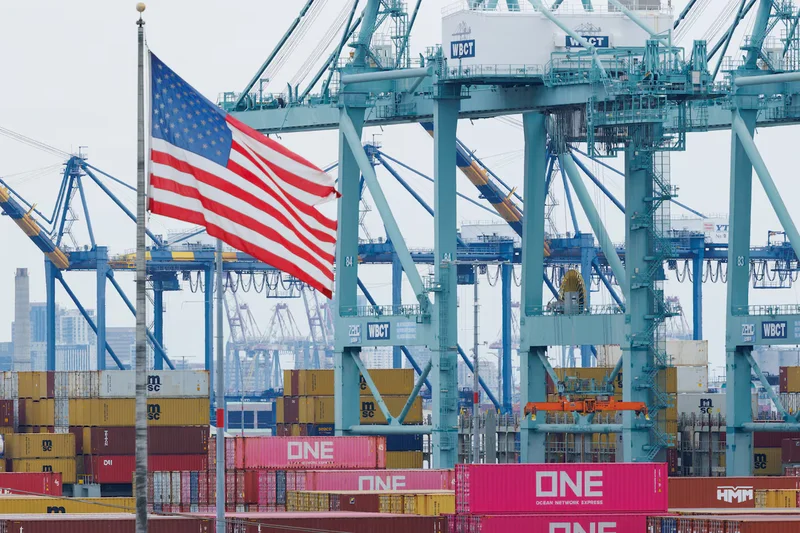
At precisely 6.01am on 24 July, the new US tariff regime was implemented on South Africa. The country was one of 60 similarly affected nations facing the consequences of the US Trade Representative (USTR) investigation findings â the investigation was launched on 12 March, about a fortnight after the US Supreme Court ruled that the previous tariffs under the International Emergency Economic Powers Act (IEEPA) were unconstitutional.
This trade shift occurs alongside other massive US protectionist measures enacted in the same week, including a 50% tariff on Canadian cars, alcohol, and dairy under Section 338 of the Tariff Act of 1930, and further adjustments to Section 232 aluminium tariffs.
Youâd need to look at Section 301 of the US Trade Act of 1974 to find the justification for the new tariffs, and they will be applied in proportion to the estimated value of the goods (read: ad valorem).
Mixed application
That USTR investigation determined that 60 economies failed to effectively prohibit or enforce bans on importing goods produced wholly or in part with forced labour. This failure was deemed an unreasonable burden that restricts US commerce.
To address this, the Trump administration established three tariff tiers:
The 10% club:economies that either impose a forced labour import prohibition but do not yet effectively enforce it; have commitments in reciprocal trade agreements; or have a partial preventive regime in place.
There are 17 countries in this tier: Argentina, Bangladesh, Cambodia, Canada, Ecuador, El Salvador, Guatemala, Honduras, India, Indonesia, Jordan, Malaysia, Mexico, Pakistan, Sri Lanka, the United Kingdom, and Trinidad and Tobago.For reciprocal trade partners (the European Union, Taiwan, Japan, South Korea, and Switzerland), the Section 301 tariffs are capped so that the sum of the standard Most-Favored-Nation (MFN) rate and the new tariff does not exceed 10% (for the EU and Taiwan), or 12.5% if youâre Japan, South Korea, and Switzerland.
The most-favoured nations:
If the standard MFN tariff already meets or exceeds these caps, the Section 301 tariff is zero.all other investigated economies whose failures to prohibit forced labour imports were found actionable. South Africa is subject to this flat 12.5% tariff rate.
The 12.5% crew:
If you were wondering, South Africa is number 48 of the 60 targeted nations, but according to Wandile Sihlobo, chief economist at the Agricultural Business Chamber of South Africa (Agbiz), we were lobbying the US trade authorities.
âThe South African government, private sector, and organised agriculture made submissions to the U.S. authorities against this rise in tariffs. But that message and clarification didnât find a fertile ear,â Sihlobo wrote in a statement shared with Daily Maverick. Sihlobo is also South Africaâs Presidential Envoy on Agriculture and Land.
A look in the rearview mirror
Although we do not like to acknowledge it in the current political climate, the US is a crucial market, accounting for close to 4% of South Africaâs $15.1 billion agricultural exports in 2025; with the main trade being in citrus, berries, grapes, wine, fruit juices, apples, pears, apricots, and nuts.
In the 2025 Trump tariff season, South African exporters faced a steep 30% charge (history will remember it as the Liberation Day Tariffs). During Q2 2025, exporters took advantage of a 90-day pause on these higher tariffs to pump volumes to the US. Once the pause ended, agricultural exports cooled in Q3 2025 by 11% year-on-year (to $144 million) and fell sharply in Q4 2025 by 39% year-on-year (to $81 million).
But despite that year-end drop, annual exports to the US in 2025 totalled $504 million, which was a minor 3% decline from 2024 â because of the cushion from that Q2 volume surge.
Itâs from this perspective that Sihlobo issued his statement acknowledging that while the 12.5% rate is undesirable, it represents a substantial improvement over the previous 30% tariff and keeps South Africa on a level playing field with its direct agricultural competitors.
âImportantly, the US has raised the tariffs for a range of countries, including some of South Africaâs agricultural competitors, such as Australia, Peru and Chile, who are also at these levels.â
Exceptions to the rule
There are, of course, a few exceptions to this new sweep of import price increases for the US customers. All goods loaded before the implementation deadline, for instance, are exempt.
If you read the Presidential Memorandum, it outlines five core justifications for exempting specific goods from the Section 301 tariffs.
The evaluations are, allegedly, based on the economic needs of the United States:
- Raw materialsthat could face domestic supply unavailability if tariffed.
- Productsthat would trigger economy-wide disruptions.
- Productsthat cannot be grown or produced in sufficient quantities or reasonable prices in the US.
- Partner country incentivesto encourage trade partners to enact/enforce forced labour bans.
- Inefficacywhere tariffs would not contribute substantially to eliminating the actionable trade policies.
And when you dig into the annexure, specifically under the modifications to subchapter III of chapter 99 of the Harmonised Tariff Schedule of the United States, there are a few interesting further exemptions.
Subheading 9903.05.86 (Specific Agricultural Goods) is a big win for agriculture. Crucially for South Africa, oranges, fruit juices, and nuts are completely exempt from the tariffs. And it also covers select fresh/chilled beef, potatoes, and onions.
But subheading 9903.05.90 may also make our local producers smile. The Industrial & Strategic Materials section covers articles of aluminium, steel, copper, passenger vehicles (sedans, SUVs, minivans), light/medium/heavy trucks (read: bakkies), wood products, and semiconductors.
We cannot yet know how long these tariffs will remain lawful, and how it will be applied against our economy. But at least South Africa has faced worse, and more unexpected tariffs before.
Itâs the second movie (publications, films, posters, microfilms, compact disks, CD-ROMs, artwork, and news wire feeds are also on the exemption list, btw) in this series and we already know the directorâs vision. DM