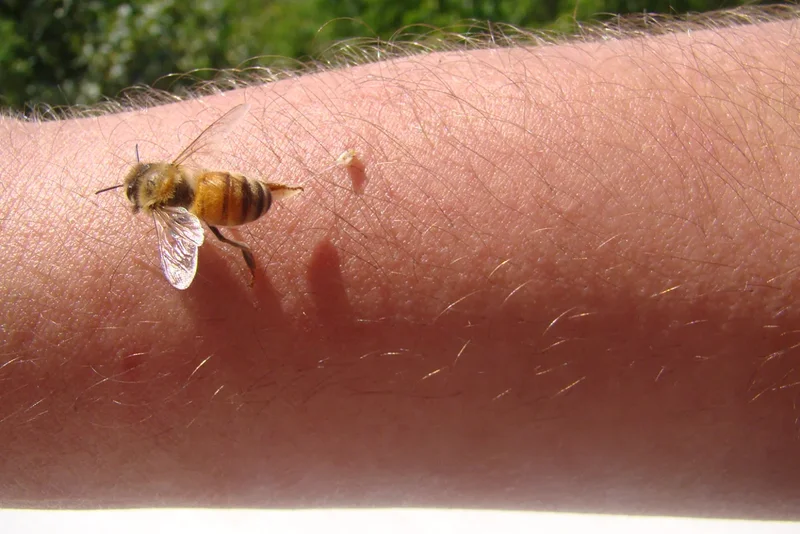
A woman has shared why she turned to bee venom therapy as a last resort to treat her debilitating Lyme disease symptoms.
Savannah Spoor, 23, began experiencing chronic symptoms from Lyme disease – an illness caused by borrelia bacteria carried by ticks – during her freshman year of college in 2021. Lyme disease is typically treated with antibiotics if the tick bite is acted upon quickly, but many patients have long-lasting symptoms.
Spoor’s list of symptoms included dizziness, headaches, nausea, joint pain, numbness, difficulty recalling words and changes to her vision and hearing. They then worsened to the point that she could no longer walk steadily, drive, attend class or participate in everyday activities.
In a new interview with People, the content creator from Seattle revealed that she has resorted to stinging herself with bee venom after exhausting other treatment options.
“I couldn’t travel, couldn’t go out to dinner and, at my worst, didn’t even feel comfortable sleeping alone,” she told the outlet. “My experience was worlds away from my peers. I don’t even think most of them could comprehend what I was going through or the depths of the suffering I was experiencing.”
Spoor had heard about bee venom treatment on social media and enrolled in a bee venom therapy program, in the hope that it would provide her with the support and guidance she needed to begin.
She began with one sting on her lower back and gradually increased the number until reaching 10 per session. Now, she administers 10 stings three times a week, for a total of 30 stings.
Before the treatment, Spoor spent months preparing her body for the increased exposure to the venom, acknowledging that she was relying on an animal that many people are allergic to.
“I’m aware of the risk of anaphylaxis and other dangerous complications,” she said. “I always sting with an EpiPen with me. It’s something I’ve educated myself on extensively and continue to approach with caution every step of the way.”
“It’s painful, uncomfortable and no small feat,” she added. “There’s a saying that ‘bee venom therapy doesn’t hurt as much as Lyme does.’”
Today, Spoor credits her alleviated symptoms to her new treatment. She told the outlet that she can now take long walks, hike and run. She also said her pain has subsided and her dizziness is now rare.
“My capacity to work, travel and be creative is back,” she said.
Spoor now documents her journey online to raise awareness of alternative treatments for Lyme disease. Her most-watched post has amassed 56 million views.
To keep up with her treatment, Spoor receives the bees from a family who operates an apiary in South Carolina.
She said that purchasing the bees provides beekeepers with an additional source of income to help them maintain their hives and support local pollinators.
“Any bees I don’t use, I release into nature, and the dead bees that I have used, I return to the earth,” she said.
While an unconventional treatment option, bee venom is an ancient remedy that can be traced back to East Asia.
In Chinese traditional medicine, scorpion venom is recognized as a miracle medicine, used to treat everything from eczema to epilepsy.
A 2017 study from researchers at the University of New Haven found that whole bee venom or melittin could be effective antimicrobial agents for the bacteria that cause Lyme disease.