IMAX vs IMAX 70mm: The difference between these two cinema formats
The viewing experience is very different — if you're in the right theater.
You've likely heard, ad nauseum even, that Christopher Nolan's epic The Odyssey is the first feature film fully shot in the awesome IMAX 70mm film format. With all that publicity, many cinema fans want to see it projected that way as well. However, they may get confused, as The Odyssey is available in both IMAX 70mm film and the IMAX digital format. Both are excellent, but one is definitely a bit better. Let's break down the differences between these two formats.
To understand IMAX, it helps to know how movies are captured in the first place. Many are shot digitally, as it's cheaper and more convenient than using film. However, many filmmakers still want, well, film. Most use the 35mm format, but some big-budget projects like Oppenheimer, Nope, Tenet and No Time to Die are shot in whole or in part on 70mm film, aka Super Panavision 70mm (more about that shortly). And then there's the king of film formats, IMAX 70mm, used in blockbusters like The Odyssey, Dune: Part 3 and Sinners.
IMAX 70mm film: The best theatrical experience
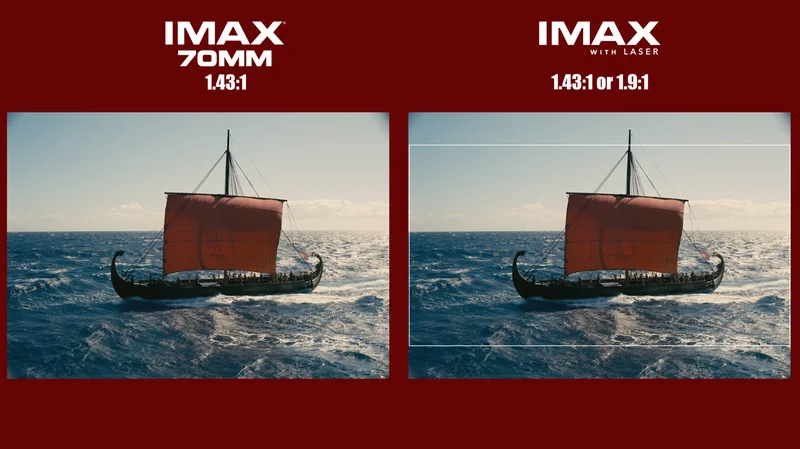
The best possible spectator experience is watching a movie shot on IMAX 70mm film and projected from an IMAX 70mm film print. With its square 1.43:1 format and 69.8 x 48.5mm frame size, IMAX 70mm (also known as IMAX 15/70 due to the 15 sprocket holes per frame) is projected horizontally on colossal 59 x 79-foot screens to fill your field of vision in all directions.
The extra resolution, up to 18K equivalent, means that images are pin sharp, even on that huge screen. The projection is bright as well, thanks to the use of single or even dual 15kW water-cooled xenon bulbs — up to 7.5 times brighter than the ones you'll find in regular theaters. All of that technology makes IMAX 70mm more immersive than any other format.
However, there are only around 24 such theaters in the US, nine in Canada and six elsewhere around the world. The other challenge is that only one feature film has been fully shot on IMAX (The Odyssey, of course). This comes down to cost. The Odyssey production cost was $250 million and required a special new camera system to reduce noise and allow dialog to be filmed. On top of that, each IMAX 70mm projection print reportedly cost around $80,000.
Your next best bet is seeing a film shot using a mix of IMAX 70mm and Super Panavision 70mm film, then projected in an IMAX 70mm theater. That still offers the full IMAX scale, brightness and 1.43:1 projection on those same large screens. However, those films lack the full resolution of true IMAX in some scenes and won't look as sharp. Films in that category are more common but still pretty rare and include Oppenheimer, Tenet, Dune Part 3 and Sinners.
Films shot on digital or 35mm, then upscaled, transferred and projected on IMAX 70mm film are a further step down. That process results in another drop in sharpness, though you retain the immersive 1.43:1 aspect ratio, colossal screen size and awesome brightness. Many recent films fit that bill, including Barbie and Project Hail Mary, both shot on Arri Alexa 65 digital cameras and screened on IMAX 70mm at select theaters.
IMAX With Laser: not as sharp, but brighter
If you have no IMAX 70mm film theaters in your area, digital IMAX (also known as IMAX with Laser) is a small step down. All of those theaters max out at 4K resolution, around a quarter of the IMAX 70mm film format. Plus, only a handful of digital IMAX cinemas in North America can play the taller 1.43:1 aspect ratio, so you won't get as sharp or grand an experience.
With that said, digital IMAX is still superior to most movie theater experiences. The 4K resolution is much sharper than typical 2K DCI theater projection systems. The best format, IMAX with Laser at a 1.43:1 aspect ratio, uses the GT Laser dual projector system that offers incredible clarity. Brightness and contrast are actually superior to IMAX 70mm film, thanks to the laser system's light-emitting power and ability to completely turn off pixels.
Once again, the problem with the 1.43:1 GT laser system is scarcity, with just 12 or so such theaters in North America. The next best option is IMAX 4K Laser at the wider 1.90:1 aspect ratio. That uses several laser projector systems, with the brightest and sharpest being GT Laser with dual projectors, offering the same excellent brightness and contrast as the 1.43:1 system. The other IMAX 1.9:1 options are the single-projector CoLa and XT systems with reduced brightness and sharpness, though still a superior viewing experience to regular 35mm or 2K digital projections. There are many more of those, with around 100 in the US.
As with IMAX 70mm, the best way to see digital IMAX is on films shot on IMAX 70mm or regular 70mm film for maximum sharpness and immersion. Films shot on 35mm film or digital formats will look a bit less sharp, though other qualities like brightness and contrast will be unchanged.
What about standard 70mm projection?
Standard 70mm film, also known as Super Panavision 5/70, is another good option that's superior to a regular cinema experience. The frame size is nearly double the width of regular 35mm movie film. However, with a height of just 22.09mm, Panavision 5/70 has a much wider 2.2:1 aspect.
Resolution is a third that of IMAX 70mm, but still much higher than 35mm film and sharper than most digital formats. 70mm film prints are often struck directly from 70mm or IMAX negatives (optically and not digitally), so the image quality and resolution are second best after IMAX 70mm. However, the picture is cropped significantly, so you'll be missing out on detail and the immersion factor available only with the true IMAX 70mm format.
With all that in mind, you should be able to find an IMAX or 70mm theater in your area that gives you the best way to watch The Odyssey and other films worthy of the extra grandeur. To suss those out, check your local listings to find a showing, then double-check that they're indeed available in your preferred format.