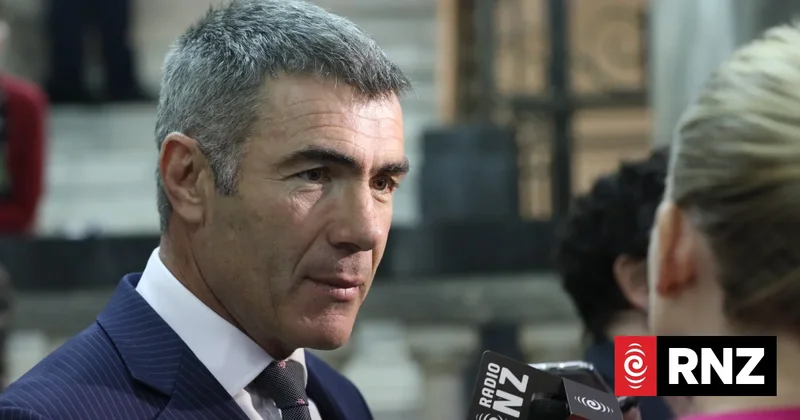
New Zealand's special agricultural trade envoy says new tariffs imposed by the United States could be challenged in the United States' courts.
The Trump administration has imposed a 12.5 percent tariff on most exports, replacing the current 10 percent one.
Former government minister Nathan Guy, also chair of the Meat Industry Association, said exporters across the board are bracing for more uncertainty.
"The Liberation Day tariffs last year, they were repealed through the Supreme Court. Refunds as a result have been flowing back to exporters, and these new tariffs could well be challenged through the courts over there as well."
Guy said the administration had decided to launch trade investigations ahead of the tariff announcements, which were considered due process, and could be harder to challenge.
US trade representative Jamieson Greer had claimed the new tariffs were designed to combat imports made with forced labour.Guy rejected this, saying a lot of information was provided through the Ministry of Trade and Foreign Affairs on the supply chains of all exporters.
He could "hand on heart" say there was no forced labour in supply chains here, but ultimately "our voices weren't heard".
Guy said he could not tell whether the administration would follow through on tariff threats, during his meetings in Washington.
"The summary that I took away, if anyone knows or can predict, has a crystal ball at the end of their bed or on their shelf in their office and knows what is going to happen next, then they're telling porkies. No one knows.
"We worry about this ... We thought something could be going to happen from this forced labour investigation. And obviously it has."
One positive was that the seed industry and animal feeds have had a tariff reduction which could equate to $100 million for those industries, he said.
In terms of the red meat industry, Guy said there was still strong demand for sheep meat in the United States.
"Certainly the value we get for the mid-loin cuts for the US is very significant. So any tariff just distorts trade, it impacts on consumer demand, it whacks them in the back-pocket so we say it's completely unnecessary and we're very disappointed."
The Dairy Association of New Zealand agreed.
Executive director Kimberly Crewther said the new tariff disadvantaged New Zealand dairy exports, compared to competitors like the European Union and Australia.
Crewther said she was disappointed exemption requests from US customers of dairy protein ingredients were declined. The products are used in specialised nutrition and not produced in sufficient quantities in the US, she said.
She said there had been no finding of forced labour in dairy supply chains.