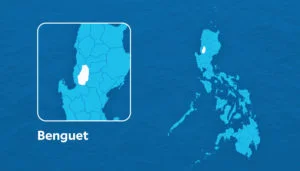
Benguet town suspends school uniform rule as dengue cases rise
BAGUIO CITY — Public school students in Benguet’s capital town of La Trinidad will no longer be required to wear their standard school uniforms for the next month after Mayor Roderick Awingan issued an executive order aimed at reducing the risk of dengue infections amid a rise in cases in the municipality.
Awingan signed Executive Order No. 102, Series of 2026, on Thursday, July 23, temporarily suspending the mandatory wearing of standard uniforms in all public elementary, secondary and senior high schools.
The order also institutionalizes the Department of Health’s (DOH) “4S” dengue prevention strategy and mandates all barangays and schools to intensify mosquito control efforts.
Article continues after this advertisement
Awingan said the measure was based on municipal health data showing 95 dengue cases were recorded inthe town from January to July this year, highlighting the continuing threat posed by the mosquito-borne disease, particularly to school-aged children.
The executive order noted that conventional school uniforms, including short-sleeved shirts, skirts and clothing made of thin fabric, leave students more vulnerable to bites from Aedes aegypti and Aedes albopictus, the primary mosquitoes that transmit dengue.
In place of the standard uniform, students are encouraged to wear long-sleeved shirts, full-length pants or slacks, high socks and closed shoes to reduce skin exposure during school hours.
The order also prohibits schools from denying students entry to campuses, classes or examinations for not wearing the prescribed uniform, provided their clothing remains clean, neat and appropriate for educational settings.
Article continues after this advertisement
Private educational institutions were not covered by the order but were strongly encouraged to adopt similar flexible dress policies during the implementation period.
Aside from the temporary dress code, the executive order requires all barangays, public and private schools, municipal departments and health facilities to adopt the DOH’s 4S Strategy, which promotes the search and destruction of mosquito breeding sites, self-protection measures, early medical consultation for dengue symptoms, and avoiding indiscriminate fogging.
Article continues after this advertisement
Barangay officials, Barangay Health Workers (BHWs) and Barangay Health Emergency Response Teams (BHERTs) in all 16 barangays have been directed to conduct weekly community “Search and Destroy” or Oplan Taob clean-up drives.
Priority areas include drainage canals, public markets, plazas, vacant lots, construction sites and residential communities where stagnant water may serve as breeding grounds for mosquitoes.
Schools, meanwhile, have been instructed to organize regular sanitation and inspection drives under the “Aksyon Barangay/Paaralan Kontra Dengue” campaign, with particular attention given to elevated water storage facilities, roof gutters, garden planters, handwashing stations and perimeter drainage systems.
The Municipal Health Office will lead monitoring and vector surveillance, provide technical guidance, distribute larvicides and oversee dengue risk reporting. The Department of Education will supervise compliance in public schools, while the Municipal Disaster Risk Reduction and Management Office will provide logistical, technical and operational support for large-scale clean-up activities.
Barangays and schools are also required to submit weekly accomplishment reports detailing their clean-up drives and the mosquito breeding sites they identified to the Municipal Health Office.
Funding for the implementation of the order will come from the Local Disaster Risk Reduction and Management Fund, barangay development funds and regular local health program allocations, subject to existing government accounting and auditing rules.
The executive order took effect immediately upon signing and will remain in force for one month, unless extended, modified or revoked earlier based on health surveillance data and vector control evaluations. ** — Maureen Matayew/Contributor** /das