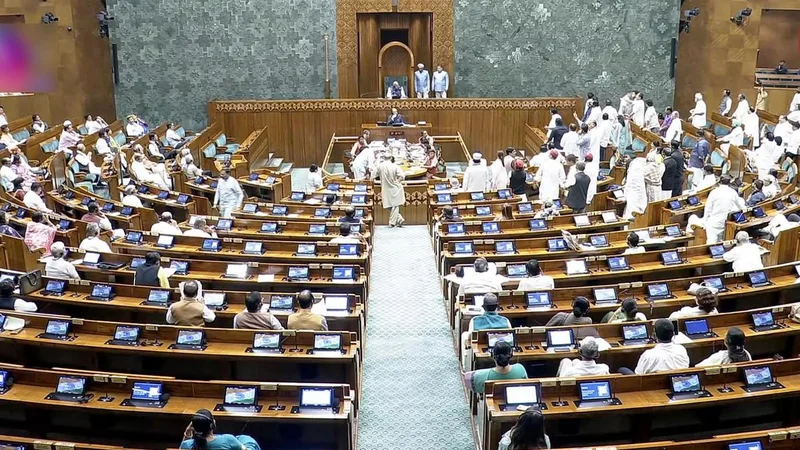
In a move to strengthen the anti-cheating law, the Union Government has proposed The Public Examinations (Prevention of Unfair Means) Amendment Bill, 2026, a copy of which was circulated among members of Parliament on Saturday (July 25, 2026).
The Centre is likely to introduce the bill in the Parliament on Monday (July 27, 2026).
The proposed legislation significantly toughens the penalties established under the 2024 Act, introduces mandatory two-month investigation deadlines, along with designated Special Fast Track Courts, and steep financial penalties reaching up to ₹10 crore for organised crime networks.
Maximum imprisonment sentences for individual and institutional offenders have been increased, alongside a steep hike in financial penalties, according to the proposed bill.
Specialized Enforcement Units enable the Central Government to constitute dedicated Special Task Forces (STF) to take exclusive charge of investigation efforts.
All investigations — whether conducted by local police, Central Investigating Agencies, or an STF — must be concluded within 60 days.
State Governments and UT Administrations will designate Sessions Courts to conduct trials on a continuous, day-to-day basis.
Trials must wrap up within three months of the chargesheet being filed. High Court appeals will be heard by a Division Bench (two judges) and must also be resolved within a three-month period.
The 2026 Amendment Bill significantly escalates the cost of committing or facilitating exam malpractices:
To address prolonged legal delays, the Bill introduces Sections 12A and 12B, establishing an uninterrupted procedural pipeline.
Courts cannot grant adjournments beyond the following day without writing explicit, exceptional reasons. All ongoing cases under the 2024 Act will immediately transfer to the newly designated Special Fast Track Courts and must be completed within three months of transfer.
States and Union Territories are mandated to appoint Special Public Prosecutors under the Bharatiya Nagarik Suraksha Sanhita (BNSS), 2023 to handle these trials exclusively.
Appeals against bail orders, judgments, or sentences must be filed within 30 days (with a strict absolute ceiling of 90 days for special delays) and will be adjudicated by a two-judge High Court bench.
Recent incidents of paper leaks and malpractices have necessitated urgent structural overhauls to safeguard transparent and merit-based selections.
“The objective of the Act is to bring greater transparency, fairness, and credibility, and to inspire confidence in the public examination system,” noted Dr. Jitendra Singh. “The amendments ensure time-bound investigations, speedy trials, and enhanced deterrence against organized crime groups and institutions.”
Published - July 25, 2026 02:11 pm IST