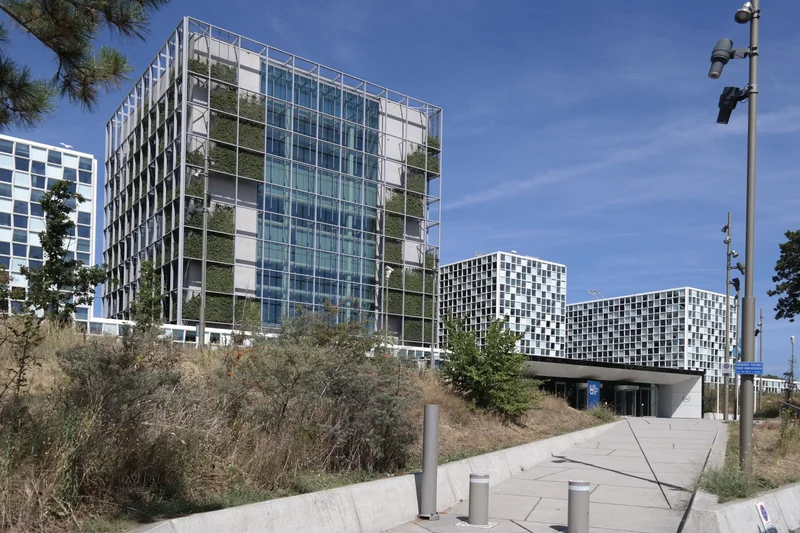
Venezuela Quits ICC, But UN Faces Crimes Against Humanity Probe
Venezuela · Politics
Venezuela has formally triggered the Venezuela ICC withdrawal process, notifying the United Nations of its decision to leave the International Criminal Court on July 24, 2026. The announcement, made by Foreign Minister Félix Plasencia, comes as the Hague-based court continues its formal investigation into alleged crimes against humanity committed by Venezuelan security forces and pro-government individuals since at least 2017.
Venezuela ICC Withdrawal: The Announcement
Foreign Minister Félix Plasencia declared the move irrevocable during a televised statement on July 24, 2026, confirming that a formal notification had been delivered to the United Nations Secretary-General. Acting President Delcy Rodríguez reinforced the message, asserting that the ICC had been instrumentalized as a political weapon against the Venezuelan state.
The government’s central argument rests on an accusation of geographical bias. Officials claim the ICC disproportionately targets nations in the Global South, particularly in Africa and Latin America, while ignoring alleged crimes committed by powerful Western states. This framing aligns with a broader diplomatic narrative pushed by the administration of President Nicolás Maduro, which portrays international legal scrutiny as a form of neocolonial interference.
What Withdrawal Legally Changes – and What It Does Not
Under the Rome Statute, the founding treaty of the ICC, a member state cannot exit the court instantly. Article 127 mandates a waiting period of one full year after the UN receives official notification before a withdrawal becomes legally effective. For Venezuela, this means the country remains a state party to the Rome Statute until at least late July 2027.
Crucially, the withdrawal does not erase the court’s jurisdiction over past conduct. The ICC retains full legal authority to investigate and prosecute crimes allegedly committed while Venezuela was a member. Since the court’s probe focuses on acts dating back to 2017, the withdrawal has no immediate impact on the admissibility of evidence or the legal basis for potential arrest warrants.
The practical effect is primarily political and logistical. A finalized withdrawal would end Venezuela’s legal obligation to cooperate with the court, including any duty to arrest and surrender suspects on its territory. However, the ICC could still pursue suspects if they travel abroad, relying on the cooperation of other member states to execute warrants.
The ICC Investigation: A Timeline of Deteriorating Cooperation
The ICC’s involvement in Venezuela began with a preliminary examination. In 2020, then-Prosecutor Fatou Bensouda concluded there was a reasonable basis to believe that civilian officials, members of the armed forces, and pro-government individuals had committed crimes against humanity. The alleged acts included imprisonment, torture, rape, and persecution of political opponents since at least 2017.
Her successor, Prosecutor Karim Khan, elevated the examination to a formal investigation in 2021. The probe, known as Venezuela I, focuses on state-perpetrated violence. The Venezuelan government initially engaged with the court, seeking to demonstrate that its national judicial system was capable of handling any credible allegations, a principle known as complementarity.
That engagement collapsed. In January 2025, the ICC closed its Caracas field office, citing a complete lack of cooperation from Venezuelan authorities. The office closure signaled a terminal breakdown in relations and foreshadowed the formal withdrawal announcement. The investigation continues from The Hague, relying on testimony from exiles, victims, and civil society organizations.
Political Context and International Reactions
The withdrawal announcement coincided with a separate institutional crisis at the ICC. On the same day, the court’s member states voted to dismiss Prosecutor Karim Khan over sexual misconduct allegations. While legally distinct from the Venezuela file, the timing allowed Maduro’s government to argue the court was in disarray and lacked moral authority.
International reaction split along predictable lines. Opposition figures within Venezuela and human rights organizations condemned the move as an attempt to evade accountability. They argue the withdrawal confirms the government’s fear of independent judicial scrutiny. The Reuters report noted the absence of a unified opposition statement but highlighted that critics view the exit as an admission of guilt.
Venezuela now joins a small group of nations that have abandoned the permanent war crimes tribunal. Burundi withdrew in 2017, followed by the Philippines in 2019. More recently, Burkina Faso, Mali, and Niger announced plans to leave, framing their exits similarly as resistance to Western-dominated institutions. None of these withdrawals halted ongoing investigations into past conduct.
What Happens Next for the Venezuela Probe
The investigation enters a new phase where the prosecutor’s office must operate without any expectation of on-the-ground cooperation from Caracas. The ICC can still issue arrest warrants under seal, a tactic used in other non-cooperative situations. Any sealed warrant would only become public if a suspect traveled to a member state willing to make the arrest.
The one-year countdown creates a window for diplomatic pressure. Member states could urge Venezuela to reverse its decision before the withdrawal finalizes in 2027. South Africa attempted to withdraw in 2016 but reversed course after a domestic court ruling. No such judicial obstacle exists in Venezuela, where the Supreme Court is loyal to the executive branch.
For foreign investors and expatriates monitoring political risk in Latin America, the withdrawal reinforces a pattern of institutional isolation. Venezuela already faces sanctions from the United States, the European Union, and other jurisdictions over democratic backsliding and human rights abuses. The ICC exit adds a layer of legal opacity, signaling that the state intends to operate beyond the reach of international criminal law.
A Broader Challenge to International Justice
The Venezuela ICC withdrawal represents more than a bilateral dispute between Caracas and The Hague. It tests the resilience of the international justice system when a target state refuses to participate. The court has no police force and relies entirely on state cooperation. If powerful nations do not enforce its warrants, the deterrent effect of the Rome Statute weakens.
Legal experts note that the ICC’s jurisdiction over past crimes is ironclad under treaty law. The real question is enforcement. The court successfully prosecuted cases without state cooperation before, but the process is slow and politically fraught. For victims of alleged crimes against humanity in Venezuela, the withdrawal changes little in the short term. The investigation continues, but the path to a courtroom in The Hague grows longer and more uncertain.
Frequently Asked Questions
Does Venezuela’s withdrawal immediately stop the ICC investigation?
No. The withdrawal takes one year to become effective under the Rome Statute. Even after that, the ICC retains jurisdiction over all alleged crimes committed while Venezuela was a member state, including acts dating back to 2017.
Why did Venezuela decide to leave the International Criminal Court?
The government of Nicolás Maduro claims the ICC applies geographical bias, disproportionately targeting nations in the Global South. Officials argue the court serves as a political tool for Western powers rather than an impartial judicial body.
Can the ICC still issue arrest warrants for Venezuelan officials?
Yes. The court can issue sealed or public arrest warrants at any time. If a suspect travels to a country that remains an ICC member, that state would be obligated to arrest and surrender the individual to The Hague.