Fixing a problem inside one of the world's most sophisticated scientific observatories might seem like the kind of challenge that demands a multimillion-dollar upgrade or revolutionary new technology.
But for scientists working on the Laser Interferometer Gravitational-Wave Observatory (LIGO), which listens for ripples in spacetime generated by cosmic collisions like merging black holes, the solution to a mild but persistent engineering challenge turns out to be as simple as an off-the-shelf camera.
By pairing commercially available thermal imaging cameras with computer models, a team led by Jonathan Richardson at the University of California, Riverside, has developed a technique that corrects tiny, heat-induced distortions in the observatory's mirrors — an elusive flaw that scientists say currently limits how far into deep space the facility can look.
"It doesn't require any new technology development, which is almost unheard of for solving a LIGO instrumentation problem," Richardson said in a statement.
Once incorporated into LIGO's upcoming upgrade, Richardson and his team estimate the fix would extend the observatory's reach by roughly 33 million light-years.
That gain might sound like a drop in the ocean against the unimaginably vast scale of the universe, but because space expands in three dimensions, pushing a detector's reach even slightly opens up an exponentially larger window of space. Being able to look further into the universe will allow astronomers to "hear" many more cosmic ripples, in turn increasing the potential for discovering the universe’s most violent collisions that lie beyond LIGO's reach today.
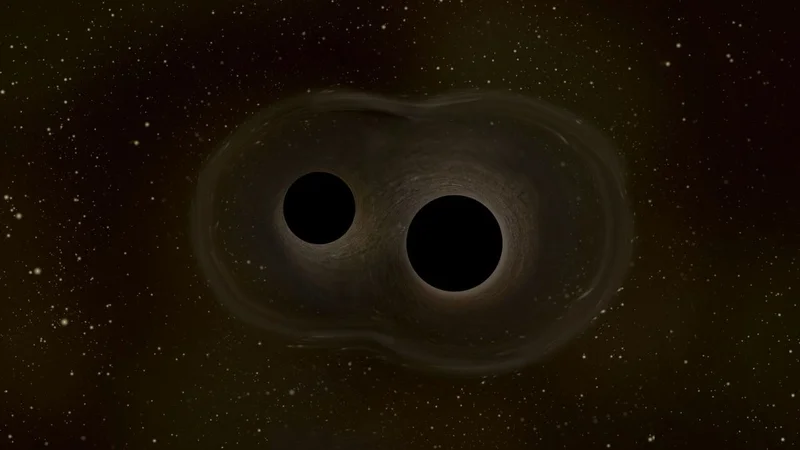
LIGO detects these cosmic ripples, known as gravitational waves, using twin L-shaped facilities in the U.S. — in the states of Washington and Louisiana. Inside each detector, a laser beam shoots down two 2.5-mile-long (4-kilometer-long) tunnels, bouncing off pristine mirrors at each end. When a gravitational wave passes through Earth, it subtly stretches one tunnel and squeezes the other. That microscopic shift alters the laser beams ever so slightly, producing a tiny flicker of light that alerts scientists to a distant cosmic event.
Because these cosmic signals are inconceivably small, preserving every single photon is crucial. To accomplish this, LIGO relies on mirrors polished to reflect 99.9999%t of the laser light that strikes them, ranking them among the purest optical components ever built.
Yet even these near-perfect mirrors have had one unavoidable flaw. The mirrors still absorb a tiny fraction of that intense laser light. That energy turns into heat, warping the mirror's surface by just a few nanometers, enough to distort the laser beam and reduce the observatory's overall sensitivity.
Physicists already knew they could counteract these distortions by applying targeted heat to the back of the mirrors. The difficult part was measuring the distortions accurately enough such that the correcting heat could be applied with exact precision.
The new technique uses infrared thermal images and existing computer models to reconstruct a map of distortions across the mirror's surface.
"You can think of it like taking an infrared picture of a car engine," Richardson said in the statement. "An engineer can look at the temperature pattern on the outside and infer what's happening inside the engine. We're doing the same thing with LIGO's mirrors."
And the technique isn't just a fix for LIGO. It is also expected to become part of the foundational design for Cosmic Explorer, a proposed next-generation U.S. gravitational-wave observatory targeted for the mid-2030s.
With 25-mile-long (40-km-long) arms — 10 times larger than LIGO's — Cosmic Explorer is already designed to detect gravitational wave events far beyond the reach of today's observatories. This new technique will only supercharge its ultimate reach.
"The goal for the next generation of gravitational-wave detectors is to achieve about 10 times the sensitivity of today's instruments," Richardson said in the statement. "One of the key obstacles to achieving that is reducing the fundamental quantum mechanical noise that limits the precision of the measurements."
The technique is described in a paper published July 16 in Classical and Quantum Gravity.
Sharmila Kuthunur is an independent space journalist based in Bengaluru, India. Her work has also appeared in Scientific American, Science, Astronomy and Live Science, among other publications. She holds a master's degree in journalism from Northeastern University in Boston.