Even the greatest anime have an episode or two that fans usually choose to skip on a rewatch. But a select few never let up, where every chapter advances the story, reveals something meaningful about its characters, or at least delivers unforgettable animation. The best anime strike a balance between compelling storytelling, great animation, and nuanced thematic depth. Very few are able to do that consistently.
Everyone pretty much agrees that Cowboy Bebop or Fullmetal Alchemist: Brotherhood are universally lauded for complex worldbuilding and coherent themes. Perhaps it’s time to shine a light on anime that are comparatively overlooked and offer an atypical viewing experience that feels very close to perfection.
There’s also the question of subjective taste, as a more contemplative story like Mushi-shi or even a sprawling space opera like Legend of the Galactic Heroes might win you over with their inspired approach to storytelling. This makes space for endless possibilities, but for the sake of this list, we’ll be looking at stories with brilliant animation that also avoid filler, embrace character complexity, and don’t shy away from thought-provoking themes. Here are 5 anime where every episode is a masterpiece.
1 Monster
The term “masterpiece” feels apt for Naoki Urasawa’s Monster, which unravels its philosophical core with great skill and technical mastery. Madhouse’s anime adaptation stands its ground despite not being as intricate as the source material — all 74 episodes engage us with excellent pacing and well-written characters who are caught up in a tense game of cat and mouse. The story opens with Dr. Kenzo Tenma, a neurosurgeon who saves a child named Johan Liebert in the aftermath of a massacre. Tenma defies orders to operate on a high-profile patient, choosing to save the child instead. This decision leads to a stalled career and complete ostracization from the medical community.
Years later, Tenma learns that a now-grown-up Johan is a sociopathic killer who murders anyone who sees his face. How does a conscientious doctor react to this unsettling truth? Monster remains faithful to Urasawa’s taut narrative structure and ambitious swings, with the animation expertly capturing the story’s dark, chilling tone. The strengths of Monster lie in its unpredictability, as morality is not a binary concept in a story set against the backdrop of the Cold War. Every character, be it secondary or tertiary, is given the chance to make their mark on the story, where even the smallest reveal becomes a key piece of the puzzle that needs to be solved.
2 FLCL (OVA)
FLCL (pronounced Foolycooly in English) got a breezy five-season adaptation courtesy of Production I.G, Toho, and Adult Swim, but the 2000 OVA (produced by Gainax, and retroactively considered season 1) is pure magic. This six-episode series follows the eccentric alien Haruko Haruhara, whose adventures on Earth include clashing with evil megacorps and disrupting civilian lives in the process. Despite the short episode count, FLCL is an unconventional coming-of-age tale that uses avant-garde animation to highlight the utter chaos of growing up. The surreal nature of the OVA is heightened by its length, allowing the animators to unleash their full creative might within a taut, impactful structure.
Haruko’s shenanigans upend the quiet, suburban life of 12-year-old Naota, whose head is inadvertently transformed into a portal that can spit out huge mechas and weapons from his subconscious. Using Naota’s head to combat her enemies, Haruko aims to fulfill her quest to find the powerful space pirate, Atomsk. While FLCL ramps up the action to the highest degree, it is more of a metaphor for growing pains, such as Naota’s struggles to live in the shadow of his brother, who is an exceptional baseball star.
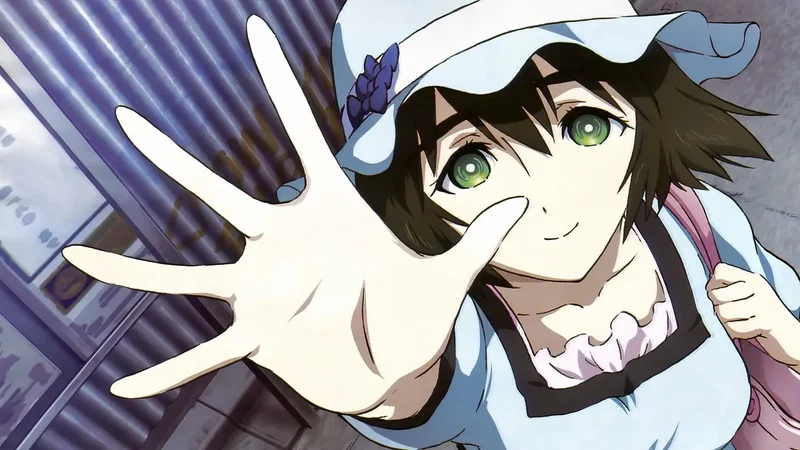
3 Steins;Gate
Steins;Gate might be based on an acclaimed visual novel, but the anime makes great use of its 24 episodes to tell an exciting, psychologically rich story about time travel and its consequences. Set in the year 2010, each segment takes place in a different alternate reality (or “worldline”) that gets created whenever a specific event (known as a convergence point) occurs. Rintaro Okabe attends a conference about time travel that completely changes the trajectory of his life — quite literally, in this case, as he discovers that he can send messages back in time.
Steins;Gate opens up its narrative possibilities in the most emotionally devastating ways, as the power to manipulate time comes with burdens that cannot be shared with anyone else. The anime avoids being self-serious at all times, leaning into quirky, slow-burn slice-of-life moments to flesh out its characters and their interpersonal dynamics. Hard sci-fi concepts are incorporated into the quest to save the world, which makes Rintaro’s pain feel more visceral (and likely) when weighed against the choices he has to make. The stakes gradually ramp up in importance, but this measured approach pays off, as Steins;Gate ends up leaving an impression that is as thrilling as it is heart-wrenching.
4 The Tatami Galaxy
Madhouse’s The Tatami Galaxy won the Japan Media Arts Festival Grand Prize in 2010 for a reason. This 11-episode anime doesn’t just employ brilliant animation to further its themes; it also succinctly captures the anxieties of youth. The story follows an unnamed student at Kyoto University who looks back on campus life, where he enrolled in different student societies with the aid of parallel universes. There’s no grand purpose behind this dimension hopping, as our protagonist simply wanted to find the “perfect” campus life by cycling through realities.
Part of embracing adulthood, of course, lies in the understanding that perfection is a myth, and that every choice holds value in the lives we create for ourselves. The Tatami Galaxy arrives at this truth by highlighting the indecision that often keeps us chained to escapism, where the protagonist needs to realize that he is neglecting the present by seeking meaning elsewhere. The experimental use of color and perspective makes it a riveting watch, adding flamboyant flair to a fast-paced tale that never loses momentum. The Tatami Galaxy takes us on a fun, carefree joyride that ends on a deeply cathartic note.
5 Paranoia Agent
Another one-season wonder, Satoshi Kon’s (Paprika, Perfect Blue) Paranoia Agent explores the complexity of fear. After a shy character designer named Tsukiko creates the popular pink dog Maromi, she struggles with the pressure to replicate the same level of success. Before Tsukiko can grapple with this issue, she is unexpectedly attacked by a kid on inline skates at night, which baffles the local police. Soon, these serial attacks are attributed to a child named Lil’ Slugger, whose victims are never able to recall his face for some reason.
Kon’s lifelong fascination with the blurred lines between reality and dreams comes into play here, as Paranoia Agent carries a surreal streak that has an almost eerie quality. This is a story about urban isolation, collective hysteria, and societal pressure, and how these factors can contribute to fear that can render us incapable of critical thought. When collective fear manifests in society, it takes on a new face every day when we take various perspectives into account. Kon uses this psychological tenet to weave a tense police procedural with a threat that is not easy to understand or deal with. The story’s ensemble cast feels like living, breathing characters trapped in an urban nightmare with no exits.