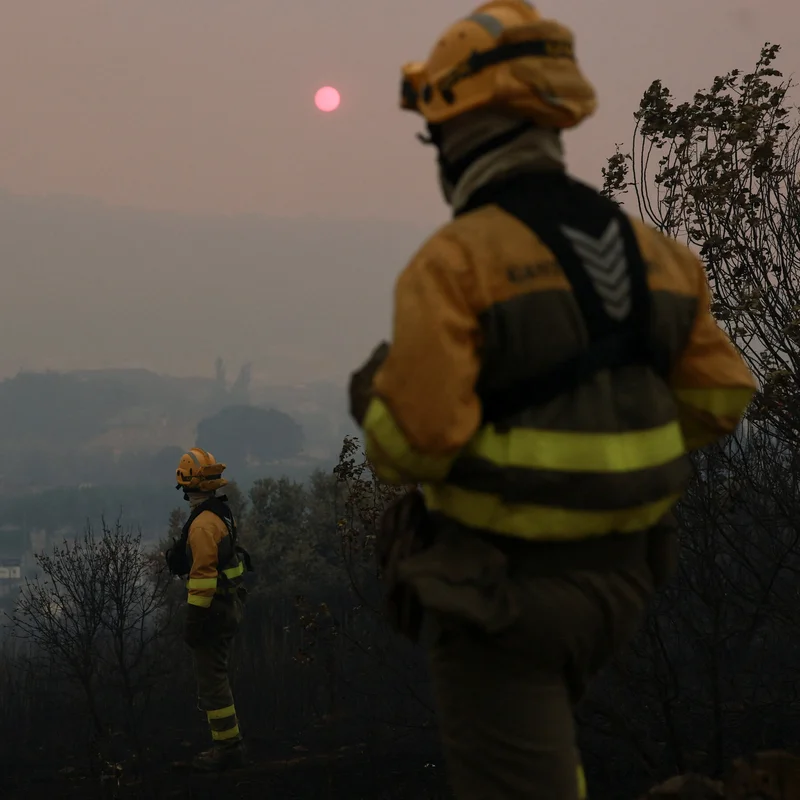
The wildfires torching Spain and France are a culmination of Western Europe’s extreme summer, in which record-setting heat waves and dry conditions set the stage for vast areas that could easily ignite.
Though it is difficult to connect a single wildfire to global warming, scientists said broiling temperatures last month, which hit both Spain and France, were made likelier because of the burning of fossil fuels. The Intergovernmental Panel on Climate Change, the world’s pre-eminent climate science body, said in 2021 that “fire weather” would likely increase across the Mediterranean over the course of the century.
In general, wildfires are closely linked to heat and drought, which sap grasses and forests of moisture. Those conditions allow for fires to spread more quickly — if there is a spark.
“Let me call it the drying out of the European continent,” said Johann Georg Goldammer, the director of the Global Fire Monitoring Center, in Freiburg, Germany. “The vegetation is suffering from this heat and drought stress. And this is accumulating.”
The wildfires were “absolutely” connected to the earlier weather extremes, he said on Saturday.
In western France, firefighters have battled flames in the same area that was a center of earlier heat waves. The city of Bordeaux, where thousands have evacuated from the suburbs, faced its hottest stretch on record in late June, with temperatures reaching 42 degrees Celsius (107.6 degrees Fahrenheit) three days in a row.
Since June 1, Bordeaux has had 20 days with highs of at least 35 degrees Celsius (95 degrees Fahrenheit), compared to five over the same period last year. It has rained only three days, never more than slightly.