Iran highlights US losses, expanded military readiness
TEHRAN – Iran has released what it describes as the most comprehensive account to date of damage inflicted on US military assets during the latest round of hostilities, saying Iranian forces struck a wide range of American command, air-defense, logistics and operational facilities between July 8 and July 22.
Brigadier General Hossein Mohebbi, spokesperson for the Islamic Revolution Guards Corps (IRGC), said the 15-day campaign targeted key elements of the US military's regional operational infrastructure, including command-and-control centers, Patriot air-defense systems, logistics hubs, aircraft shelters and intelligence facilities.
Extensive damage inflicted on US command, air defense and logistics infrastructure
According to the IRGC, the strikes hit seven command-and-control centers, three satellite communications systems, six Patriot air-defense radars, multiple early-warning and long-range radar systems, as well as air and maritime surveillance facilities. Iranian officials said the attacks significantly degraded the effectiveness of Patriot systems, enabling Iranian missiles and drones to penetrate US defensive networks.
The IRGC also reported extensive damage to US logistical infrastructure, including six aircraft and helicopter maintenance facilities, three logistics centers, 12 fuel storage tanks, 17 warehouses containing weapons and spare parts, and six missile storage sites.
Iranian officials further said the operations targeted critical military infrastructure, including MQ-9 drone hangars, F-15 preparation facilities, Patriot missile complexes, HIMARS launch platforms, command centers, intelligence and communications facilities, aircraft shelters, fuel installations and an artificial intelligence data-processing center affiliated with Amazon.
In the air domain, the IRGC said Iranian strikes destroyed or damaged 11 fighter aircraft and helicopters on the ground, 17 reconnaissance and combat drones, an F-15 fighter aircraft, a P-8 maritime patrol aircraft, a C-17 strategic transport aircraft, eight aerial refueling aircraft, four heavy helicopters and six missiles held in storage.
The United States has not publicly confirmed the reported damage but has not denied operational assessments released by Iranian officials.
Ceasefire boosted Iran's military capabilities
The damage assessment was released as senior Iranian military officials outlined what they described as a significant strengthening of the country's defense posture during the ceasefire period that followed months of confrontation.
Speaking in an interview with Tasnim News Agency, Mohebbi said Iran used the ceasefire to accelerate missile production, improve missile precision and further expand the operational capabilities of its armed forces.
"We increased our defense capacity, increased the speed of missile production and improved missile accuracy," he said, arguing that the ceasefire ultimately benefited Iran more than the United States.
Army spokesman Brigadier General Mohammad Akraminia echoed that assessment, announcing that new military equipment—particularly in the air-defense sector—has been integrated into the Army's operational structure. He said repaired systems have returned to service while newly deployed equipment has substantially strengthened Iran's defensive capabilities.
Akraminia added that Iranian military planners used the ceasefire to reassess operational requirements and prepare for every potential scenario. He maintained that Washington had failed to achieve its principal objectives during the conflict, including weakening Iran's military capabilities, forcing the reopening of the Strait of Hormuz through military pressure, and undermining the readiness of the Iranian Armed Forces.
Iranian officials also pointed to developments in Erbil, Iraq, where Akraminia said Iranian operations rendered nearly all US military infrastructure operationally ineffective. He further revealed that Iran has fielded a new generation of combat drones with greater range, precision and destructive capability than the Arash-2 platform, although no technical specifications were disclosed.
The Strait of Hormuz featured prominently in the officials' assessment of the conflict. Mohebbi said the latest escalation began after Washington violated navigation arrangements established under the Pakistan-brokered Islamabad Memorandum of Understanding by announcing an alternative transit corridor through the strategic waterway.
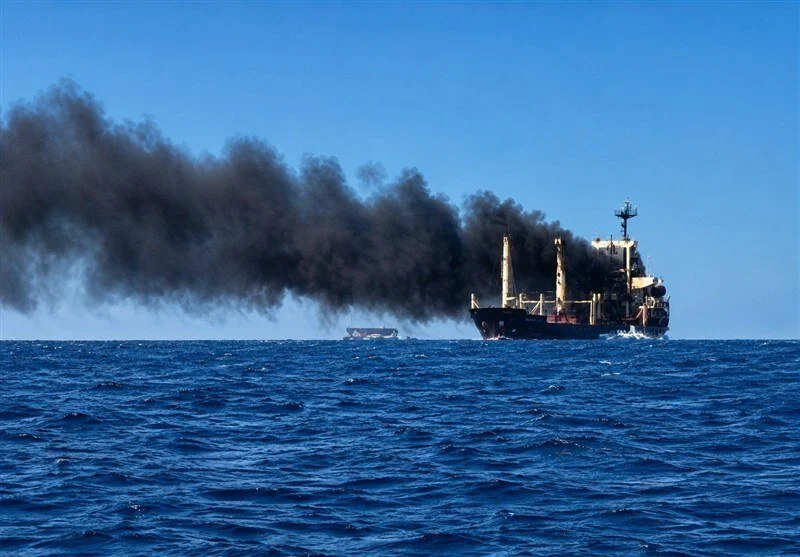
He said Iranian forces subsequently intercepted a vessel that violated those arrangements, after which US forces launched attacks against Iranian coastal positions, islands and radar installations. According to Mohebbi, Iran's subsequent military operations, including Operation Nasr-2, were designed to compel Washington to comply with the agreed maritime framework.
The Strait of Hormuz remains one of the world's most strategically important maritime chokepoints, carrying roughly one-fifth of globally traded oil and a substantial share of liquefied natural gas exports. As a result, any military confrontation affecting navigation through the waterway is closely watched by global energy markets and international shipping companies.
Iranian officials reiterated that maritime traffic through the Strait would only return to 'normal conditions' within a framework established by Iran and respected by the United States.
The military briefings also included renewed warnings regarding the possibility of another regional escalation. Mohebbi said Iran has prepared operational plans for all potential contingencies and warned that any country providing military support to US operations against Iran—including Britain or regional states hosting American forces—would be regarded as a legitimate military target.
Referring to the reported use of British airbases by US B-1 strategic bombers, he said continued military cooperation with Washington would carry consequences. He also accused Israel of encouraging the United States to prolong its regional military engagement, warning that any renewed Israeli participation in hostilities would trigger a decisive Iranian response.
The statements collectively project Tehran's position that, while the ceasefire created space for rebuilding military capabilities, Iran's armed forces remain on heightened alert and prepared for any future escalation across the region.
Iran's layered defense strategy raises cost of military confrontation
Military analysts say Iran's greatest advantage lies in its ability to combine precision-guided missiles, long-range drones and layered air-defense systems into an integrated deterrence strategy. Rather than relying on conventional military superiority, Tehran has invested heavily in asymmetric capabilities designed to raise the cost of any prolonged military confrontation.
According to defense experts, the recent conflict demonstrated that Iran's missile production capacity remains resilient despite years of sanctions and repeated efforts to restrict its access to advanced military technology. Analysts note that Iran has developed an increasingly self-sufficient defense industry capable of sustaining large-scale missile and drone production.
Regional security specialists argue that Iran's expanding arsenal of long-range unmanned aerial vehicles has become one of the country's most significant strategic assets. The combination of drones with ballistic and cruise missiles complicates enemy air-defense planning by forcing defenders to respond simultaneously to multiple types of threats.
Experts also point to the growing sophistication of Iran's indigenous air-defense network. While the effectiveness of individual systems remains difficult to verify in combat, analysts say the integration of domestically produced radars, command-and-control systems and surface-to-air missiles has considerably strengthened Iran's ability to monitor and defend its airspace.
Another area highlighted by defense observers is Iran's emphasis on redundancy. Military infrastructure, missile storage facilities and production sites are believed to be geographically dispersed, allowing the armed forces to maintain operational continuity even after sustaining significant attacks.
Analysts further note that Iran's command structure has increasingly emphasized rapid battlefield adaptation. The country's experience in Syria, Iraq and maritime operations in the Persian Gulf has provided valuable operational lessons that have shaped doctrine, logistics and command coordination.
According to regional military experts, the Strait of Hormuz remains one of Iran's strongest strategic leverage points. Although any prolonged disruption would also carry economic costs for Tehran, Iran's geographic position enables it to influence one of the world's most critical maritime chokepoints, making the waterway a central element of its deterrence strategy.