ST More than Grades
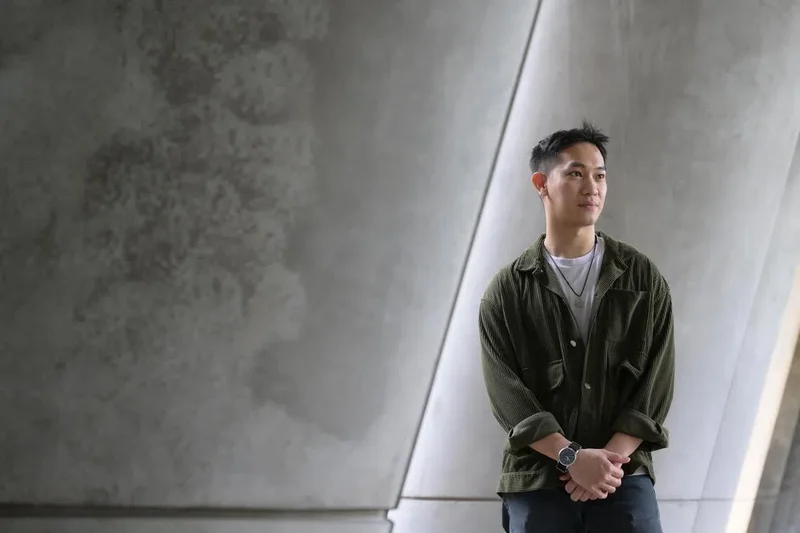
Diagnosed with cancer at 24, Joshua Lee found hope in community, graduated from NUS with honours
Behind every academic result is a young person quietly chasing their dreams, beating the odds, and hoping to make something of themselves. In More than Grades, a series by The Straits Times, we tell the stories of youth who are making waves in school and beyond.
AI generated
SINGAPORE – Midway through his psychology degree course at the National University of Singapore (NUS), Joshua Lee thought he had his life carefully mapped out.
He spent his days actively rock climbing, volunteering and interning, while juggling classes.
Then, a fall sustained while bouldering left him in such severe pain that he nearly passed out.
Medical checks after the fall revealed something more serious: Lee had Stage 3 testicular cancer that had already spread to his lymph nodes.
He was 24, and two months into a new relationship. “The very first thing was just shock or disbelief,” he said. Then came the practical worries. What would happen to his studies and career plans? And how would the people he loves take the news?
Lee began chemotherapy in July 2024, taking a six-month leave of absence from his studies. “It was my first time being so angry in a long while.”
The treatment made him frustrated, as it stripped him of his autonomy, not being able to travel, eat, or move as he pleased. At his lowest points, he felt he had lost his sense of purpose.
“When I peeled back the anger, I realised I was just very hurt by the whole situation,” Lee, now 26, said. “I’m okay to suffer, I just didn’t see the reason for it.”
As a Catholic, Lee found himself unable to pray, and it was weeks before he stumbled onto a Bible passage that began with lament before turning towards hope.
That was a pivotal moment for him. While there was no dramatic epiphany, it gave him something to hold on to.
People rallied around him in the months that followed. His family was a key source of support, and friends he had not spoken to in a decade reached out.
His girlfriend, now his fiancee, stayed by his side, even as he struggled with the feeling of helplessness that he was not able to comfort her in return. “I felt guilty, although I shouldn’t have, because at that point in time I couldn’t do anything.”
Watching people “go beyond themselves” for him, he said, eventually helped to dissolve the anger he carried.
NUS, Lee said, also offered support. As part of his minor in community leadership and development, Lee had begun a year-long project at the Chua Thian Poh Community Leadership Centre that his illness made impossible for him to complete.
Rather than penalise him, a professor arranged within two days for him to replace the project with two modules.
Staff sent gift baskets, checked in regularly, and even offered to help raise funds for his treatment. “They don’t just teach about community development – they really walk the talk,” Lee said.
He returned to university still without eyebrows – a side effect from the chemotherapy – and wore long sleeves to cover his collapsed veins, uneasy about being treated differently.
Cancer, he said, gave him “the courage to live a bit more unapologetically”. He struck up conversations beyond the syllabus with professors and chose niche topics for his coursework over easier, better-resourced ones.
“That’s the point of university, right? To push the boundaries of what is known,” he said.
The experience also redirected his career plans. Lee had long pictured himself working with at-risk youth, but that changed after he took up a psychology module focused on patients and healthcare in university during his recovery. He watched elderly cancer patients face harsher treatments than his own, smiling through chemotherapy.
“Frankly, I didn’t have a soft spot for physical illness,” he said. “I’m glad that cancer broke my heart...and I began to venture out.”
He completed his studies in November 2025 – the same month he was declared cancer-free – and began working at Singapore Cancer Society in January as a senior programme executive, ahead of his graduation ceremony in July.
Next April, Lee will marry his fiancee, Josephine Hamnett.
“I feel more like myself, and I’m glad I have my autonomy back,” Lee said.
“(My perspective on a meaningful life) has expanded,” he said. “It has given me courage to be less hesitant...even doing things that are almost impractical, but of value to me.”