- See more Daily Mail on Google - save us as a Preferred Source
When we hear the word widow, many of us automatically picture an older woman with greying hair, dressed in muted tones, quietly navigating her twilight years.
However, that image excludes a growing, often invisible community of younger women facing the unimaginable. When Kelsey Parker tragically lost her husband, Wanted star Tom Parker, to a brain tumour at just 32 in 2022, and more recently 43-year-old fashion influencer Lorna Luxe opened up about the devastating death of her husband John, the reality of young widowhood was thrust into the spotlight. Their stories shatter the stereotype and remind us that grief doesn't wait for old age.
Kelsey Parker with late husband Tom Parker, Wanted star, in 2016
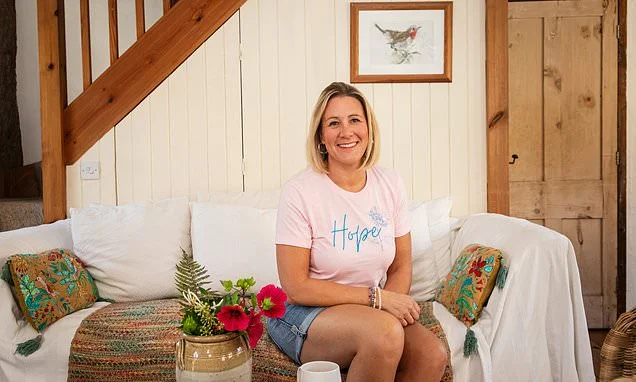
Karen Sutton knows this pain intimately. At just 39, her world imploded when her 43-year-old husband, Simon, suffered a sudden cardiac arrest while out cycling. Overnight, she was forced to navigate the disorienting, crushing reality of losing her life partner in the prime of her life. Now known as The Widow Coach, Karen supports women who find themselves in the very same position - stranded in a reality they never planned for, trying to figure out how to survive.
Karen says that the greatest gift you can give yourself after the death of your partner isn’t learning how to grieve properly, it is permitting yourself to stop trying to grieve ‘properly’ at all.
Having now supported thousands of women who have lost their life partner at a young age, Karen offers six starting points of advice.
1. Stop looking for the right way to grieve
Karen says, ‘When we’re widowed young, we desperately search for certainty.
‘We ask “Am I crying enough? Should I be dating? Should I still wear my wedding ring? Should I be coping better?”
‘The truth is there isn’t a right way. There is only your way. Your grief is as individual as your love was,, so stop trying to grieve like everyone else and start listening to yourself.
‘As soon as we stop measuring ourselves against other people’s grief, we begin to hear our own instincts again.’
Karen became a widow when she was just 39, now she speaks about coping as a young widow
2. Trust yourself before you trust everyone else’s opinions
As with every huge life event, everyone will have advice. Some people will tell you to move on; others will tell you you’re moving too quickly. Some think you’re too emotional, while others think you’re not emotional enough.’
Karen says, ‘None of them are living your life. One of the biggest pieces of work after losing your person is rebuilding trust in yourself.
3. Your grief won’t always look like sadness
‘This is a really important point that isn't talked about enough,’ Karen says. ‘Sometimes grief looks like laughing until you cry, or a sudden urge to travel. Sometimes it looks like fierce anger, wanting to date, redecorating the whole house, or complete and total numbness. None of those means you’re grieving wrongly, they simply mean you are human.’
4. Lower the expectations you have of yourself
Karen says, ‘When your person dies, it’s double the workload, half the workforce, and grief is a full-time job on top.’
You don’t need to be the parent, employee, daughter, friend, and organiser you were before. Your life has fundamentally changed. Adjusting your expectations isn’t giving up - it’s being realistic.
Karen with husband, Simon, just weeks before he died
5. Ask for help before you’re desperate
‘This feels especially true for younger widows with children,’ Karen says. ‘If someone offers to help, let them. Don’t save those offers for an emergency, use them so you can sleep, go for a walk, cry, have a coffee, or just sit in silence. Sometimes the bravest thing isn’t coping; it’s allowing yourself not to.’
6. Don’t forget you’re still alive
The thread that runs through everything Karen teaches is simple: the death of your partner is life-changing, but it doesn’t have to become the death of you, too.
Living again isn’t leaving them behind. Joy isn’t betrayal, and hope isn’t forgetting. ‘Living well after loss isn’t a betrayal of love, it’s one of the most beautiful ways to honour it,’ she says. ‘Building another beautiful life is one of the greatest ways we can honour the love we shared.
‘Grief is not the end of a widow’s story. It’s about gently helping you rediscover yourself and the life that is still waiting for you.
‘Remember, the goal isn’t to become who you were before. It’s to discover who you are now.’