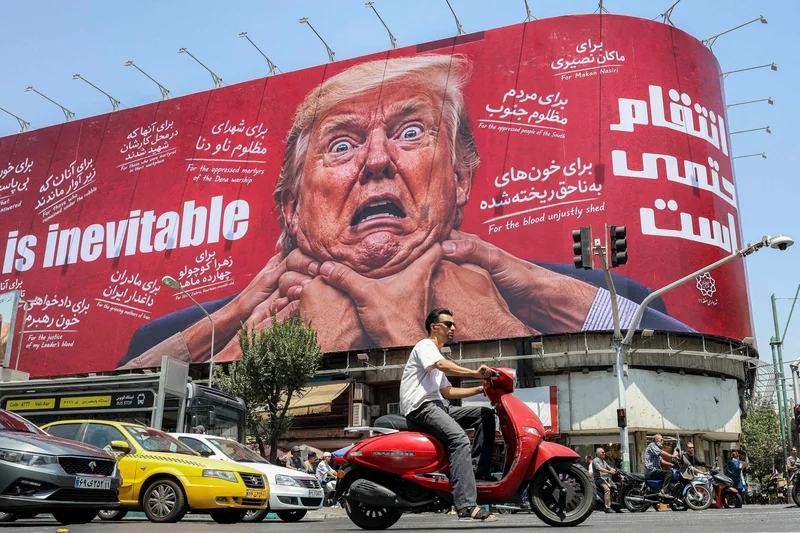
U.S. President Donald Trump said Monday that Washington is engaged in "very deep talks" with Iran but warned that the window for diplomacy is rapidly closing, saying the United States is prepared to take "strong military action" if negotiations collapse.
"Not much time. Either it goes fast or not at all," Trump told Axios when asked how long he was willing to give for talks.
"If they don't work out, we will go back to very strong military action," Trump told Israeli broadcaster Channel 12. He emphasized that the diplomatic window is narrow, noting that the process must move forward rapidly "or not at all."
The U.S. president explained he paused strikes on Friday following appeals from regional mediators. "All of the people that deal with Iran asked me: 'Don't fire'," Trump claimed, asserting that there was "nothing gained, nothing lost by granting the request."
Trump's remarks come ahead of his scheduled meeting with Israeli Prime Minister Benjamin Netanyahu on Tuesday. The two countries launched strikes on Iran in late February, citing threats and over its nuclear program.
"I am going to talk to Bibi about the fact that if I weren't president, Iran would have had nuclear weapons by now and Israel would have been destroyed," Trump said.
Trump's words came after a halt to U.S. strikes following two weeks of sustained bombardment, as well as U.S. media reports that top U.S. officials, including Vice President JD Vance, urged the president to avoid a major escalation citing munitions stockpile and the potential consequences.
Trump dismissed concerns over shrinking ammunition stockpiles, telling The Wall Street Journal that the U.S. has "far more munitions than anyone in the world, and far more than we need."
U.S. Ambassador to the U.N. Mike Waltz said Sunday that Trump is allowing "some space" for diplomatic discussions with Iran, and that negotiations are proceeding at "every level."
Pakistan mediated a cease-fire in April, and later a memorandum of understanding was signed between Tehran and Washington in June to allow for further negotiations and to end the war permanently. But tensions had flared up earlier this month over disagreements on navigation in the Strait of Hormuz, which Iran effectively blocked during the conflict.