Double-digit tariffs are back, and retailers are once again scrambling to keep tariff-imposed price increases from customers. New tariffs couldn’t come at a worse time. Nearly 60% of voters say the cost of living is the worse they have ever experienced, according to a Politico poll among 2,000 registered voters.
The tariff situation is even more threatening to Canadian retail brands doing business in the U.S. On August 19, President Trump is set to impose a 50% tariff on most Canadian imported goods under the Smoot-Hawley Tariff Act of 1930, the first time it’s been used in the modern era.
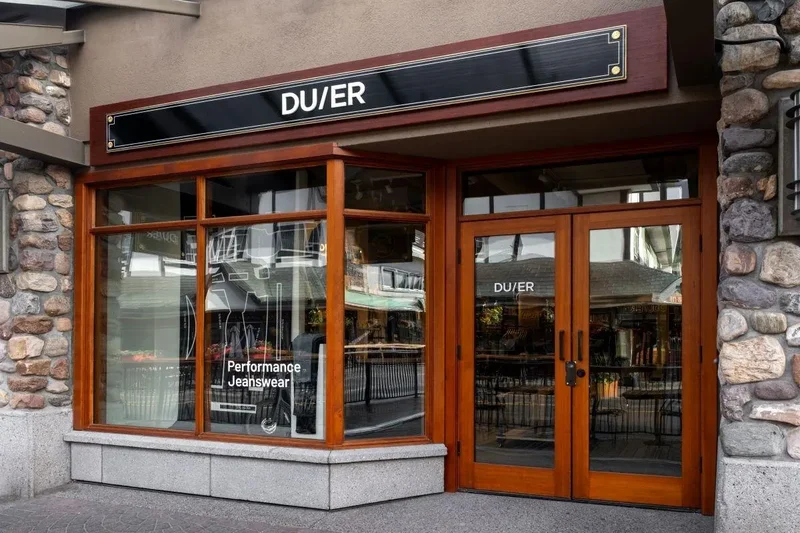
But Gary Lenett, founder and CEO of Vancouver-based DUER, isn’t losing sleep. Known for blending classic jean styling with athleisurewear performance attributes, DUER moved quickly after the first round of tariffs, shifting to a U.S. distribution model that now supports half of company sales. With that move, the company was able to protect margins, avoid price increases, double its women’s business last year and maintain profitability—something its done since 2017.
“I dare say, we might be the fastest growing apparel brand in North America,” Lenett said. First quarter sales were up 40% year over year, even as he acknowledged relatively low U.S. brand awareness compared to the three larger Vancouver fashion brands—Lululemon, Aritzia and Arc’teryx. “Our size is an advantage. We can move fast, change sourcing and fabrics quickly, unlike some of our neighbors.”
Insider Knowledge
Lenett started his professional career as a lawyer with a side hustle teaching at local universities, then a call from his brother to help out at the family clothing manufacturing business disrupted his legal career. In 1991, he took a year’s sabbatical from his law firm, that turned into a full 15 years producing jeans for some of the biggest names in the business, including Levi Strauss, Guess, The Gap, Lee and Wrangler. That experience gave him a virtual advanced degree in the denim business.
Feeling an entrepreneurial itch, Lenett left the family firm and launched his own brands with DUER his crowning achievement that he started in 2014. The brand name is not an acronym—it’s simply a trademarkable alternative for “doer” or as the company’s tagline states, “Built for Doing.”
“The question in the beginning was ‘Does the world need another jeans brand?’ and the answer was emphatically no, unless it was clearly differentiated,” Lenett shared. “DUER is that. I saw white space in the category to make jeans for an active outdoor lifestyle—one that combines jeanswear and athleisure performance.”
Finding White Space In Performance Jeanswear
The company spent two years developing its own performance-enhancing, super-comfortable fabrics. One is a proprietary denim weave— 70% cotton with a touch of polyester and spandex—and finished with an antimicrobial treatment for longer wear and fewer washes. The other is the fabric behind DUER’s “No Sweat Pant,” a combo of cotton and cellulose-based Tencel Lyocell from sustainable wood pulp. Together, these two fabrics— offered in different styles and colors—account for roughly 70% of company volume and remain bestsellers over the last five years.
The company launched as a menswear brand, only adding a women’s line in 2021. It’s quickly become the company’s fastest growing segment and candidly, giving neighbor Lululemon and other athleisure brands fits. Women are trading out of their leggings in favor of a more polished look for everyday wear and DUER lets her do it without sacrificing comfort.
“Athleisurewear is big, but it’s based on a false premise—that people want to wear après-gym synthetic plastic clothing throughout their day,” he asserted. “DUER is based on the premise that what the world needs now is more cotton-rich or natural-fiber-rich street clothing that has performance attributes that you can wear throughout your day.”
While best known for pants, DUER also offers the requisite t-shirts, sweatshirts and casual jackets and for women, skorts, skirts and dresses. The average price for a pair of DUER pants is about $120, putting the brand in the premium range for jeans but well below Levi’s ultra-premium Blue Tab line that extends to around $300. The $120 price point also compares favorably to Lululemon’s leggings, with DUER offering greatly expanded wearing opportunities because of its more sophisticated styling.
On The Move
DUER’s revenues are evenly split between wholesale and direct-to-consumer retail. The brand boasts about 1,000 wholesale accounts with REI and Nordstrom being its premiere trade partners.
“These two retailers represent our proof promises,” Lenett said. “Nordstrom speaks to our contemporary fashion—the jeanswear heritage piece—and REI is a proof statement of our performance capability. We sit in this middle space.”
He adds that DUER’s price points bridge the mid-to-high perceived value for these retailers, being at the top of the range for REI and accessibly priced below the luxury tier at Nordstrom.
DUER currently operates 13 of its own stores and will add another location in Winnipeg this summer to close the year at 14 stores. In the U.S., DUER has stores in Los Angeles, Denver, Chicago and Portland, OR and its U.S. business is growing faster than that in Canada.
Besides the U.S. being a significantly larger market—MarketResearch.com reports that jeans is an $18.5 billion business in the U.S., at least 2.5 to 3 times larger than in Canada—the primary difference Lenett sees in its North American neighbor is not the traditional East Coast-West Coast split but a North-South one. “Portland and San Francisco have very similar demographics to Vancouver and the same can be said for Chicago and Toronto, even New York City,” he noted, though DUER has yet to open a store there.
“We have pretty aggressive plans to expand both in the U.S. and Canada,” he asserted, with plans to keep up with its current schedule of four-to-five store openings each year.
“After 35 years in the fashion business, I thought I’d seen it all—but then we had the pandemic, then last year’s tariffs and now the new ones. But we’ve kept going strong, averaging 25% year-over-year growth and being profitable,” he concluded.
See Also: