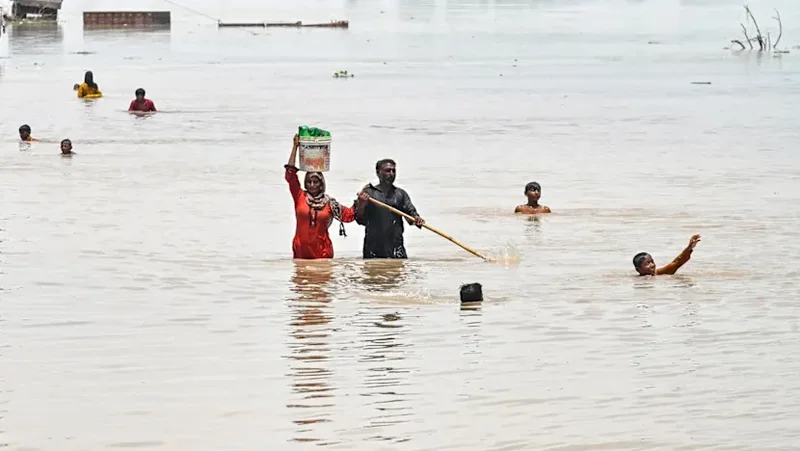
Flooding forces residents to flee homes by boat in Pakistan
At least 109 people have died in flood-related incidents across Pakistan since late June, as floodwaters leave many residents stranded without food, clean water and electricity.
AFP journalists witnessed small motor boats chartered by volunteers ferrying residents to safety, but many more were left stranded in Muridke district in Pakistan's most populous province of Punjab.
"It has been four days, and no rescue team has reached us," said 32-year old Iqra Salman.
"We have no electricity, no clean water, and now we have completely run out of food supplies," she said. "We are surrounded by floodwater on all sides."
Flood-related incidents, including by drowning and from house collapses, have killed 109 people in Pakistan since June 26, according to official disaster agency figures.
Around a third of the deaths are in Punjab.
Volunteer rescuers said they had launched an effort to rescue people and recover their belongings from around a dozen villages.
"Four rescue boats ... are actively conducting rescue operations, evacuating people stranded by the flooding," said Haris Dar, a volunteer rescuer, standing by a huge lake-like body of brown water.
"WE HAVE LOST EVERYTHING"
Muhammad Ramzan, 45, recalled water rushing in during the early hours of the morning shortly before his family's house collapsed.
"The water rose so rapidly that we had no opportunity to save or remove any of our belongings," he said.
"We have lost everything and have nothing," he added.
Pakistan is vulnerable to the effects of climate change, with limited resources for adaptation.
While South Asia's seasonal monsoon brings rainfall that farmers depend on, climate change is making the phenomenon more erratic, unpredictable and deadly across the region.
In neighbouring Afghanistan, flash floods and heavy rainfall killed 34 people between July 20-26, according to disaster authorities, including a deluge in eastern Nuristan province that left around 100 missing.
In 2022, what UN chief Antonio Guterres called a "monsoon on steroids" caused havoc across Pakistan, killing around 1,700 people and submerging huge areas of the country.