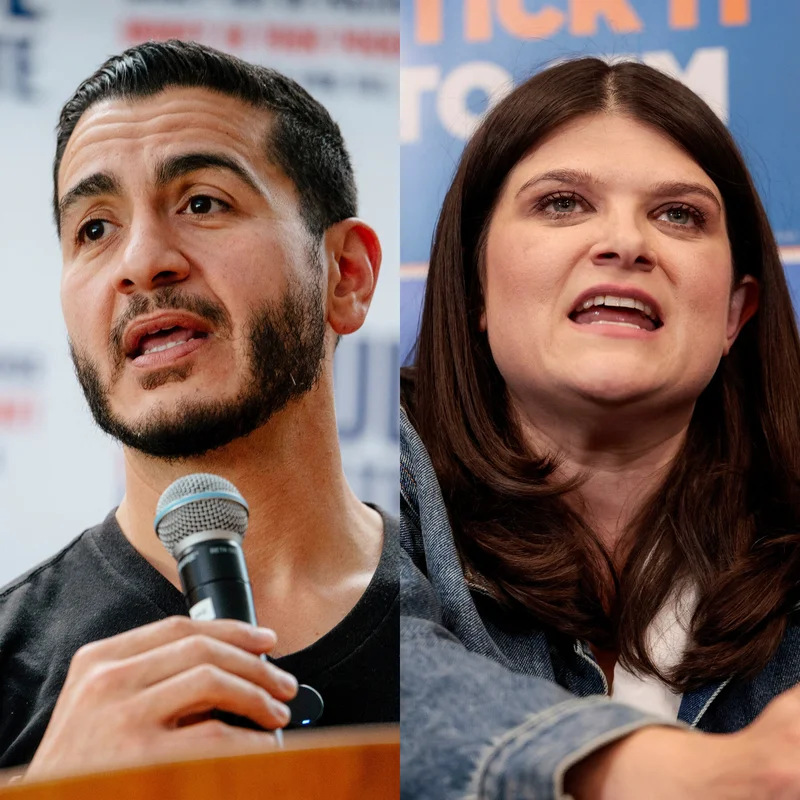
A week before Michigan’s primary contest for Senate, the two Democrats seeking the nomination spent much of their final debate hitting out at each other over campaign finance and who would focus more on helping their state.
Dr. Abdul El-Sayed, a progressive former public health official, repeatedly accused Representative Haley Stevens, a moderate, of being a tool of corporate interests. She declared that he would use the Senate as a steppingstone to political celebrity and would not put the needs of their state first.
Their ideological and stylistic divide, starkly illuminated in the debate on Monday and in the final weeks of the campaign, is as broad as any in a major primary campaign this year. The Michigan seat is seen as crucial in the race for Senate control. The winner of the Democratic primary will face former Representative Mike Rogers, a Republican, in the general election in a race to succeed Senator Gary Peters, a Democrat who is retiring.
On Monday, the candidates’ divergent visions presented Michigan Democrats with a stark choice: Do they want a senator who will work with Democratic leaders in Washington and occupy a middle lane? Or one who will push for progressive causes like “Medicare for all” and ending U.S. aid to Israel?
Here are six takeaways from the debate:
El-Sayed repeatedly hit Stevens over AIPAC money.
The Senate primary in Michigan has become the showpiece fight between Democrats who want to fundamentally alter the nation’s relationship with Israel by cutting U.S. military aid and those who back continued American support for the Jewish state.
It has also become a central battle over money in politics. The main super PAC for the American Israel Public Affairs Committee, the nation’s leading pro-Israel group, has so far spent $30.6 million on advertising backing Ms. Stevens, according to data from AdImpact, a media tracking firm. Six other super PACs that have not disclosed their donors have spent a collective $29.4 million on her behalf.