Myanmar approves death sentence for cyberscam offenses
YANGON — Myanmar’s military-backed parliament approved a law on Tuesday that authorizes capital punishment for those who detain or violently coerce victims into working in online scam centers, the speaker said.
The “Anti-Online Scam Bill” was passed after MPs approved changes to a draft bill at a combined meeting of the lower and upper houses Tuesday morning in the capital Naypyidaw, Union Parliament Speaker Aung Lin Dwe said during a live television broadcast.
Article continues after this advertisement
Lower house MP Aye Chan confirmed to AFP that the death sentence remained in the approved version of the law.
“There were not many significant changes to the proposed draft bill after discussions between the lower house and upper house. The important parts of the bill remained the same,” Aye Chan said.
Draft legislation published in May said the law included sentences of 10 years to life in prison, as well as capital punishment, for “violence, torture, unlawful arrest and detention, or cruel treatment against another person for the purpose of forcing them to commit online scams”.
If committing such an offence caused death, “the death penalty shall be imposed”, it said.
Article continues after this advertisement
The draft bill also featured a maximum sentence of life in prison for those who “run an online scam centre” and those who “commit digital currency scams (crypto scams)”.
Internet fraud factories have flourished in war-torn Myanmar, part of Southeast Asia’s thriving scam economy, targeting web users worldwide with romance and cryptocurrency investment cons.
Article continues after this advertisement
The multibillion-dollar black market attracts many willing employees, but repatriated foreigners have also reported being trafficked to sites in Myanmar and tortured by scam center operators.
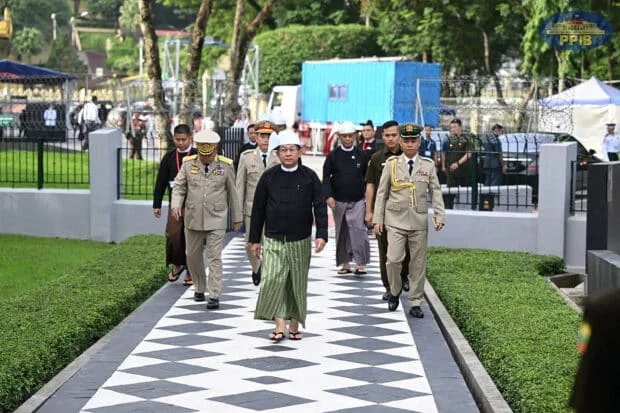
The anti-scam law is the first legislation passed by Myanmar’s new government, headed by former junta chief Min Aung Hlaing.
He led a 2021 coup in which the military ousted the elected government of Aung San Suu Kyi and triggered the country’s ongoing civil war.
In April, Min Aung Hlaing assumed the role of civilian president after heavily restricted elections that did not include the detained Nobel laureate, Suu Kyi, or her party.
Many analysts describe the military-backed parliament as a rubber-stamp legislature, with pro-military MPs sweeping the vote, which was widely criticized by Western nations and democracy watchdogs as a sham meant to launder the junta’s image.
The civil war has seeded instability across Myanmar, creating fertile ground for organized crime groups running transnational scam operations to set up shop in fortified compounds, according to monitors. /dl