Police forces, councils and private firms are raking in more than £170 million from speed awareness course fees, Money Mail can reveal.
Campaigners say motorists are being treated like cash cows as lower speed limits ensnare growing numbers – who are forced to fork out to attend expensive courses or face fines and points on their licence.
A record 1.85 million motorists took a National Speed Awareness Course last year – up 12 per cent on 2024 and 70 per cent over five years, according to the not-for-profit body National Driver Offender Retraining Scheme.
Key to this increase is the rollout of controversial new 20mph speed limits. The number of drivers caught by speed cameras in 20mph zones has soared from 21,125 three years ago to 127,915 last year – a 505 per cent leap.
Speed awareness courses are promoted as a way to help motorists caught breaking a speed limit improve their driving skills without putting points on their licence.
But drivers face a postcode lottery on how much they are charged to attend the courses – and are left in the dark over the fact you can shop around to get a lower price.
Money Mail has found that motorists could save almost 20 per cent on the cost by opting for the cheapest course over the most expensive.
But drivers are usually only told the price of their course once they have chosen it and picked a time to attend, so have no opportunity to compare prices with other options.
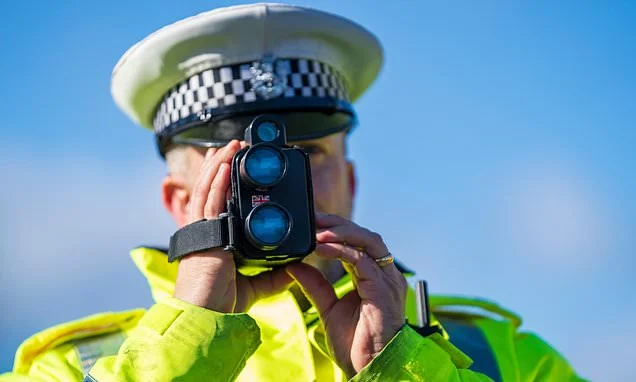
Cash cow: A record 1.85 million motorists took a National Speed Awareness Course last year – up 12% on 2024 and 70% over five years
Those who want to find the cheapest course face the laborious task of asking each provider in turn what they charge.
Money Mail has carried out this exercise for readers and – despite much obfuscation from some providers hesitant to reveal their charges – has put together a comprehensive price list (right).
These providers include local authorities and private firms.
The number of motorists forced to pay out for these courses is likely to escalate further as campaigners push for local authorities to make 20mph the new standard instead of 30mph on their roads.
MPs were told by a panel of road safety experts earlier this month to ramp up efforts to make 20mph the default speed limit on all roads in urban areas in England.
Should lower speed limits be rolled out further, the cash haul from speed awareness courses will escalate.
How do these courses work?
Most caught speeding will be none the wiser until a Notice of Intended Prosecution (NIP) letter drops on the doormat. It must arrive within 14 days of the offence for the prosecution to be valid.
The letter includes details of the offence – the speed you were caught travelling at and the speed limit on the road, along with the time and place you were snapped by a camera. Also included is a Section 172 form you send back within 28 days confirming who the driver was.
Once you have returned the form, you then receive a second letter with three options for you to choose from.
You can take a speed awareness course, accept a Fixed Penalty Notice (FPN) of £100 and three points on your driving licence, or respond to a court summons if you are caught at an exceptionally high speed or want to dispute a ticket.
Ignore these options or the initial letter and you face getting six licence points and risk a £1,000 fine.
If you opt for the speed awareness course, you need to go on to the website provided in the letter received and input the 16-digit reference code and six-digit pin number and/or your car registration plate number.
Further details – including bookings – can be found at gov.uk and typing National Driver Offender Retraining Scheme into the search box.
You are given a list of a couple of dozen providers offering courses, with details of their location and the option to take the course in person or online.
If you opt to attend in person, it would make sense to go for the course nearest to home for convenience.
However, if you’re doing the course remotely – attending via a video call on your laptop or phone – you may as well pick the one that is cheapest. After all, the courses cover the same material and should not vary in quality.
However, it is only once you have picked a provider and given the date when you wish to take the course (it must be within 120 days of the offence) that the prices are provided.
They vary between £82 and £100, as our table shows. If you take the course online, you must register for an online video provider – typically Zoom – and log on for the three-hour course.
Once started, you must show you are watching and listening at all times – and take notes. The instructor may even ask you to show what you have put down on the notepad to the screen.
Turn off the camera or sound for five minutes and you could be told that you have failed the course and must retake it.
Motoring campaigner Brian Staples, who runs the 2,000- strong Griffins Head Classic Car Club, says: ‘Speed awareness courses are a cash cow – pure and simple.
I took one and felt robbed. The focus is on telling you off rather than improving awareness of speed.’
He says he was caught doing 33mph in a 30mph zone in a 1960 Austin A40 car. He adds: ‘I do not begrudge handing over almost £100 if it really makes motorists safer behind the wheel – and the course is better than three points on your licence.
But it was deadly dull and nothing but a sermon, with gems such as start your journey early to get there on time. And where is all the money going? Why are course providers allowed to charge different rates rather than a single uniform charge? It all seems a racket.’
Rules: Most caught speeding will be none the wiser until a Notice of Intended Prosecution letter drops on the doormat. It must arrive within 14 days of the offence to be valid
So where does all the money go?
The courses are managed by an arm of charity Road Safety Trust called UK Road Offender Education (UKROEd) – which pockets 6 per cent for every sign-up. That’s about £9 million a year.
The police force takes 52 per cent of the fee paid by the motorist, while 42 per cent goes to the company or local authority running the lesson, meaning they pocket £42 if the course costs you £100.
An UKROEd spokesman says: ‘The fee for speed awareness courses is set by the referring police force as part of their contract with a course provider.
‘That fee is made up of three component parts – the cost of delivering the course, an element for the originating police force and the UKROEd element for managing the scheme on behalf of the police and maintaining the national system.’
Chief Superintendent Marc Clothier, head of operations at the National Roads Policing Coordination Centre, adds: ‘The policing element which forces receive is set nationally at £50 [totalling £95 million], to ensure they recover the costs of administrating these courses.
‘Police forces offer education, including speed awareness courses, as an alternative to prosecution to encourage driver behaviour changes and prevent offending.
Choosing to exceed the speed limit or driving at an inappropriate speed for the road conditions puts your life and that of other road users at risk.
We all have a responsibility to make the right decisions and do everything we can to keep each other safe on the roads.’
Course providers include Trusted Trading and Compliance (TTC), which runs 14 of the 44 courses offered in England and Wales, and AA-owned Drivetech, which runs eight. Most of the others are run by local authorities.
The cheapest courses are in Cleveland, where Hartlepool Borough Council charges £82. The most expensive are in Devon and Cornwall, and West Mercia, all run by TTC, Humberside, run by Safer Roads Humber, and West Midlands, run by Safer Roads for West Midlands, charging £100.
The Driver \& Vehicle Standards Agency and Driving \& Vehicle Licensing Agency are not involved in the awareness courses, while the Department for Transport only deals with speeding penalties. It is the Home Office, which owns the National Driver Offender Retraining Scheme, that takes responsibility.
Motor expert Shahzad Sheikh, who runs YouTube channel Brown Car Guy, says of the speed awareness course cost: ‘This is a revenue generator – no question. It is easy to view motorists as a cash cow.
'Motorists struggle to stick to 20mph as it is not naturally a speed they were taught to stick to and the Government knows this.
‘Driving is increasingly about anxiously looking out for speed traps rather than focusing on being a good driver.’
Nicholas Lyes, director of policy at IAM RoadSmart (previously the Institute of Advanced Motorists), says: ‘These courses offer drivers the opportunity of education – which needs to be paid for through fees instead of simply a fine and points on the licence.
‘Forces will have operational flexibility in how they choose to run these courses, which explains the difference in prices. But those attending can still expect consistency in the quality of the scheme.’
How to save cash and avoid points
If you are offered a speed awareness course, you should usually take it – but not necessarily the one in your area.
Check our list of the cheapest courses. Alternatively, find an option online that suits your availability and use our table to compare prices to ensure you are not paying more than necessary.
The alternative to the course is a Fixed Penalty Notice. This costs £100 – the same as the most expensive course – so you would not save money by going for that option and you would also get three points on your driving licence.
These points would also increase your motor insurance when you come to renew – typically by around 10 per cent, adding around £60 a year to your premiums.
The National Police Chiefs’ Council dictates that if you are caught speeding between 10 per cent plus 2mph above the limit and 10 per cent plus 9mph above the limit you could get the option to pay for a speed awareness course rather than take three points on your licence.
So, you can opt for a course if caught driving in a 20mph zone up to 31mph, a 30mph zone up to 42mph and a 70mph limit caught on camera as fast as 86mph.
Speed above these limits and you may not be offered a course but get three points on your licence and fined up to 75 per cent of your weekly income.
Caught going faster and you could get disqualified for seven to 28 days and lose four to six points on your driving licence.
On top of this, the fine can be put to 125 per cent of your weekly income – or up to £1,000 or £2,500 if you have been caught speeding on a motorway.
Twelve points on a licence is an automatic six-month driving ban. Points picked up from speeding typically stay on the licence for four years starting from the date of the offence.
toby.walne@dailymail.co.uk
How much a speed awareness course costs in YOUR area
| Location | Provider | Cost |
| --- | --- | --- |
| Avon and Somerset Bedfordshire Cambridgeshire Cheshire Cleveland Cumbria Derbyshire Devon and Cornwall Durham Dyfe-Powys Essex Gloucestershire Greater Manchester Gwent Hampshire Hertfordshire Humberside Kent Lancashire Leicestershire Lincolnshire London London Merseyside Norfolk North Wales North Yorkshire Northamptonshire Northern Ireland Northumbria Nottinghamshire South Wales South Yorkshire Staffordshire Suffolk Surrey Sussex Thames Valley Warwickshire West Mercia West Midlands West Yorkshire Wiltshire | TTC Hertfordshire County Council Drivetech Cheshire Constabulary Hartlepool Borough Council TTC Drivetech TTC Hartlepool Borough Council Dyfed-Powys Police Safer Essex Roads Partnership Driver Education Gloucestershire Drivesafe TTC Hampshire \& IOW Police Hertfordshire County Council Safer Roads Humberside Kent County Council Lancashire Constabulary Leicestershire County Council Lincolnshire County Council Drivetech TTC Drivetech Norfolk County Council TTC TTC TTC Moorgate Training Limited Drivetech Safer Roads for Nottinghamshire TTC TTC Staffordshire County Council Suffolk County Council Drivetech Drivetech Drivetech Warwickshire County Council TTC Safer Roads for West Midlands TTC TTC | £93.20 £90.00 £96.20 £90.00 £82.00 £95.20 £96.20 £100.00 £82.00 £92.00 £98.00 £97.00 £96.00 £95.20 £96.00 £98.00 £100.00 £98.00 £95.00 £95.00 £98.00 £96.20 £98.20 £93.20 £95.00 £95.20 £95.20 £98.90 £84.70 £93.20 £97.00 £95.20 £95.20 £93.00 £95.00 £96.20 £96.20 £96.20 £95.00 £100.00 £100.00 £99.00 £93.20 |
SAVE MONEY, MAKE MONEY
Up to £200 cashback
Up to £200 cashback
5% cashback when investing at least £100
4.67% cash Isa
4.67% cash Isa
Trading 212: 1.07% fixed 12-month bonus
£200 Sipp cashback
£200 Sipp cashback
Fund a pension with at least £20,000
Up to £750 cashback
Up to £750 cashback
Open a savings account with at least £10,000
Welcome bonus
Welcome bonus
Get up to £200 when you invest £100
Affiliate links: If you take out a product This is Money may earn a commission. These deals are chosen by our editorial team, as we think they are worth highlighting. This does not affect our editorial independence. Terms and conditions apply on all offers.