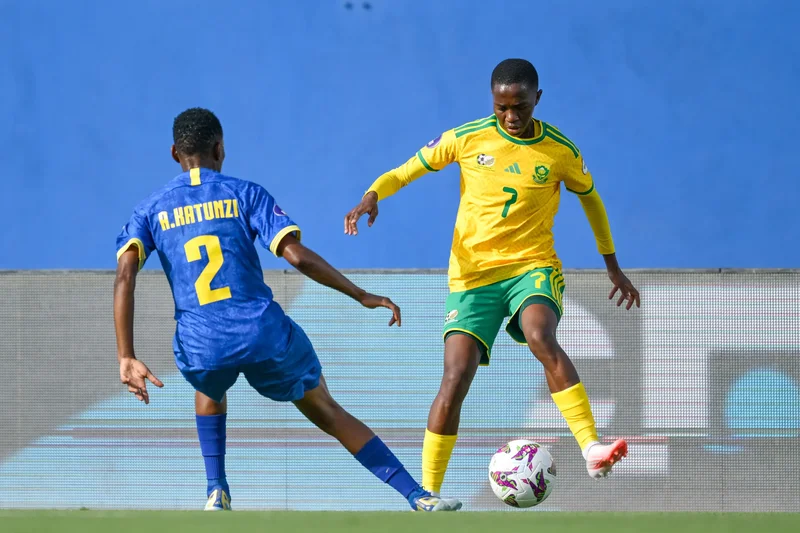
The Women’s Africa Cup of Nations (WAFCON) should be a celebration of skill, resilience and the growing power of women’s football across the African continent. Instead, recent editions have left many supporters and players with a familiar, bitter taste: vast stretches of empty seats, muted atmospheres and a sense that the tournament still struggles for the attention and resources it truly deserves. For South Africans watching Banyana Banyana, the disappointment cuts especially deep. It highlights not only continental organisational shortcomings but also the persistent disparity in support between the women’s national team and their male counterparts, Bafana Bafana.
In the recent WAFCON hosted by Morocco, capacity crowds would turn out for the hosts’ matches, yet games involving other sides, including strong teams such as South Africa and Nigeria, often played out in empty stadiums. Officials and coaches noted the lack of visible promotion in host cities and the high cost of intra-African travel as barriers to travelling support. The contrast with the 2022 final, when more than 50,000 fans packed the Prince Moulay Abdellah Stadium in Rabat to watch South Africa defeat Morocco 2-1, is stark. That record attendance proved what is possible when conditions align. Too often, however, the stands remain less than half-empty, stripping the competition of the energy that elevates football into a shared cultural event.
This pattern is not unique to WAFCON but it is particularly disheartening given the progress African women’s football has made on the pitch. Banyana Banyana’s 2022 triumph remains a high-water mark, yet the structural support around the team continues to lag. In South Africa the imbalance with Bafana Bafana is very glaring. Government bonuses, sponsorship visibility and administrative priority have repeatedly favoured the men’s side. When national teams receive financial rewards, Bafana have often been allocated significantly larger shares. Historical reports and parliamentary discussions have long highlighted lower funding for the women’s league and national team relative to the men’s structures, despite Banyana’s consistent competitive results and role-model status for young girls.
Women’s football in South Africa simply does not receive the sustained investment it needs and rewards. Development pathways remain under-resourced, media coverage is inconsistent outside major tournaments and commercial partners still treat the women’s game as secondary. For decades, players and coaches have spoken openly about the struggle for basic professional conditions that their male colleagues enjoy and take for granted. The result is a cycle: limited visibility leads to lower attendance and sponsorship interest, which in turn justifies further under-investment. Breaking that cycle requires deliberate policy choices, not occasional bursts of goodwill after a tournament success.
Comparisons with other continental competitions make the shortfall crystal clear. UEFA Women’s Euro 2025 in Switzerland set a new aggregate attendance record of 657,291 across 31 matches, with an average of more than 21,000 spectators per game. The first time the average crossed the 20,000 mark. Group-stage matches frequently sold out, and even fixtures not involving the hosts drew strong crowds. Earlier editions in England and the Netherlands also demonstrated growing public appetite once infrastructure, marketing and broadcasting were treated as priorities rather than afterthoughts. In those environments, women’s continental football is increasingly regarded as a mainstream product capable of filling major stadiums.
Africa’s geography and economic realities present genuine challenges such as travel costs, ticket pricing and limited local promotion. Those all play a role. Yet these obstacles are not insurmountable. The 2022 WAFCON final showed that African fans will respond when the event feels accessible and important. The consistent full houses for host-nation matches further prove that local engagement is possible. What is missing is systematic effort such as better scheduling that avoids clashes with other major tournaments, aggressive grassroots marketing, affordable ticketing strategies and genuine investment by federations as well as governments in the women’s game year-round rather than only during finals.
For South Africa the stakes are both sporting and social. Banyana Banyana have repeatedly demonstrated excellence despite the odds. Continued neglect sends a message that their achievements are secondary to the powers that be. Equalising support in finance, logistics and culture between Banyana and Bafana is not merely a matter of fairness, it is an investment in the future of the sport and in the visibility of women athletes. Continental organisers must also treat WAFCON with the same seriousness afforded to the men’s Africa Cup of Nations in things such as proper venues when available, coordinated promotion, TV coverage, and a refusal to accept empty stands as inevitable.
The disappointment of sparsely attended WAFCON matches is real. It reflects broader failures to back women’s football with the resources and respect it has earned. Until governments, federations, leagues, broadcasters and sponsors match the commitment shown by the players themselves, the stands will remain emptier than they should be. This will sadly make a generation of talented women continue to achieve more than the system that surrounds them.
Lelo Mzaca is an award-winning multitalented journalist, copywriter and presenter of The Big Breakfast Show on Radio 2000. He has an overwhelming passion for sport, lifestyle, music, arts and culture.