When the Education Minister Dharmendra Pradhan finally caved in to the protest and resigned, protestors around the country were quick to appropriate Salman Khan’s It’s done bro as the defining meme of the moment.
Khan’s first message praised the students, called the paper leak “a very serious issue”, described their agitation as “the right way to go about it” and urged that it not be “hijacked politically”. Less than 24 hours later, after the Prime Minister had responded, Salman expressed confidence that the government would take strict action and asked to students to return home with an appeal to the activist Sonam Wangchuk 25 days into his fast: “Sonam, it’s done, bro… If you want, will send you food from home.”
Both posts came under fire — from both sides.
Superstar Salman Khan’s posts on the recent student protests perfectly capture Bollywood’s swinging tightrope walk. Silence is seen as complicity and middle ground fence-sitting as rage unfolds on the streets and outrage on our feeds.
Yet the story of Bollywood’s political engagement over the last decade and a half is far more complicated than the accusation that it has been silent.
Take Amitabh Bachchan.
During the Nirbhaya protests in 2012, Mr. Bachchan tweeted that he was “pained and horrified” to see peaceful protesters being met with tear gas and water cannons. Last week, as students once again took to the streets, Mr. Bachchan’s public timeline was occupied instead by cryptic Hindi aphorisms, which he later clarified were not about him (or his hospitalisation and surgery) but inspired by Argentina’s loss in the World Cup, moments after they went viral speculating his support to the movement.
Aamir Khan’s remarks on intolerance in 2015 triggered years of boycotts, political attacks and eventually cost him the Incredible India campaign. By 2020, the actor deleted his social media accounts.
Shah Rukh Khan rarely comments directly on politics anymore, though he did ask India to “be democratic” as part of his New Year message before the pandemic. He leaned more towards it in Jawan, with an appeal asking citizens to vote thoughtfully. Around the same time, the arrest and eventual exoneration of his son Aryan Khan turned the actor into the centre of one of India’s most polarising media trials — which the younger Khan lampooned in his Netflix show The Ba****ds of Bollywood.
Salman Khan has chosen another route — speaking rarely, carefully. During the farmers’ protest, struggling for adjectives, he said: “The right thing should be done, the noble thing should be done, the correct thing should be done…”
Cozying up to Modi
During the 2019 elections, Akshay Kumar’s interview with Prime Minister Narendra Modi — remembered as much for its conversation about mangoes — became symbolic of Bollywood’s changing relationship with the establishment. His meetings with Uttar Pradesh Chief Minister Yogi Adityanath over the proposed Noida Film City only reinforced that perception, even as questions over his Canadian citizenship complicated his image as one of Hindi cinema’s loudest on-screen nationalists.
In 2019, an entire delegation of Bollywood’s biggest names — Karan Johar, Ranbir Kapoor, Ranveer Singh, Alia Bhatt, Rajkummar Rao, Ayushmann Khurrana, Ekta Kapoor, Vicky Kaushal, Rohit Shetty and Imtiaz Ali and several others — posed with Prime Minister Modi in photographs that came to symbolise the industry’s growing proximity to political power.
Politics, in turn, borrowed freely from cinema. Uri‘s “How’s the Josh?” became an election slogan. More recently, Prime Minister Modi even invoked Dhurandhar in a speech, to attack those who didn’t like the film.
After watching Dhurandhar, Hrithik Roshan posted on Instagram that he “may disagree with the politics of it” but admired its storytelling and craftsmanship. When he shared his appreciation on X, the political disclaimer disappeared.
Yet to paint Bollywood as uniformly timid would ignore another, equally consistent tradition.
There are a handful of filmmakers who have consistently been political — Anurag Kashyap, Hansal Mehta, Anubhav Sinha, Vishal Bharadwaj, Sudhir Mishra and, more recently, Honey Trehan, whose film Satluj, previously called Punjab 95, was taken off Zee5 three days into release.
Women lead the charge
Deepika Padukone visited JNU in 2020 and simply stood with the protesting students between the promotions of Chhaapaak. The viral photo was followed by calls to boycott the film.
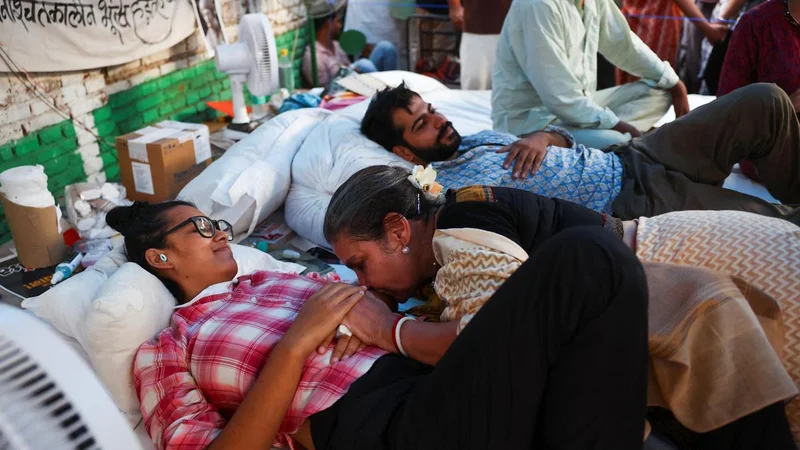
Long-time activist Shabana Azmi kissed the hand of a fasting student and suffered an asthma attack caused by tear gas used during the Sansad Chalo march.
Swara Bhaskar has continued speaking despite sustained online abuse, admitting it cost her acting opportunities.
Richa Chadha has repeatedly defended dissent and free speech and continues to tweet asking people to “come together.” Both these actresses were trolled by the right wing ecosystems for marrying Muslim men.
Huma Qureshi accompanied by her brother Saqib Saleem turned up at the Delhi protests to support the students.
There are many more who aren’t afraid to speak their mind regularly including Taapsee Pannu, Sonakshi Sinha, Gul Panag, Ayesha Khan and Lekha Washington who showed up with actor Imran Khan.
Youth icons join in
Imran Khan at the Mumbai student demonstrations when asked about “apolitical actors” said “If you can’t stand by your own opinions, if you can’t pour your heart into your art, your art has no value.”
Also Read | Mumbai protest: 400 booked, 13 FIRs in five days for protesting without permission
Avinash Tiwary used Instagram to urge followers to “make this the biggest protest ledger ever in the world” and encouraged people to register their support.
Vijay Verma was among the first to tweet and get trolled with threats of Unfollow. “You can do this quietly too. No need to announce everything,” the actor posted in response.
No more Jaane Bhi Do Yaaron
Veteran actor Naseeruddin Shah, speaking emotionally after participating in the recent Delhi student protests, Mr. Shah said he was “boiling with anger”. Asked why so many of his colleagues remained silent, he replied with a line that immediately went viral: “A dog with a bone in its mouth can’t bark.”
Bollywood then, perhaps, is a mirror of India itself: risk-averse, scared into silence, politically divided and deeply aware that every public statement carries consequences.
Just as people have been emboldened to step out in numbers to protest, Bollywood opinions too find safety in numbers too.
Seen together, they reveal an industry caught between public expectations and political consequences.
Or, as Rajkummar Rao wrote while defending himself against criticism over a political campaign song, “One song does not define who I am, what I stand for or what my ideologies in life are.”
He ended that post with a line that perhaps explains Bollywood better than any political analysis can.
“You can never know the pressure.”
A little later, he quietly deleted it.
But here’s to the braver voices. Like Dhurandhar actress Ayesha Khan wrote in her post after being trolled: “I rather have a spine than a career. Go scare someone else.”
The writer is a film critic, filmmaker and screenwriter, most recently known for Culture Vulture, an indie on Bollywood’s relationship with politics
Published - July 29, 2026 11:44 am IST