The 1980s and 1990s stand as the undisputed golden age of movie soundtracks
Ah, yes! The 1980s and the 1990s didn’t just represent a truly memorable, magnificent, and simply golden era for cinema—oh no, my dear readers, they most definitively marked the absolute, undeniable, and staggering zenith of the motion picture soundtrack, a remarkable phenomenon that I always look back on with such profound awe!
Back then, walking out of a wonderfully dimly lit theater meant immediately rushing to the nearest record store to eagerly grab the cassette tape or compact disc of the film you had just witnessed on the silver screen, and oh, the sheer thrill of it all! In fact, in many truly spectacular instances, the soaring music you took home possessed far more artistic merit, lasting staying power, and breathtaking cultural resonance than the actual celluloid it was originally meant to support, which is just the most striking irony of it all when I sit back and deeply think of it today.
Article continues after this advertisement
Let me just say that to fully understand this monumental pop culture phenomenon, you, my dear reader, simply must look closely at how the massive, unstoppable machinery of Hollywood and the powerhouse music industry intertwined so perfectly during these two explosive decades—or much better yet, if you weren’t even alive at that revolutionary point in time, then it is infinitely wiser to just take it from me, as someone who actually got to live, breathe, and experience it all firsthand, and who can now happily tell all of you, my ever-loyal dear readers, exactly what those magical decades were truly like to be in!
The Sonic seduction of the 1980s
Back in the 1980s, the game completely changed. The birth of MTV rewired the formula of how major movie studios marketed their films, turning what used to be a simple narrative experience into a full-blown multi-media product. Iconic directors like John Hughes understood this shift intimately. While his films are fondly recalled by many as the definitive, quintessential portraits of teenage angst, they were essentially near-perfect visual vessels meant to showcase the absolute best of New Wave, Post-Punk, and Synth-Pop.
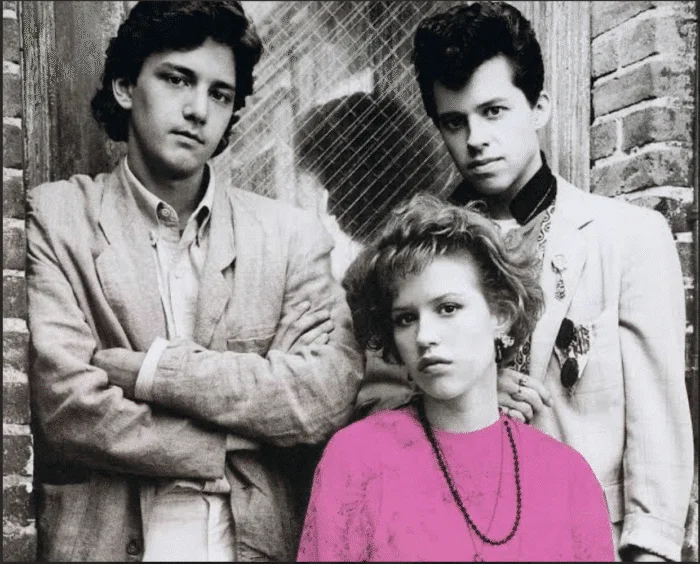
I mean take a look back at a beloved teen classic like ‘Pretty in Pink’ (1986). While the movie remains a staple of the era, its narrative resolution—which we all know was mired in studio-mandated rewrites—often takes a backseat to its incredible sonic architecture. The soundtrack is a flawless, meticulously curated masterpiece featuring legendary acts like The Psychedelic Furs, New Order, Echo & the Bunnymen, and Orchestral Manoeuvres in the Dark. If you have not listened to it yet, now, is the right time to do so.
The music didn’t just accompany the scenes; it provided the deep emotional weight that the script occasionally lacked. Long after the specific plot points of Duckie’s heartbreak fade from your memory, the opening strains and synth swells of “If You Leave” by Orchestral Manoeuvres in the Dark will still evoke an instant, visceral wave of nostalgia. If that doesn’t hit you right in the feels, honestly, I don’t know what will.
Then, you have the massive box-office blockbusters that were completely salvaged by their radio-ready anthems. ‘Top Gun’ (1986) is a visually stunning piece of military might but make no mistake—its true soul belongs to the slick, high-octane production of Giorgio Moroder “behind the boards.” Kenny Loggins’ high-energy “Danger Zone” and Berlin’s haunting, era-defining “Take My Breath Away” did the heavy lifting here. They single-handedly transformed what could have been a standard Tom Cruise lead starring action flick into a massive, global cultural empire. The music created an atmosphere so potent and undeniably catchy that it completely eclipsed the thin plot and cheesy dialogue. For any fan of ’80s pop culture, these soundtracks aren’t just background music—they are an absolute must-listen to everyone both young and old.
Article continues after this advertisement
The gritty, star-studded curation of the 1990s
When the calendar flipped over to the 1990s, oh boy, what an exciting time it was to be alive in, as a seismic shift shook the core of the music landscape, aggressively dismantling the glossy, over-polished synth-pop that defined the previous decade. Seemingly overnight, we were thrust into a raw, eclectic era ruled by a gritty mixture of Grunge, Alternative Rock, Hip-Hop, and R&B. During this specific window of time, the movie soundtrack emerged as the ultimate curated mixtape for Gen X. It was a golden age where the compilation albums frequently possessed a fearless artistic vision that put the actual accompanying films to total shame.
Perhaps there is no more glaring example of a soundtrack completely overshadowing its cinematic counterpart than the 1998 ‘Godzilla’ movie. Let us be honest: the film itself was a disaster—a messy, poorly written, CGI-bloated spectacle that totally failed to capture the majestic aura of Japan’s legendary monster. Yet, its companion Original Soundtrack (OST) was an absolute titan of a record. It was highlighted by the jaw-dropping, monumental sonic collision of Jimmy Page and Puff Daddy on “Come with Me,” a massive hit from Jamiroquai, and definitive, stellar tracks from the likes of Rage Against the Machine, Ben Folds Five, and The Wallflowers. Moviegoers actively hated the film, but music fans kept that CD on repeat. It became a certified multi-platinum triumph fundamentally attached to a monumental cinematic dud.
Article continues after this advertisement
Coincidentally, my lingering memories hold true for 1995’s ‘Batman Forever.’ While Joel Schumacher’s neon-soaked, campy creative direction split moviegoers straight down the middle, its stunning soundtrack is still widely regarded by music purists as one of the greatest alternative compilation albums of the entire decade bar none. This was the exact record that gave the world Seal’s undisputed magnum opus, “Kiss from a Rose,” alongside standout tracks from U2, Brandy, Mazzy Star, and PJ Harvey. Ultimately, the album possessed a cohesive, brooding, and deeply romantic identity that the actual movie simply could not match.
Why the music eclipsed the movies
First, it all came down to a question of pure portability. Back in the day, experiencing a movie was entirely a captive affair. Moviegoers either had to line up at the local theater or endure agonizing, months-long waits just for the official VHS release. It was a time when cinema held you completely hostage to its own schedule. To be honest, I do not miss that specific experience because it was time-constricting and limited what you could watch given the scheduling. On the other hand, the movie soundtrack? That is an entirely different case on its own. Why so? That was a piece of the magic you could actually take home. It lived inside your Walkman and Discman, blasted through your car stereo, and echoed in the sanctuary of your bedroom. It transcended the celluloid itself, effectively morphing into the definitive sonic score of your actual life.
Second, the unprecedented budgets and absolute creative freedom handed to music supervisors during this golden era were nothing short of legendary. Record labels astutely viewed these curated soundtracks as prime real estate to break fresh, unsigned artists or to engineer massive, cross-label collaborations that simply could never happen on standard studio albums. What we got as consumers was a glorious, hyper-concentration of raw musical talent packed into a single disc—a veritable treasure trove for audiophiles and casual listeners alike. By all accounts, the treasure trove contained time-capsules from previous decades of music from movies
Ultimately, a bad or mediocre movie is forever bound by its own visual limitations, clunky dialogue, and poor pacing. But music? Music is boundless. Music is limitless. Music is forever. A truly great song completely bypasses intellectual logic and strikes directly at the heart of our human emotions. Throughout the ’80s and ’90s, Hollywood frequently stumbled in the editing room, but the music industry rarely, if ever, missed a beat. Long after the credits rolled and the actual films faded into absolute obscurity, it was the music that stayed alive—etched forever into the deep grooves of our collective pop-culture memory.