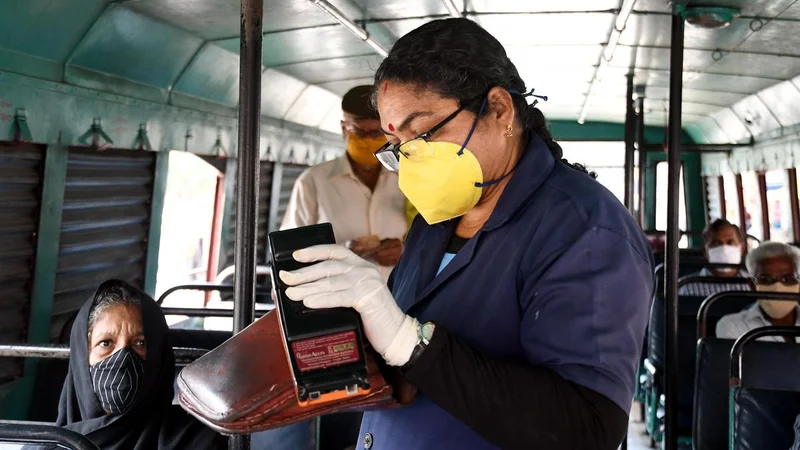
The Kerala High Court has ordered that the State government should decide on the demand for paid menstrual leave by women conductors of Kerala State Road Transport Corporation (KSRTC) within three months. The State should hear the petitioners and the corporation before making a decision.
The court held that the State may consider introducing an appropriate policy providing menstrual leave to women conductors, subject to appropriate safeguards. It opined that a limited provision for menstrual leave would promote employee welfare, reduce presenteeism, enhance productivity, and foster a more inclusive workplace.
The court observed that menstrual leave is “a progressive welfare measure” that recognises the physical and psychological impact of menstruation on women employees. It is consistent with the right to life, the provision for positive discrimination for the welfare of women and children and the provision for just and humane working conditions as enshrined in the Constitution. Women conductors in KSRTC perform physically demanding duties involving prolonged standing, continuous movement, long working hours, and limited access to hygienic restroom facilities. Severe menstrual symptoms may substantially affect their health, dignity, and ability to perform these duties efficiently.
The women conductors had given a representation requesting the State to adopt a menstrual leave policy for women employees in the KSRTC. They had highlighted the challenges they face during menstruation, such as long working hours, lack of access to clean toilet facilities with water in various depots, insufficient resting periods, and inadequate disposal systems for menstrual products, which leads to physical discomfort, health issues and emotional distress.
Three conductors, along with Forum For Justice, KSRTC Employees and Welfare Society, moved the High Court after the State and the corporation did not take a decision on the issue. They informed the court that the women conductors have to work for long hours – about 8 to 16 hours per day – and they have to move through the crowded bus to issue tickets and collect fares.
The court was apprised that there were about 3,000 female staff working in the operating sector, and as there are no proper resting areas, hygienic toilets and a proper waste disposal mechanism, the female employees, especially women conductors, are facing severe problems during their daily duty hours.
Karnataka decision cited
The petitioners pointed out that the State of Karnataka had one day paid menstrual leave each month to all working women, aged 18 to 52, working in the government as well as the private sector. It was stated that the intention behind the said system was to enhance women’s health, well-being and to ensure their confidence and that it benefits around 4 lakh women working in the government as well as the private sector as a matter of right. A similar menstrual leave policy is adopted in some other States such as Bihar and Odisha as well.
Further, the State of Kerala had already implemented a menstrual leave policy for female students in various universities; however, it is not extended to female government servants and KSRTC employees, they pointed out.
Published - July 29, 2026 12:25 pm IST