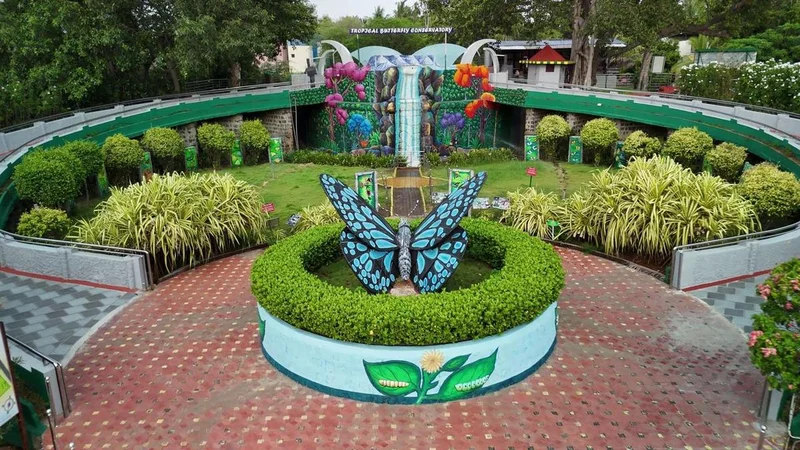
The lush green Tropical Butterfly Conservatory situated at Melur on the Srirangam island between the Cauvery and Kollidam rivers has recorded a significant increase in butterfly activity during July within the sprawling facility. The noticeable rise in butterfly activity within the conservatory during July is being attributed by the Forest Department to increased availability of flowers providing abundant nectar resources for butterflies, favourable weather conditions coupled with well-maintained host plants.
During July alone, about 1,200 individual butterflies of different colours representing 57 species were documented during regular monitoring thereby providing an enriching experience for the visitors, says a Forest Department official. Established by the Forest Department in 2015 on a huge expanse of 25 acres of reserve forest land sandwiched between the Cauvery and Kollidam rivers, the Tropical Butterfly Conservatory is today home to not only different species of butterflies but also bird species.
The conservatory, which attracts visitors all through the year, was set up with the twin aims of conserving butterflies and creating public awareness on their ecological benefits and the importance of their conservation. The conservatory raises host plants essential for butterfly sustenance, nectar-yielding plants and ornamental flora specially designed to captivate visitors. According to the Forest Department, India is home to over 1,500 distinct species of butterflies of which Tamil Nadu hosts 324 species.
Ever since the conservatory was established in a serene atmosphere over a decade ago at Melur, it has seen a steady increase in butterfly species. The conservatory has so far recorded 131 butterfly species and 119 bird species with more than 450 plant species. Some of the butterfly species recorded inside the conservatory include Tailed Jay, Small salmon Arab, Crimson Tip, Large oak blue, Common Jezebel, Lemon Pansy, Gull, Pioneer, Pale palm Dart and Indian Palm Bob.
The conservatory maintains a diverse range of nectar and host plants which provide essential resources for adult butterflies as well as caterpillars, the official said adding that they help in maintaining a favourable environment for the complete life cycle of butterflies.
During July, the conservatory witnessed profuse flowering of 60 species of nectar plants throughout the conservatory owing to favourable weather conditions resulting in abundant nectar resources for adult butterflies. The increased availability of nectar coupled with well-maintained host plants and suitable habitat conditions contributed to higher butterfly count and species richness, the official said. The presence of numerous butterflies of different colours and species adds to the visual beauty of the landscape providing an enriching experience for the visitors.
The July season has become a particularly attractive period to observe butterflies of numerous species inside the conservatory with flourishing flowers creating a vibrant natural atmosphere within this facility, the official further said adding that their population and the species count would further increase during the upcoming north-east monsoon season.
The conservatory with a comprehensive array of facilities inside attracts about 500 to 600 visitors daily and their footfalls exceed 1,000 on holidays. About 22 lakh visitors have visited the conservatory since its establishment, the official said.
Published - July 29, 2026 05:14 pm IST