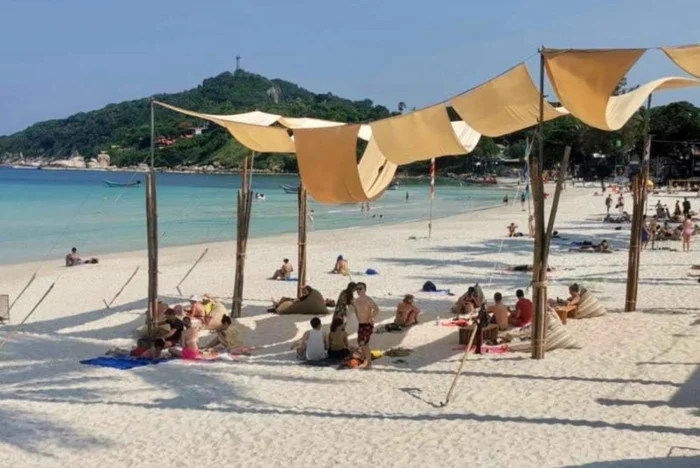
A shortage of tap water has led to rationing on Koh Samui, where a prolonged dry spell has reduced clean water production capacity to about 40% of normal levels, according to the Provincial Waterworks Authority (PWA).
Dry weather exacerbated by the El Niño pattern has depleted the island’s reservoirs, while piped water supply from the Surat Thani mainland is insufficient for the tourist island, the PWA said.
The underwater pipeline from the mainland supplies about 16,000 cubic metres of water per day but average demand is about 34,000 cubic metres.
The PWA said on Wednesday that tap water supply is being rotated across different zones of the island. Local residents and businesses are urged to use water sparingly, store it when it is running, and prepare for temporary interruptions.
Many hotels and larger businesses have been forced to buy supplemental water trucked in from off-island sources. Piped water availability for properties at higher elevations has also been affected, according to local reports.
The Interior Ministry on Wednesday ordered urgent measures to ease the tap water shortage, which has affected the island since Monday.
Deputy Interior Minister Jeseth Thaiseth said the PWA is hoping to increase the volume of water sent through the undersea pipeline by about 4,000 cubic metres per day. As well, it is working to repair a damaged reverse osmosis treatment system and is closely managing available raw water resources to maximise production.
The Interior Ministry is also coordinating with the Department of Royal Rainmaking and Agricultural Aviation to carry out artificial rain operations when conditions become favourable.
Mr Jeseth said he had instructed the PWA to provide daily progress reports, prepare contingency plans should the shortage continue and keep residents regularly informed about water supply schedules so they can better plan their water usage.
Beyond the immediate response, he has asked the PWA to draw up a long-term water security plan covering expanded raw water sources, upgraded production facilities, improved transmission systems and stronger water infrastructure to support the island’s future growth.