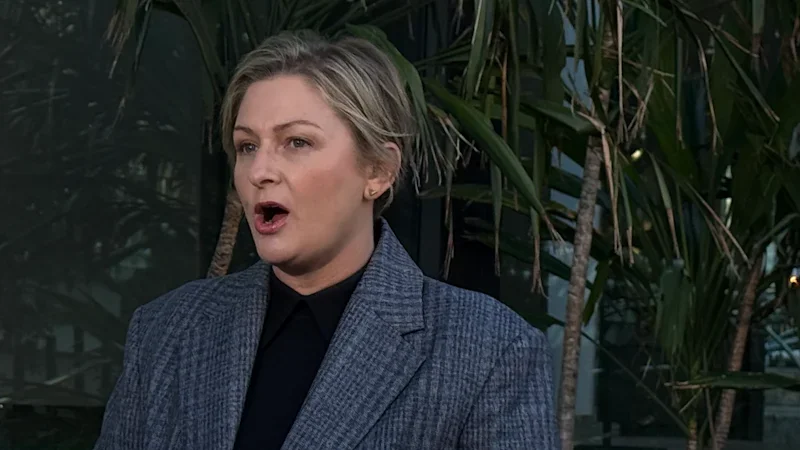
The number of children – including those younger than five – in state care in Queensland has risen, the Child Safety minister has revealed.
Data released by Amanda Camm showed 2819 children were in residential care as of March, up from 2258 compared with the previous year.
The number of children aged four or younger rose from 78 in 2025 to 107.
The minister has been under fire, after claims from opposition MPs late in June that department staff had left children to sleep on the floor at government offices.
While she took a week to address the claims – the deputy premier saying she had been in hospital suffering a migraine – she also had to front media to explain the state’s bungled rollout of its new child safety IT system, Unify.
On Thursday, Camm said the government should be judged on its work going forward, rather than the nearly two years it had been in power.
“Our government is committing to Queenslanders that [the number of children in state care] is the peak, that we will reduce the number of children in residential care, and that is the line in the sand,” she said.
The number of children under child protection orders rose by more than 800 in the same period, jumping from 13,336 to 14,147.
The data was released as the state published its response to a $20 million inquiry into the children in care system, with the government committing to changes but stopping short of the overhaul called for by the commissioner.
The government accepted 32 of the 52 recommendations in full, with 16 supported in principle.
The commission, headed by Paul Anastassiou, KC, who slammed the state’s child safety system in his 1400-page report, received more than 1000 public submissions.
A “measure of failure” was how he characterised the statistic of 13,500 children in state care as of March 2025.
“The system we have inherited is broken,” Camm said.
“It is complex, and it will take time to reform, but we are committed.”
She noted some work was already under way, with unlicensed providers taken out of the system after they were uncovered by the commission.
The commission threw light on widespread reports of sexual assault in the system, which is run by non-government providers, and Anastassiou said a target strategy for girls in out-of-home care was needed desperately.
The government supported that recommendation, promising a cross-sector response within six months.
The “adoption as a last response” principle for First Nations children would be discarded, at Anastassiou’s recommendation, within six months despite calls from First Nations stakeholders for it to remain.
Other actions will take longer, with the government giving itself a 2½ year runway to improve its case management framework.
The data released along with the report showed Child Safety workers were managing the cases of more than 15 children each on average.
Key to the government’s plan would be shortening the main principle of the Child Protection Act, to be that the “safety, wellbeing and best interests of a child” were paramount, losing the phrase “both through childhood and for the rest of the child’s life”, which Anastassiou said did not provide practical guidance.
Attorney-General Deb Frecklington described this as “massive legislative change”, which would affect the case management of every child in care.
Despite promises for change, the government would spend about $300 million less on child safety this financial year, with forecast spending of $2.8 billion, down from $3.1 billion.
A permanent office to oversee the reforms would be established, with the government promising to consider how it would work for the next six months.