Cuba · Energy
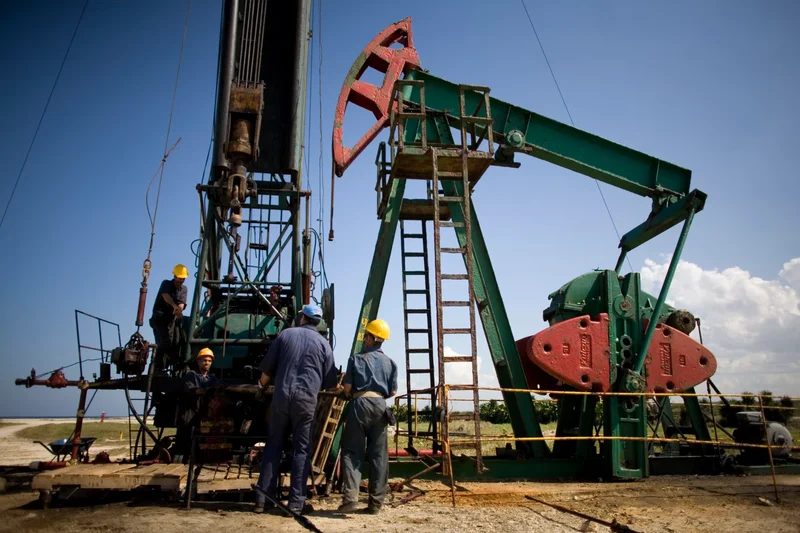
For sixty-six years, pumping oil in Cuba was something only the state did. From August, that stops being true.
Cuba’s government will allow private and foreign companies to extract oil and natural gas from August, according to regulations published in the official gazette. Large-scale mining opens on similar terms, through economic association and foreign investment.
The state has held a monopoly on hydrocarbon extraction since the nationalisations of 1960. That monopoly is what is being unwound.
What forced the move
Cuba is short of fuel and short of electricity. Blackouts have run for hours a day across much of the island, at times knocking out the national grid entirely.
The crisis is not just a matter of inconvenience; it has choked economic activity, shut down refrigeration, and sent long lines of Cubans searching for fuel for cooking. The government’s inability to secure reliable energy shipments has tested public patience to a breaking point.
The old arrangement, cheap Venezuelan crude in exchange for Cuban doctors, has thinned as Venezuela’s own output stayed constrained. Havana has been buying at market prices in a currency it does not have.
A state that cannot fund exploration and cannot buy enough fuel has limited options. Letting someone else take the geological risk is one of them.
The government’s own thermal power plants, many decades old, suffer frequent breakdowns that compound the fuel shortage. Keeping the lights on has become a daily scramble that leaves little room for ideological purity.
Why the geology matters
Cuba sits on the southeastern edge of the Gulf of Mexico, in a basin that on a map looks like the same system that made Mexico and the US Gulf coast rich. That resemblance has drawn explorers for two decades.
None of them found a commercial field. Repsol, Petronas and others drilled offshore blocks and walked away.
Onshore, Cuba’s producing fields around Varadero yield heavy, high-sulphur crude that is expensive to refine. The country still imports most of what it burns.
The deepwater play that attracted Repsol and others targeted the same geological structures that yielded huge finds off Brazil and West Africa. Those similarities were never enough to guarantee a discovery, and after multiple dry holes, the appetite for Cuban offshore risk faded.
The obstacle nobody legislates away
The binding constraint on Cuban energy investment is not Cuban law. It is the US embargo, and specifically the extraterritorial reach of Title III of the Helms-Burton Act.
Any foreign company operating on property expropriated after 1959 exposes itself to litigation in US courts. For an oil major with American assets, that risk is usually decisive.
The firms most likely to test the new rules are therefore not the majors. They are smaller operators with no US exposure, and states with a political reason to be in Havana.
Chinese and Russian state-backed firms have long operated in Cuba without much concern for U.S. legal threats. They remain the most plausible candidates to test the new licensing regime, though even they will tread carefully given the geological uncertainty.
What it signals
Read narrowly, this is an energy regulation. Read broadly, it is the latest step in a slow, reluctant retreat of the Cuban state from sectors it once held absolutely.
Private restaurants came first, then small firms, then wholesale. Hydrocarbons were always assumed to be the last thing Havana would let go of, which is precisely why this one is worth watching.
The move also reflects a broader regional pattern in which governments, faced with economic collapse, open strategic sectors that were once off-limits. Venezuela’s own recent experiments with private oil contracts provide a close parallel.
Frequently Asked Questions
When do the new Cuban rules take effect?
From August 2026, according to the regulations published by the Cuban government. These rules amend decades of legislation that reserved hydrocarbon extraction exclusively for the state.
Can any foreign company drill in Cuba now?
Private and foreign firms are permitted, but subject to conditions, and mining is limited to economic association and foreign investment structures. The regulations specify that extraction rights will be granted through contracts, not outright concessions.
Does Cuba produce much oil?
Little relative to its needs. Domestic output is heavy, high-sulphur crude and the country imports most of the fuel it consumes. Even with enhanced recovery techniques, onshore fields have not reversed the decline.
What stops foreign investment in Cuban energy?
Chiefly the US embargo, in particular Helms-Burton Title III, which exposes firms operating on expropriated property to US litigation. Until there is a political settlement between Washington and Havana, this legal risk will continue to deter the largest multinationals.